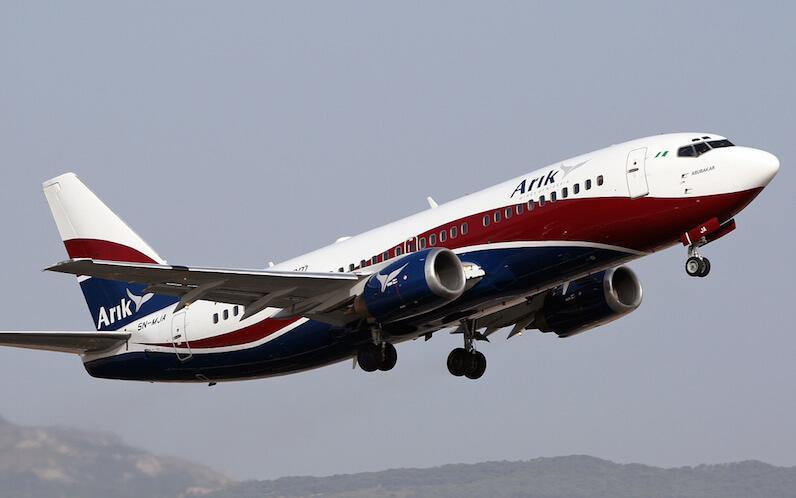
Against reports making rounds that Asset Management Corporation of Nigeria (AMCON) is yet to get a buyer for Arik Air, BusinessDay’s findings show that local and foreign investors are currently showing keen interest in the airline.
Recall that at the time AMCON was appointed a receiver manager, Arik’s debts were in excess of N300 billion. The airline had lost the confidence of key vendors, maintenance repair organisations and part suppliers. These creditors were both local and international.
Two years down the line, BusinessDay’s checks show that critical vendor relationships have been revamped and trade lines restored, with Arik now enjoying the confidence of partners.
Oluseye Opasanya, receiver manager, Arik Air, in a statement sent to BusinessDay said the airline is being run under unique governance arrangements that have ensured that costs are prudently optimised and that all departments of the company function in an orderly and professional manner.

“It is gratifying to report that the airline’s Earnings Before Interest, Tax, Depreciation and Amortisation (EBITDA) was negative in 2017 but in 2018 was significantly positive. The financial trajectory has been positive, proving that a professionally run airline has a future in Nigeria,” Opasanya said.
“Following the impressive performance of Arik Air in receivership, local and foreign investors are showing keen interest in the airline. Past attempts to resolve the debt issue with legacy shareholders have been frustrated by their insincerity exemplified by the presentation of fake and bogus investment proposals (false financial backing), confirming the lack of corporate governance and diligence in their approach to business,” he said.
Consequent upon measures taken post receivership, on-time performance (OTP), which had fallen abysmally to 19 percent a month before AMCON’s intervention, climbed up steadily and currently averages 63.5 percent.
Cancellations, which were as high as 40 percent as at January 2017, has been significantly reduced to less than 4 percent. Average load factor is currently over 73 percent whilst aircraft utilisation has also increased by about 50 percent.
Opasanya assured that the airline places a high premium on staff training to maintain its safety standards and meet national and international operational requirements, adding that the management team has ensured that staff undergo mandatory trainings, locally and internationally.

A staff in Arik Air who craved anonymity told BusinessDay that all hitherto unpaid salary obligations have been paid while current salaries and pensions are paid and remitted as at when due.
“The Arik we have now is totally different from the Arik Air which was managed by Joseph Arumemi-Ikhide, founder of Arik Air, three years ago. The new management is investing in staff trainings and ensuring the aircraft are maintained as at when due,” the staff assured.
Before AMCON took over the management of Arik, BusinessDay’s investigations showed that some of the serviceable aircraft were due for various checks, staff were owed between four to six months’ salaries, and staff morale was at the lowest ebb.
Fleet insurance was due and the airline basically struggled to pay the premium. Vendors were being owed colossal amount of trade debts to the extent that no oil marketer selling aviation fuel was willing to advance trade credit to the airline.
The former management found it extremely difficult to pay for fuel and as a result flight cancellation was rife. On-time performance (OTP), which is a measure of an airline’s ability to meet scheduled flight time, plummeted, leading to significant customer attrition and loss of confidence.
Furthermore, regulatory agencies were owed incredulous amounts of money and, by way of example, passenger service charges collected on behalf of the government had not been remitted for several years.
So also were huge sums of money deducted from workers’ salaries over many years which were not remitted to pension companies. The flying public was equally owed several millions of naira and foreign currencies on account of un-flown tickets and cancelled flights.
IFEOMA OKEKE