|
Getting your Trinity Audio player ready...
|
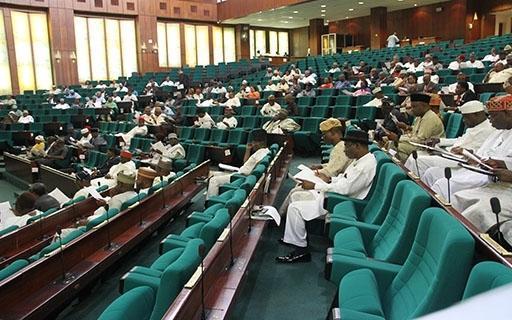
With estimated N70 billion debt portfolio offered to members of the National Assembly on assumption of office in 2015, management of various domestic banks are scrambling to recover the unserviced debts ahead of June 2019 date for the 8th Assembly to wind down, BusinessDay investigation reveals.
Although the actual worth of banks’ exposures to the federal lawmakers cannot be ascertained as at the time filing this report, BusinessDay gathered that most of the lawmakers who obtained loans ranging from N150 million to N200 million since July 2015 have failed to meet their obligations.
According to a management staff of a leading bank at the National Assembly, most of the serving lawmakers have defaulted in servicing the loans, despite herculean efforts and consultations with the affected lawmakers.
The banker, who pleaded anonymity during a chat with our correspondent, disclosed that other recovery mechanisms explored so far have not yielded any positive results.

Some of the indebted lawmakers are currently being investigated by the House Committee on Ethics and Privileges in response to series of petitions sent to the speaker, Yakubu Dogara, by the banks, our findings show.
Recall that the names of some serving senators were part of the top list of 105 debtors publicised by Asset Management Corporation of Nigeria (AMCON) as at October 2018, to the tune of N409,502,652.84. They include Buruji Kashamu, who allegedly owes AMCON the sum of N13.015 billion, and Usman Bayero Nafada, who was deputy speaker of the House of Representatives in the 6th Assembly.
Joshua Dariye, former governor of Plateau State and a serving senator, is reportedly indebted to the tune of N6.823 billion, while Chimaroke Nnamani, former governor of Enugu State and a serving senator, is allegedly indebted to AMCON to the tune of N42.49 billion owed as promoter of Iorna Global Resources, Sammy Beth Interbiz Limited, Camden Resources Limited, Riverside Logistics Limited and Rainbownet Limited.
Also featured on AMCON’s debtors’ list are Ben Murray Bruce, who reportedly owes N10 billion, and Stella Oduah, a former Aviation minister, who owes N20 billion.
Similarly, Nigeria Deposit Insurance Corporation (NDIC) revealed in its 2017 annual report and statement of accounts that Nigerian banks’ Non-Performing Loans (NPLs) in 2017 was N2.36 trillion, representing a 13.46 percent increase compared to N2.08 trillion in 2016.

In a reaction to BusinessDay inquiry, a member of the National Assembly who does not want his name in print denied allegations bordering on connivance between National Assembly staff and the affected lawmakers to diversify accounts used by the lawmakers.
He also denied knowledge of requests from banks for the recovery of loans, adding that National Assembly management lacks the powers to halt statutory payments such as salaries, allowances and quarterly allowances of any serving lawmaker.
“You see, part of the problems we are having is that the banks were out to make customers with the hope that they will do well. You know that in every loan there is a clear understanding between the bank and the beneficiary on the rate to which the beneficiary would pay the facility for a period of time. These are the issues. I want to tell you that these are private issues between the beneficiary and his bankers. In every transaction like this, if you don’t look at the risk factor before you go in to sign the loan facility, then you take the liability of not doing the right thing,” the source said.
“There rules that guide every process of service, anybody that goes against the rules that guide us in our official transaction, there is no connivance.”
What we are talking about is a loan that runs above the earnings of an individual. It is not going to be business as usual. They won’t come and hold us responsible. Did they consult us before giving out those loans? The answer is no. The banks cannot say they do not have their recovery processes before giving out loans, it is not done. I know the practical rules that guide banking transactions. A bank will just give you a loan without collateral. There is what is called liability, they should know it, if they don’t, it is their own problem,” he said.
KEHINDE AKINTOLA, Abuja