|
Getting your Trinity Audio player ready...
|
China reported a sharp drop in exports for December, sending stock markets across Asia lower, as a global slowdown and a punishing trade war with the US hit the world’s second-largest economy.
The 4.4 per cent fall in December exports came as China reported an annual trade surplus with the US of $323bn, the highest since at least 2006, according to Reuters data, as exporters rushed to ship orders ahead of a threat of rising tariffs.
A 7.6 per cent monthly import decline in December underlined how growth was slowing in China, because of weakening investment and consumption following Beijing’s drive to reduce debt in the economy.
Car sales in China, the world’s largest car market, also declined last year for the first time since 1990, official figures showed on Monday, adding to fears that consumers are reducing spending.

A growing bilateral surplus complicates trade negotiations between Beijing and Washington, with the US pushing China to commit to large purchases of American agricultural and energy commodities in order to reduce the gap.
President Xi Jinping’s administration has signalled its willingness to do so in order to reach a possible trade truce by March 1 but a deal could still falter over US demands for wide-ranging structural changes to China’s economy.
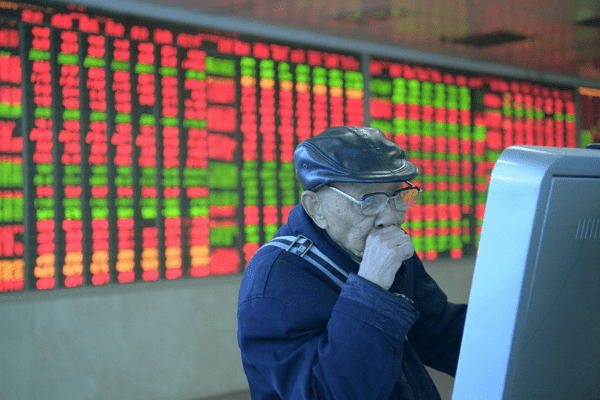
The December trade contraction confounded expectations, hitting Asian markets. Companies listed on Hong Kong’s Hang Seng index closed down 1.38 per cent on Monday, while shares listed in Shanghai and Shenzhen fell 0.87 per cent.
The offshore renminbi was also weaker by 0.10 per cent in late afternoon, at Rmb6.7665 against the US dollar.
China’s overall trade figures for last year were relatively robust, with exports up 10 per cent over 2017 and imports up almost 16 per cent year on year.

In a sign of belated impact from the trade war, monthly exports to the US fell 3.5 per cent in December, while imports of US goods plummeted 36 per cent as China largely stopped buying American soyabeans and other commodities.
Analysts said slower global growth was to blame for the sluggish December trade figures. Exports to other markets, including Japan and the EU, also shrunk while shipments to Hong Kong, a centre for re-exports of Chinese goods, fell 26 per cent.
“[US] tariffs can’t take all of the blame,” said Julian Evans-Pritchard, senior China economist at Capital Economics. “Exports to the rest of the world also slowed, with surveys pointing to weaker global demand at the end of 2018.”
Japan and Germany, two of China’s biggest export markets, reported third-quarter economic contractions. Weakening global demand for electronic products “poses the real risk to China’s external outlook even if China and the US reach a resolution on their trade dispute”, said Raymond Yeung, an economist at Australian Bank ANZ.
Chinese officials are scheduled to announce their estimate for full-year economic growth on January 21, which is expected to show that the economy met or exceeded the government’s full-year growth target of 6.5 per cent. Next year’s target, according to people briefed by economic policymakers in Beijing, is expected to be a more flexible range set between 6 per cent and 6.5 per cent.
The December trade data were released at a critical juncture in the trade talks, with senior US and Chinese negotiators expected to meet this month after a round of positive discussions between mid-level officials. If a deal is not reached, Mr Trump has threatened to increase the tariff rate on $200bn of Chinese goods from 10 per cent to 25 per cent.
The December export figures from China’s General Administration of Customs were far below a median forecast of 3 per cent growth from economists polled by Reuters. Monthly imports had been expected to expand 5 per cent. Those trade flows still resulted in a trade surplus of $57bn in December, the highest in three years.
Imports of intermediate goods, such as electronic parts which are assembled in China and then exported, slowed sharply in December. Slowing Chinese investment weighed on commodity demand, with imports of iron ore falling for the first time since 2010.
The country is the world’s top importer of a range of commodities from iron ore, where it accounts for a third of global imports, to crude oil and copper.
“The import slowdown is consistent with other signs that growth in China’s domestic economy continued to weaken,” said Louis Kuijs, head of Asia economics at Oxford Economics, a consultancy.
In another worrying sign for China’s economy, foreign direct investment into China rose just 0.9 per cent last year to Rmb885.6bn ($131bn), the commerce ministry said, down from 7.9 per cent growth the previous year despite Beijing’s efforts to loosen restrictions on foreign investors to attract more overseas capital.