Takeda will consider selling businesses from its Nycomed acquisition in 2011, as Japan’s largest pharmaceutical group seeks to divest $10bn of assets after completing a £46bn deal to buy Shire.
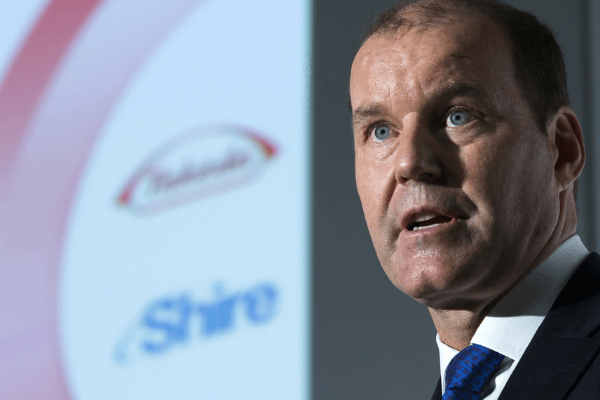
Christophe Weber, chief executive, said Nycomed was among the company’s “non-core assets” that it could consider jettisoning but denied that the $13.7bn acquisition of the Swiss drugmaker had been a flop, as some analysts have suggested.
Investors in Takeda have called for more clarity on the planned disposal of assets, which will be critical for the group in reducing $48bn in net debt that it will shoulder from buying Shire.
Mr Weber said in an interview at the JPMorgan healthcare conference in San Francisco that his company had hundreds of brands outside its focus areas that he could sell if he could find buyers with a better strategic fit.

To simplify the business, Takeda will focus on five core areas: oncology, gastrointestinal conditions, neuroscience, rare diseases and plasma-derived therapies.
“The overall environment is demanding more innovative medicine,” he said.
Takeda bought Swiss drugmaker Nycomed, which included Daxas, a treatment for lung conditions, and a portfolio of over-the-counter medicines in 2011 in a bid to expand its presence in emerging markets such as Russia. But market conditions deteriorated following the acquisition, and analysts had long criticised Nycomed’s operations as a “black box” for Takeda.
“As a business, it was a failure and the acquisition was not necessary,” said Fumiyoshi Sakai, an analyst at Credit Suisse, adding that the company was likely to sell Nycomed’s OTC business in Russia.
Other brands deemed outside the core areas include Azilva, a blood pressure medicine, Nesina, for diabetics, and Uloric, which is used to treat patients with gout.

The troubles Takeda faced with Nycomed could be relevant for its integration of Shire, but the company has changed significantly since its last major acquisition.
Under Mr Weber, the first non-Japanese CEO of the 237-year-old group, the company is led by an international executive team and the organisation is much leaner following an aggressive cost-cutting programme.
“The management needs to take this [Shire] acquisition and make sure that they drive improvement in profitability,” said Alessandro Valentini, a portfolio manager at Causeway Capital Management, which has been a longtime investor in Takeda.
Critics have expressed concern that the acquisition may end up being one in a string of large deals needed to sustain Takeda’s drugs pipeline.
“Shire’s assets will run out in 10 years,” Mr Sakai said. “Takeda basically bought five years’ worth of time through this deal. If their efforts don’t bear fruit at the end of that period, they may need to do another major acquisition.”
But Mr Weber rejected the idea that Takeda might do a Shire-sized deal every five years. He said he was “confident” the acquisition would drive “long-term, highly innovative and sustainable” growth.
“Our long-term ambition is to have a very productive research and development engine,” he said, adding that Takeda has 21 assets in phase two and three drug trials. Phase three is the largest and most important stage for proving a drug’s efficacy.