|
Getting your Trinity Audio player ready...
|
With the 2019 general elections few weeks away, anybody who becomes President must unveil a new industrial strategy that will determine Nigeria’s manufacturing trajectory.
Over the years, the country’s industrial strategy has been obfuscating as it is difficult to determine whether the country is trending towards import- substitution or export- orientation.
Import-substitution is a strategy in which local industries are established with a view to producing goods that replace imported ones.
It requires imposition of tariffs, quotas and exchange controls to protect local industries from foreign competitors and make foreign goods expensive.

Export- oriented or substitution industrialisation, on the other hand, is a strategy of exporting goods for which a country has a comparative advantage. This strategy has worked miracles for the Asian Tigers.
Some countries have also adopted foreign private investment strategy, whereby incentives are put in place to attract multinationals and foreign direct investors. A typical example of a country with this policy is Ethiopia, even though it may be argued that the East African country is export-oriented or a mix of export-orientation and foreign private investment strategies.
Nigeria has adopted what is called ‘resource-based industrialisation’, whereby firms use locally available resources, such as raw materials, man power and natural resources, to grow domestic production.
This has seen some success with local input sourcing reaching 57 percent in the first half of 2018, according to the Manufacturers Association of Nigeria (MAN). Despite adopting this strategy, local manufacturers remain the heaviest importers of inputs, machines and packaging materials. This is why any scarcity of dollars hurts the industrial sector most.
Muda Yusuf, director-general of the Lagos Chamber of Commerce and Industry (LCCI), pointed out recently that the country needs a new industrial strategy targeted at shoring up non-oil export.

He, however, explained that import- substitution and export promotion could go together, adding that resource-based industrial is more competitive because local resources are utilised, citing an example with the bright performance of food and beverage sub-sector which gets most of its inputs locally as a case study.
Nevertheless, facts on ground show that the country’s industrial strategy is not clear.
In 2013, for instance, the National Automotive Policy imposed 35 percent levy and 35 percent duty on imported vehicles, amounting to a total of 70 percent. This was meant to protect local vehicle assemblers.
At the same time, importers of damaged or ‘accidented’ vehicles officially enjoy a rebate of 30 percent. What this has done is to encourage the importation of rickety vehicles, which make up 70 percent of imported cars today.
“If you want to develop a market for 54 companies that have got licenses with 410,000 capacity plants and you import a huge number of used vehicles, how are you going to support vehicles being assembled, since the ones assembled locally will be more expensive?” Bambo Adebowale, chairman, Auto and Allied Sector group of the LCCI, asked in a recent interview with BusinessDay.
A new industrial strategy has become imperaitive, as local industries are increasingly becoming a shadow of themselves.
What is happening to Ajaokuta Steel Complex today? The complex has gulped $8 billion public funds without producing one sheet of steel. Recently, the Senate approved $1 billion from public funds to revive Ajaokuta even when there is a good case for its privatisation. The next President must not waste the country’s scarce resources on this behemoth.
Since 1994, successive governments have claimed that the complex is 98 percent completed, but the remaining two percent has become a hard nut to crack for successive administrations. Muhammadu Buhari’s government budgeted N3.9 billion in 2016 and N4.27 billion in 2017 for the resuscitation of the steel, despite an earlier business case in the last administration showing that the complex could only work if properly privatised.
BusinessDay checks show that Ajaokuta Complex has the capacity to produce one million metric tonnes of steel, one million metric tonnes of coal , manganese and limestone, among others.
Due to lack of operations at Ajaokuta Steel, Nigeria today imports steel valued at $3.3 billion every year.
Frank Udemba Jacobs, immediate past president of the Manufacturers Association of Nigeria (MAN), said over 50 percent of raw materials used in the sector would have been locally available had Ajaokuta been working.
Similarly, the Aluminium Smelter Company, located in Akwa Ibom State, is not in operation due to a tussle between Bancorp Financial Investment Group Divino Corporation (BFIG), a consortium of U.S.-based Nigerian investors led by Reuben Jaja, and the United Company RUSAL, a Russian firm.
Nigeria has three paper mills that are not working. These include: Nigeria Paper Mill (NPM)Limited located in Jebba, Kwara State; Nigerian Newsprint Manufacturing Company (NNMC)Limited, Oku-Iboku, Akwa Ibom State; and Nigerian National Paper Manufacturing Company (NNPMC) Limited in Ogun State.
Studies show that Nigeria loses N180 billion annually from non-performance of these paper mills. Nigeria spends N50 billion on the import of papers annually, according to a research done by Abimbola Ogunwusi and Peter Onwualu, director and former director-general of the Raw Materials Research and Development Council (RMRDC) Newspapers and publishing firms are struggling to import papers with limited foreign exchange, leading to very high cost of paper products.
“The co-investor that bought the NigeriaPaper Mill (NPM) Limited did not buy it to help Nigeria,” said Samson Ololade Ogundele, ex-senior manager, NigeriaPaper Mill Limited, Jebba, Kwara State in Lagos, said at a stakeholders’ forum in Lagos in 2016.
“I know it was valued at about N30 billion in Nigeria as at 1995, but this same mill was given to the investor at N334 million in 2008. The aim of the government in handing over the mill was to create jobs and improve the economy. The majority of Nigerians working in Nigeria Paper Mill –both junior and senior—are all casual,” Ogundele disclosed, adding that the Federal Government must re-visit the privatisation in spite of the fact that it is the only paper mill working at the moment.
As of today, many private companies are either shut down or mired in intractable legal tussles. Vita Malt in Agbara, Ogun State, is shut down. Multi Trex, a 65,000 metric-tonne cocoa processing factory, the largest in the country, has been taken over by the Asset Management Company of Nigeria (AMCON).
In 2015, the only surviving brake pads and lining maker, Star Auto Industries, collapsed as it was unable to compete with cheap Chinese products and could not pay back loan borrowed from the Bank of Industry.
“It is difficult to compete with Asia, with substandard, cheap brake pads. I am not happy that import duty on brake pads fell from 25 percent to 10 percent. This is the situation since 2004 and government has done nothing about it,” CEO of the firm Chidi Ukachukwu, told BusinessDay in early 2014.
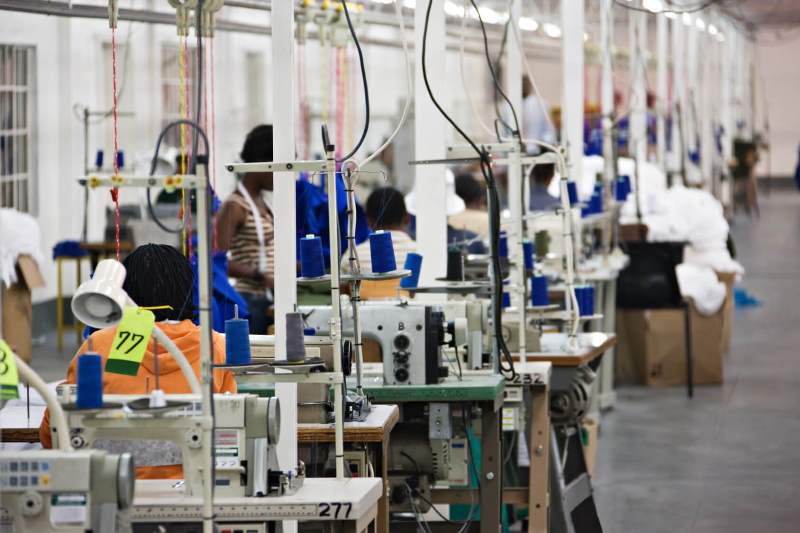
Today, only three textile firms out of over 120 in the 1980s are in operation.
“What we need is the enabling environment. We cannot compete with the level of smuggling and counterfeiting going on now. We used to have about 127 textile firms in Nigeria but that has come down to two or three now,” said Grace Adereti, president of the Nigerian Textile Manufacturers Association (NTMA) in Lagos at a Made-in-Nigeria stakeholders’ meeting in Lagos.
“We had the revival loans but this didn’t work because our biggest problem has never been money,” Adereti said.
Similarly, public firms such as Federal Superphosphate Fertilizer Company and National Steel Raw Materials Exploration Agency are also moribund and need a blueprint.
Fifty-four manufacturing firms closed down 12 months preceding August 2016 due to their inability to access dollars to import raw materials, according to a survey carried out by NOI Polls and Centre for Economic Research in late 2016.
Speaking at last year’s Manufacturing & Equipment Expo organised by MAN and Clarion Event West Africa, Aliyu Suleiman of the Dangote Group, said that an industrial strategy has become important for Nigeria as new governments spend half of their tenures devising plans, with little room for implementation.
“Last year, the United Kingdom produced a revised manufacturing strategy— a definitive roadmap. We can do that in Nigeria and MAN is in the best position to do this,” he stated.
According to him, the industrial strategy should include the aspiration of industry in terms of how much GDP contribution targeted; where to play, with regard to areas of priority, and how to win, in terms of becoming competitive.
ODINAKA ANUDU