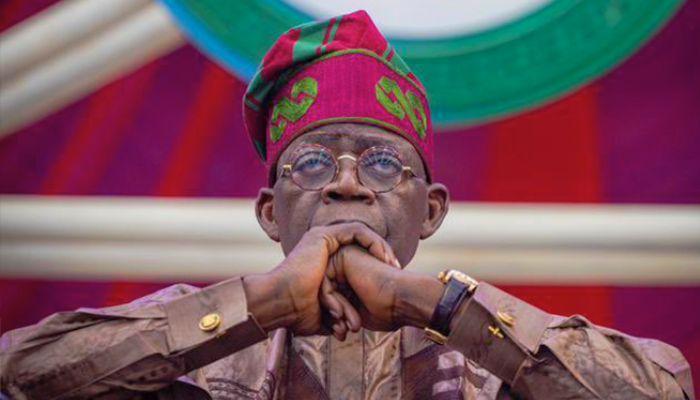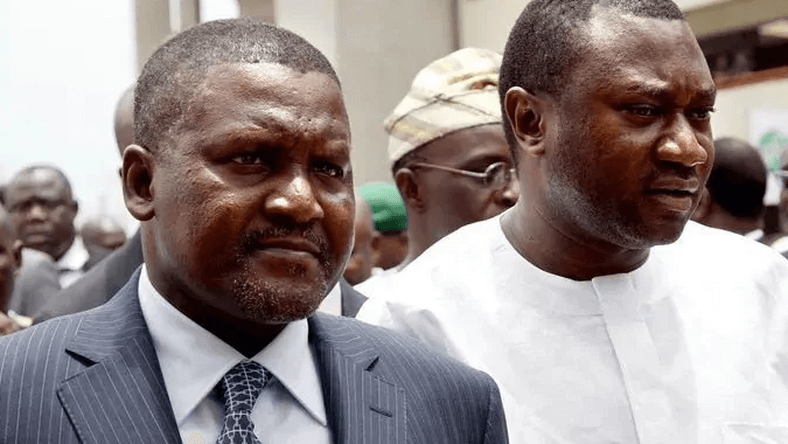
The announcement on Friday that President Muhammadu Buhari had appointed the duo of Aliko Dangote and Femi Otedola into his Presidential Campaign Council raised some dusts. But while the political community was yet to fully digest the import of the information, a contrary message came from the same source, presidential spokesman Femi Adesina: the two men were actually not members of the committee.
Adesina explained that the billionaires could not have been members of the campaign council since they were not card-carrying members of the ruling All Progressives Congress (APC). This made a lot of sense and must have brought some relief to those who were agitated by the announcement.
The reasons are obvious. Dangote is Nigeria’s and Africa’s richest man, whose business tentacles extend to every nook and cranny of the Nigerian economy. Only recently, the National Bureau of Statistics told Nigerians that Dangote’s businesses directly and indirectly account for about 10 percent of Nigeria’s gross domestic product. This is a world record.
Otedola in his own way is also a significant player in the Nigerian economy. Just this week, he decided to divest his 75 percent shareholding from the downstream business of Forte Oil, where he the majority shareholder. That decision set the stock market abuzz, with investors scrambling to get a part of what the market considers a juicy asset.

Otedola said in a statement issued by Forte that he was divesting from the oil marketing company to focus on refining and petrochemicals, areas where margins are said to be higher. Such a big player is not a minnow in the local economy and definitely not one that should be cornered into a tight position by a political party in a bid to get votes, especially if he is not known to be a member of that party.
All over the world today there is a visible disenchantment with cozy relationships between politics and business. The two are strange bedfellows and thus must at best keep each other at an arm’s length. Business corrupts politics and politics corrupts business. Each seeks something to gain from the other in ways that do not meet generally acceptable standards.
Thus, based on these facts, such appointments at this time would have sent a wrong signal to the public. For what reasons would these great entrepreneurs take up what is clearly a partisan position with a presidential candidate of a party at this late hour on the political timetable? They would have by that wittingly or unwittingly declared to the rest of the country where they belong. That message would have been interpreted differently if they were already card-carrying members of the party.
Nigeria needs a strong private sector that will drive an envisaged economic revival. But that private sector must be seen to be an independent sector. It must not be hoodwinked into entering a partnership that reduces it to an extension of a political party, whether the ruling or opposition party. As already noted above, these two men account for a significant part of the economy and much more of the private sector.
True, governments play key roles in the development of economies. Evidence of this abounds in much of what is today the developed world. The sudden rise of a country like South Korea testifies to this. Successive governments in that country, through coordinated policies, helped the rise of predominantly family-held, large conglomerates.

These entities, otherwise known as Chaebol, played key roles in the fortunes of previously wobbling economies in Asia. Over decades, these entities, such as Samsung, Hyundai, LG, and others, became the lynchpin of South Korea’s meteoric rise to become one of the Asian Tigers. The Chaebol became the engine of the country’s domestic production and its export-led drive.
Nigeria no doubt needs that, as the country dreams of an economic turnaround and a diversified economy led by export of non-oil commodities. However, as desirable as this is, some key issues must be taken into consideration. One, this policy or programme must be at the government level. It is not a political party affair. A political campaign is a party affair. This distinction is imperative. It should also apply to the main opposition Peoples Democratic Party.
Second, while the government-chaebol tango supposedly resulted in Korea’s economic miracle, facts later emerged that the affairs were not as clean as they appeared on the surface. There were compromises and undue influences on both sides. In fact, it has been revealed that the chaebols had significant influences on governments.
The proclivity of governments to confer undue advantage on some economic players in exchange for some political favours (at an election time such as this) is well known. But those who want to resort to it now must be told that its drawbacks are well documented.
What Nigeria needs is the provision of a level playing field that will favour all economic players, big and small. That is the way to a sustainable growth and development that the country so much needs.