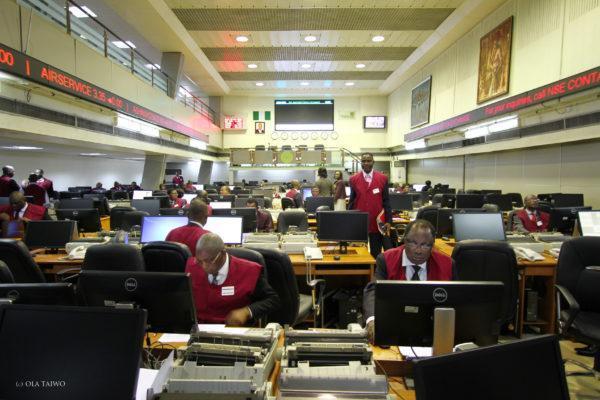
For investors in the Nigerian stock market, it is a gloomy end to 2018 today as a late market rally failed to save them a nightmarish ending to their investments in stocks. At least 23 stocks have seen more than 50 percent of their market value wiped out by the stock rout, according to BusinessDay analysis.
The losses have made Nigerian companies one of the cheapest priced in emerging markets but also investors have seen a significant part of their wealth wiped out leaving them exposed if the economy fails to pick up in 2019. Companies that have seen their values halved could also face difficulties raising new finance or attracting new investments due to their very low valuations as they fall out of the view of major portfolio investors.
Even though 2018 started on an optimistic note for stocks, it is ending with investors seeing the value of their stocks decline by N2.3 trillion, an amount that is almost equivalent to the size of Nigeria’s capital budget for 2018 or enough money to buy 23,000 flats at N100 million each in Banana Island, one of Nigeria’s most expensive neighbourhoods.
Equities which opened the year with a market value of N13.609trillion, increased to N15.896 trillion as at end of January; it rallied further to a record high of N16.019 trillion as at end of June.

But then the market commenced its descent, as the political environment heated up and uncertainty around the 2019 elections forced many foreign portfolio investors to flee the country. The market never recovered from the downward trend until it touched a new low of N11.337 trillion as at Friday December 28, 2018.
The All Share Index (ASI) closed at 31,037.72 points on December 28, 2018 representing Year-to-Date loss of 18.84 percent. This is in contrast to 2017, when the Nigerian stock market made a return of 42 percent, making it the third best performing market in the world. Equities value were up 4.36 trillion in 2017, which means that investors have lost about half of what they gained in 2018. With a year to date loss of 18.84 percent, the country’s stock market now ranks as one of the worst performing globally in 2018. Losses are spread across all sectors of the market.
The NSE 30 Index closed at 1,402 points on Friday December 28, 2018, representing a loss of 19.73 percent year to date. The NSE Banking index is down 16.34 percent; NSE Consumer Goods is down 24.35percent; and NSE Industrial Good Index is down 37.73 percent. At 125.96 points, NSE Insurance Index is down by 9.62 percent this year; while that of Oil & Gas declined 11.89 percent this year despite higher oil prices in the global market.
“At the moment, performance indicators such as the All-Share Index and market capitalisation of the Nigerian Stock Exchange are weak, reflecting continuous loss in investment appetite. This is expected to continue till the end of the first quarter (Q1) as 2019 election fear is palpable,” Sola Oni, a Lagos-based stockbroker said in an emailed response to BusinessDay.
Today is the last trading day of 2018 and it is already certain that no matter the gains today, the stock market is not going to reverse the losses of 2018.
“The usually expected ‘Santa Claus Rally’ between December and early January may be moderated by the current mood of the market, characterised by investor apathy. Real investors are likely to adopt a wait-and-see attitude while speculators may intensify moving their asset classes from variable to fixed income,” Oni explained. He believes however that some discerning investors will always take advantage of low valuation of stocks and strong market fundamentals to beef up their portfolios.

But analysts at Cordros Capital and Afrinvest have a cautious view on how investors should trade going forward.
“Our view continues to favour cautious trading in the equities market amidst brewing political jitters ahead 2019 elections, and the absence of a positive market trigger,” research analysts at Lagos-based Cordros Capital wrote in their December 21 note to clients. They however expect the positive macroeconomic fundamentals to drive recovery in the long term.
Analysts at Afrinvest also maintain a bearish short-term outlook for the market as political uncertainties remain heightened and also expect investors to take positions in fundamentally sound stocks for short term gains.
Top on the list of major losers in 2018 are Lafarge Africa Plc (-72.2 percent), AG Leventis Plc (-61.4 percent), Cornerstone Insurance Plc (-60 percent), FTN Cocoa Plc (-60 percent), and Japaul Oil Plc (-60 percent).
Also, Courtville went down this year by 60 percent, Mutual Benefit (-60 percent); Royal Exchange (-58 percent), Guinea Insurance (-54 percent), Multiverse Mining and Exploration Plc (60 percent), and Niger Insurance (-56 percent), Regency Alliance Plc (-58 percent), and Sovereign Trust Insurance Plc (56 percent), and Universal Insurance Plc (60 percent); and Veritas Kapital Assurance (54percent).
But not all stocks lost value in the year. Some actually made significant gains: Cement Company of Northern Nigeria Plc recorded the highest gain in 2018 with over 110 percent rally, followed by Unity Bank Plc which advanced by 84.91 percent. Other stocks that advanced above 50 percent are: Sterling Bank Plc (71.3percent); Learn Africa Plc (54.55 percent) and NEM Insurance Plc (54.22 percent).
Iheanyi Nwachukwu