In spite of 18.32 percent year-on-year growth in the nation’s agricultural sector, where crop production sub sector recorded an impressive 18.74 percent increase in productivity in Q3 2018, Notore Chemicals Industries ended the 2018 financial year in losses.
The firm posted loss after tax to the tune of N2.01 billion for the period ended September 30, 2018 compared with a profit after tax of N8.65 billion in similar period in 2017. The surge in crop production activities ought to be a source of opportunities to agro-allied firms such Notore Chemicals.
Analysts who are well familiar with the nation’s agricultural sector have attributed this development to subsidy removal, huge finance cost and the likelihood that the firm might want to present the true state of its affairs, being the first report it would release post listing on the Nigerian Stock Exchange.
“This is the first time the company will be publishing its audited financial statements after listing on the NSE. What we are seeing now may be the true state of its affairs after it listed on the Nigerian bourse’, Saheed Bashir, CEO, Meristem Securities, said.

In the financial year ended September 30, 2018, Notore Chemicals realised N26.83 billion as revenue from within Nigeria and overseas, representing 25 percent decline when compared with N35.89 billion it made same period in 2017.
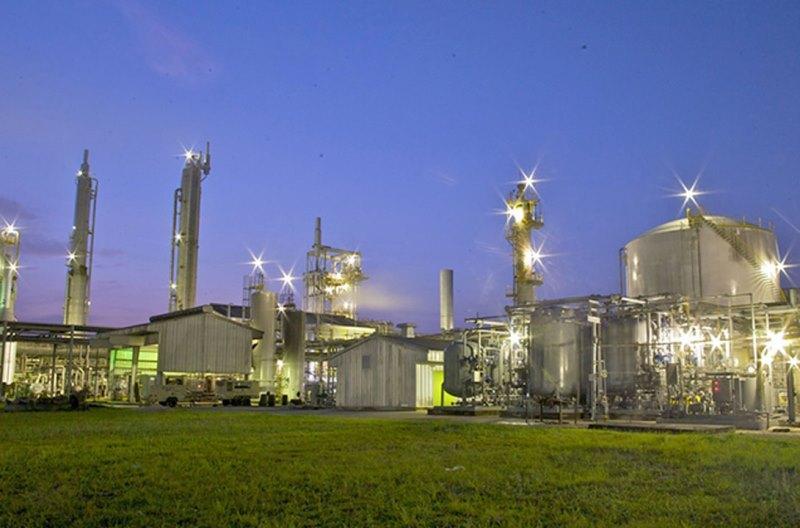
“The principal activities of the company are to manufacture, treat, process, produce, supply and deal in nitrogenous fertilizer and all substances suited to improving the fertility of soil and water. The company has a 500,000 metric tonne urea plant in Onne, Rivers State, Nigeria”, the company said.
Traditionally, the company sells NPK, urea and other chemicals, and ammonia. However, in 2018 financial year, Notore sold only ammonia, urea and other chemicals excluding NPK.
Urea and other chemicals generated N26.65 billion for Notore while ammonia generated N170.35 million. In 2017, the firm earned N35.68 billion from the sale of urea and other chemicals, while ammonia fetched it N214.09 million. This implies that the sales of the two products declined by 25 percent and 20 percent respectively.
When sales were analysed by geographical locations, revenue from within Nigeria fell by 22 percent during the period from N34.33 billion last year to N26.71 billion by September this year. Similarly, revenue from external sources nosedived by 92 percent from N1.56 billion last year to N118.38 million this year.

On what may be responsible for the sharp decline in fertilisers’ sales when so much attention is being given to agriculture, Oluyinka Alawode, CEO and agric information broker, Farm Cafe, an online agribusiness information platform attributed the problem partly to the absence of subsidy and the preponderance of small holder farmers within the nation’s agric value chain.
“So many factors, external and internal, could make a firm record losses. Many farmers, even the educated ones, are still small holder farmers and have challenges of access to finance, who cannot afford some inputs such as fertilisers since they can still produce without fertilisers, although they may not get the maximum output. Also related is that there is no subsidy on fertilisers anymore which means fertiliser producing firms were profitable because of the subsidy in the last regime. Back then, farmers bought fertilisers at half price while government paid the balance to the companies” Alawode said.
Cost of sales declined by 32 percent from N25.5 billion to N17.22 billion, partly due to 13 percent fall in raw materials and other chemical costs, as well as the reversal of Export Expansion Grant due to the approval giving to the scheme in the course of the year by the Nigerian Export Promotion Council (NEPC).
Other income rose to N4.36 billion by September 2018 from N1.25 billion same period in 2017. Finance cost rose by 19 percent to N10.85 billion as against N9.09 billion paid in 2017. That was as a result of 175 percent increase in borrowings during the period. In 2018, Notore raised its borrowing to N69.32 billion up from N25.45 billion in comparative period in 2017.
TELIAT SULE