|
Getting your Trinity Audio player ready...
|
It is the end of another troubled year in the history of Nigeria and Nigerians. There has been plenty of official efforts to persuade people that their lives are not so bad, or at least that things are getting better, and there is hope for the future.
Festivals are landmarks and signposts in the life of society, and there are very few places in the world where they carry as much significance for the average individual as they do in Nigeria. There are also few countries in the world that have as many festivals and public holidays as Nigerians do.
That there are a large number of festivals and holidays in Africa should surprise no one. Ali Mazrui – Kenyan academic and social scientist, in the famous documentary history which he wrote and narrated in the 1980s, spoke about Africa’s ‘Triple Heritage’, referring first to the indigenous culture and way of life, including its world view and religions developed over centuries and shaped by the land and climate. Second was the imposition of Western colonialism on Africans. And third was the advent of Islam.
There are many controversial aspects to Professor Mazrui’s documentary and subsequent book, including its effort to portray Christianity as more ‘alien’ than its counterpart. – Islam. What Ali Mazrui has done by introducing the description ‘Triple Heritage’ in 1986 is to state a fact that is only commonsense in 2018, which is that the Africa had, and still has indigenous religions, to which have been added the influences and formal rituals of Christianity and Islam, both of which are ‘alien’, in reality, none more or less so than the other. All the three tendencies daily influence and even dominate the lives and living of the people, and one of the obvious signs of this dominance is the plurality of festivals and celebrations in existence today.

In Nigeria, there is a greeting for every celebration, and it is unique onto itself. This tendency to have a unique greeting for every occasion and circumstance is nowhere on earth more developed than among the Yoruba. There is a greeting for when you go out, and when you come in. There is a greeting for when you cough, which is distinct from when you sneeze. And of course, every celebration has its unique characterization. There is a greeting at Eid al-Adha – ‘Ileya’, when the rams are slaughtered, and the neighborhood children of all religions gather round salivating as they await their share of the feast.
Because every celebration has a name, and a character, it is announced and celebrated, by name. Celebration is no ‘one size fits all’, whether it is New Yam Festival, or Osun Festival, or Easter, or Ileya. There is no such thing as ‘happy holidays’.
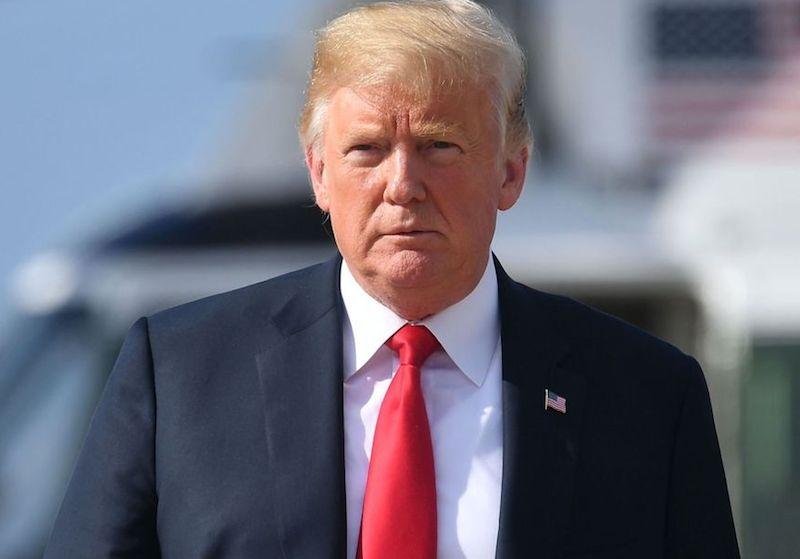
By contrast there is a tendency in America, to greet people with ‘happy holidays’. This is instead of saying ‘happy Christmas’ or ‘happy Hanukkah’ or ‘Eid Mubarak’. Although the practice has been long existing, the fact has become one of the strong elements in recruiting otherwise sensible men and women, especially Christians, to the support of one of the most despicable specimens of human being ever to have inhabited the highest reaches of power in America – Donald Trump. It is a subtle but important matter, which many people miss, even now. And it may be one of the reasons why Donald Trump, much reviled as he is by men and women of good reason, will win a second term in the office of President.
Hanukkah is the Jewish festival of light. It is an eight-day celebration. Its history lies in the successful revolt by the Maccabees – a Jewish warrior sect, against Antiochus IV Epiphanes– a Greek emperor who ruled the Seleucid Empire from 175BC to 164 BC and controlled a large part of the world, including Jerusalem and The Levant. Following the rebellion, the Second Temple in Jerusalem was purified and the wicks of the chandelier – the menorah, miraculously burned for eight days, even though there was only enough oil for one day’s burning. The festival usually falls towards the end of the year. This year, it was observed from 2nd December to 10th December. In 2019 it will run from 22nd December to 30th December, straddling the Christmas season as it is wont to do from time to time.
There is yet another December celebration in the USA. It is ‘Kwanzaa’, celebrated by African Americans and some other pockets of the African diaspora. It was created in 1966 by a Black Power activist named Ronald McKinley Everett, who in the manner of African-Americans wishing to ‘Africanize’, changed his name to ‘Maulana Karenga’. It is advertised as a celebration of family, community and culture, lasting a whole week, with exchange of gifts and greetings. In its original form, it was based on a belief that Christianity was a ‘white’ religion which should be shunned by black people. In later years, it has softened its hostility and now many practicing African-American Christians also celebrate Kwanzaa, which is observed from December 26 to January 1. The name is supposed to be drawn from ‘Kwanza’ – Swahili for ‘first fruits’ and is meant to be a symbol of pan-Africanism, mutilated out of shape as usual and rendered meaningless by the addition of another ‘a’ at the end.

To further complicate the matter of festivals in polyglot United States of America, there is a substantial Muslim population, and the festival of Eid al Adha – the ‘Festival of Sacrifice’ – which symbolizes Abraham’s readiness to sacrifice his son on God’s instruction, later to be replaced by the sacrifice of a ram, occasionally falls in the month of December too.
Part of the beef of the Christian right-wing, those who brought Donald Trump to power, and may yet keep him in power for another term, is that President Barack Obama, in being ‘super-cool’, de-emphasized America’s Christian core values and antecedents. Instead, he wanted to be everything to everyone. In his White House, and in his America, it was not ‘merry Christmas’ or ‘happy New Year’ or ‘happy Hanukkah’ or ‘Eid Mubarak’. The standard ‘Obama-ism’ was ‘happy Holidays’.
It is probably not an entirely fair criticism, since ‘happy Holidays’ was used as greeting before Obama and is used by many even now. But it shows the state of the struggle afoot for the soul of America, when an irreverent, amoral Donald Trump can stand before a Christmas tree and emphatically greet his countrymen ‘Merry Christmas’ and be applauded as an embodiment of their history and their values, even while acknowledging other religions.
In Nigeria, despite all our troubles, there are no such subtleties. A few days ago, it was ‘merry Christmas’. It is still running. Soon it will be ‘happy New Year’. In the not too distant future it will be one or other of the major Islamic festivals. And then any number of the others – ‘New Yam’, Osun, others. And people will celebrate.
Merry Christmas, and a happy New Year to all the readers of this column.
Femi Olugbile