With three months to the 2019 general election, the fourth version of the Electoral Act (Amendment) Bill recently passed by the National Assembly has come under serious scrutiny.
Although Nigerians from different spectrum of the divide have expressed divergent views on whether President Muhammadu Buhari should sign the bill into law once it is transmitted to him, they are unanimous on the need for stiffer sanctions for officials of the Independent National Electoral Commission (INEC), especially those who take undue advantage of the lacuna in the current legal framework for elections.
For instance, in the Osun State governorship election held in September, a staff of the electoral body, Salawu Mutiu Kolawole, was arrested by party supporters at Ayedaade Local Government Area for alleged tearing an INEC result sheets believed to be under contention. Although Kolawole admitted that a superior officer called him and directed him to proceed to St. Peter’s in Ayedaade to tear the controversial result sheets, the two INEC officials went scot-free.
READ ALSO: ICPC to investigate sources of looted palliatives

Perhaps, it is for offences like these that made federal lawmakers tighten the noose in the gaps in the Electoral Act by adopting stiffer sanctions not only for INEC officials but also for political parties and media houses.
Some of the clauses that provide for stiffer sanctions in the amended bill are as follow: Clause 4 of the bill amends Section 18 of the Act by prohibiting the replacement of Permanent Voters Cards to any voter less than 30 days before Election Day.
The clause which deals with ‘Power to Issue Duplicate Voters’ Card’, prescribes a five-year imprisonment or a fine of N5 million to any INEC official that contravenes the provision.
Similarly, the proposed legislation prescribes a fine of N100,000 or six months imprisonment (or both) for any official of the Commission that fails to display voters’ register at each local government, area council, ward or its official website.
It stipulates that the voters’ register be displayed not later than 30 days to a general election.

Section 8 (5) addresses the issue of INEC staff who conceals his membership of a political party in order to secure an appointment with the Commission.
Consequently, the new sub-section provides that any staff of the Commission who is a card-carrying member of any political party is liable on conviction to five years imprisonment or a fine of N5million or both.
The largest fine for erring staff of the Commission is in Clause 34 of the proposed legislation which amends Section 151 of Electoral Act Bill. The clause which deals with ‘Inspection of Documents’ witnessed the insertion of a sub-section which provides that: “Where there is a breach of an order of a court or tribunal directed at the Commission particularly order to produce, inspect or take copies of electoral materials, such disobedience shall attract court sanctions which shall include the committal by the Tribunal or Court of the Commission’s official to whom the order is directed, to a conviction of imprisonment for a term of at least 2 years, or fine of not less than N10 million or both”.
By the same token, Section 100 (6) (a) slams a fine of N5 million on any public media that fails to allocate equal time to political parties or candidates.
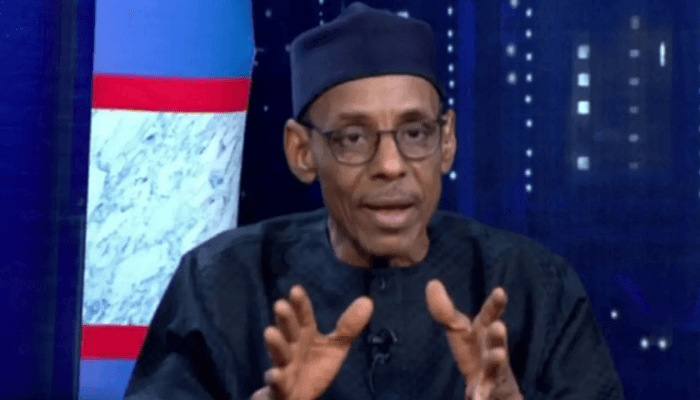
In an interview with BusinessDay, a political analyst, Jide Agunbiade believes that if the bill is passed into law and implemented, it will serve as a deterrent to others.
“The reason why people commit electoral offences and painfully INEC officials who do so with impunity is because previous offenders get away with it. As we speak, electoral offenders in the 2015 election are yet to be brought to book. And here we are; the 2019 election is just around the corner. I believe if the Electoral Act Amendment Bill is passed, signed and fully implemented, the days of electoral offences will be confined to the dustbin of history,” Agunbiade said.
However, beyond the stiffer sanctions, there are also calls for the establishment of electoral offences commission.
Those in this school-of-thought believe this would allow the commission handle its core mandate of election management while another body prosecutes electoral offences and other related matters.
Recently, the International Republican Institute (IRI) and National Democratic Institute (NDI) backed the call for the establishment of an Electoral Offences and Political Parties Registration Commission ahead of the forthcoming elections.
A member of the joint group, Terry Tselane, made the call in Abuja at a news briefing on the 2019 general election.
Tselane, who is the vice chairperson, Electoral Commission of South Africa, said that the delegation was in Nigeria to assess the political and electoral environment in the country ahead of the elections. He said there was need to establish the commission as soon as possible to enhance the accountability of political parties with regard for the funding of campaigns and other activities.
He said that the group had observed some challenges that could hamper the elections if not well addressed. He listed such challenges to include hate speech, insecurity, vote-buying and lack of internal democracy in parties, but said that the delegation had made some recommendations that could help the government.
“The delegation believes that with political will and through efforts, many of the challenges can be addressed in order to enhance citizens’ confidence and participation in elections.
“It can also mitigate violence during and after the polls; the Federal Government needs to intensify efforts to address insecurity in many parts of the country as it could disrupt the electoral process.
“The government also needs to reiterate to all security services their constitutional obligation to be professional and impartial in guaranteeing election security for all citizens and political contestants,” he said.
Already, the Federal Executive Council (FEC) has sent an executive bill to the National Assembly for the establishment of the Electoral Offences Commission. But it is left to be seen if the proposed legislation will see the light of the day considering that politics has assumed a centre stage as lawmakers are currently battling for their return tickets.
OWEDE AGBAJILEKE, Abuja