What if we came up with a private sector driven addition through a “Made with Youth Sweat” campaign, where it was possible to uniquely identify goods and services with at least 50% of the value coming directly from youth activity, preferably through youth-owned micro enterprises?
According to Eurostat, by end of Q1 2018, Nigeria was one of the top 10 countries of origin of people seeking asylum in Europe (now leading all other African countries on the list). Furthermore, Nigeria ranked 4th, after Syria, Iraq and Afghanistan as country of origin of migrants crossing the Mediterranean.

Many of Nigeria’s youth are determined to seek greener pasture elsewhere. With the crippling youth unemployment in Nigeria, this problem is expected to get much worse and urgent concrete measures are needed by both home and destination governments to address the root causes. Due to these irregular migrations to Europe from Africa, “The EU Emergency Trust Fund for Africa,” EUTF, a EUR2.8 billion fund, was set up as a “quick” and “flexible” EU response to different dimensions of this challenge and for amongst other things, “promoting economic and equal opportunities, security and development” in Africa.
On the Nigerian side, on just one of myriad programmes, for example the Government Enterprise & Empowerment Program (GEEP), some 1,000,000 traders, women cooperatives and market women; 200,000 MSMEs; 260,000 enterprising youth; 200,000 farmers and agricultural workers are targeted with loans of between N10,000 and N100,000, a potential spending of between £30m to £300m to strengthen the economy.
The priorities of the EU Emergency Trust Fund for Africa and FGN programmes like GEEP are similar and include amongst other things, creation of employment opportunities, especially for young people and women in local communities, with a focus on vocational training and creation of micro and small enterprises. Assuming these programmes achieve the reach and impact for which they were designed, why are Nigerians still risking their lives braving the Sahara, potential enslavement in Libya and possible death trying to cross the treacherous Mediterranean to get to Europe?

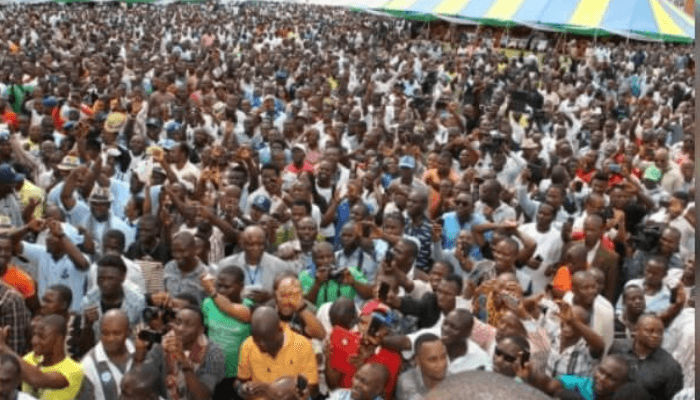
Nigeria’s youth complain that they are “not being carried along by government.” Probing deeper, it appears they lament their idleness even after attending institutions of higher learning (for those who have). The absence of jobs and incomes leaves them with the feeling that they were not factored into some grand scheme that in their minds, must exist in the country today, which only a privileged few who have connections or other means of access can benefit from.
According to Trading Economics, 33.1% of Nigerian youth (out of a population of over 126 million persons) were unemployed in the third quarter of 2017. On the one hand, they feel even if there are no jobs, they could be granted access to capacity building, ideas, capital and help with market linkages, so they could get on with the job of building their own livelihoods.
On the other hand, even when support is made available, are there too many youth with a get-rich-quick outlook tainting any attempt at organic, gradual growth and biasing them towards unrealistic expectations resulting in high levels of frustration and perhaps the dream that ‘the grass could be greener on the other side’ where they could ‘make it big.’
Is there a way to change the narrative? More “show & tell” from current programmes? How can we better channel the Nigerian and EU government expenditures to increase both reach and impact? What if we came up with a private sector driven addition through a “Made with Youth Sweat” campaign where it was possible to uniquely identify goods and services with at least 50% of the value coming directly from youth activity, preferably through youth-owned micro enterprises?
What if in this campaign, we were able to persuade trade blocs suffering the impact of such irregular youth migration such as the UK and the EU member states (especially Germany, Greece, Austria, and the Netherlands), to open a special trade window creating market linkages for such youth-inclusive goods and services that meet EU requirements. This will create a demand pull for youth-owned micro and small enterprises, standardisation of youth made goods and services, and inducement of their incorporation into the supply chains of larger companies involved in export.
For starters, this could be applied to the agriculture and ICT sectors where (production quality, and farm-gate-to-container) competencies to prepare produce for export are mostly lost because of the scrapping of marketing boards during the implementation of Structural Adjustment Programme (SAP) without any institutions to replace them or play their roles.
The youth-owned agro-processing or services enterprises could be involved in activities to get produce to EU standards such as by ensuring production quality, cleaning, sorting, grading, bagging and trading of produce; export documentation; creation of specialized IT platforms linking sellers in Nigeria with buyers participating in the special window and so on.
For this, a wide range of vocational skills will have to be provided and access to finance for them could be through existing arrangements of the EU Emergency Trust Fund and in Nigeria from the Bank of Industry, Central Bank Funds and other sources. The ability to stay in Nigeria and with their sweat, earn a decent living (perhaps even in foreign exchange) and be productively engaged in the economy would also help counter the belief (home and abroad) that the governments involved are not doing anything to address their plight. It could benefit even youth who currently sell only their sweat as labourers who could be trained to run other services in addition.
Support for such a scheme will also present opportunity to enlist the youth in the fight against corruption, insecurity and economic sabotage. The youth feel if the government is providing such a scheme, it will have the legitimacy to deal with unacceptable behavior withdrawing the privilege of participation where necessary. Offenders should also be placed on a public blacklist (for a period), published for all to see.
Accepting such sanctions and learning what constitutes unacceptable behavior should be part of the process of accessing the incentives from governments participating in the scheme. A behavioural approach is needed. There is more that could be done to stem the irregular migration and just throwing money at the problem may not make it go away. What do you think?