The constant reference to education across the globe underscores the importance the human race attached to it. Education comes up for mention because if there must be any meaningful progress, the intellectual capacity of the human capital has to be shored up.
For instance, medical doctors need sound education to provide quality health services, the brains in the financial sector cannot be generated without a good educational traning, while lawyers need to spend many years being groomed in the ivory towers before graduating to keep the nation’s judicial system running.
That notwithstanding, the Nigerian education sector has not received as much attention as it should in the last two decades. For instance, budgetary allocation to the sector has consistently fallen short of the United Nations Educational, Scientific and Cultural Organisation’s (UNESCO) recommended 26 percent.
The fallout is that lecturers demand higher pay on a regular basis and grind academic activities to a halt with strike actions. Most tertiary institutions are dilapidated, libraries are poorly stocked with relevant materials, examinations like WAEC, NECO and JAMB record mass failure and the best brains in the academia are constrained to look for greener pastures abroad.

In the 2015 fiscal year,N392.2 billion was allocated to education, representing about 8 percent of the N5.068 trillion budget, falling short of the recommendation by UNESCO. The story was not any better in 2016 when the present government allocated N369.6 billion, representing 6 percent of the total budget of N6.061 trillion.
In 2017, it was N550 billion representing 7.4 percent of the N7.444 trillion total budget, while in the 2018 appropriation bill of about N8.612 trillion, only N605.8 billion was proposed for capital projects in the education sector, representing 7 percent of the budget.
An analysis of budgetary allocation for education over the last six years has not hit 15 percent, a situation which educationists say is reflective of how much importance successive government’s attach to education.
Those who know in the education sector observe that the constant below par budgetary allocation to education has several notable downsides at all levels. They opine that Basic education is still characterised by low net enrolment as about 8.5 million children are out of school. School infrastructure has not caught up with increasing enrolment as reports document many pupils sitting on the floor for classes and some learning under trees. T
Industry close watchers also said that the secondary level is not spared the decay. There are infrastructural challenges including inadequacies in power and water supply. Over 65% of schools have no public power supply. ICT infrastructure is also poor at the basic education level. Inadequacies of classroom, laboratory and workshop facilities pervade the system. At all levels, teachers are inadequate in number and quality.

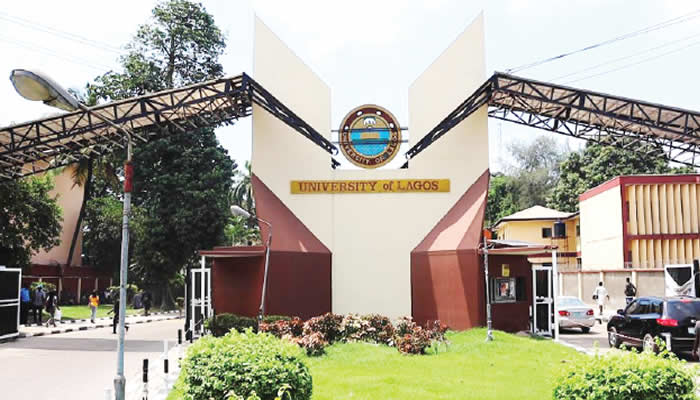
According to them, “The universities can exemplify the challenges at the higher education level. The 163 universities in Nigeria today are faced with a host of quality challenges which include the fact that majority of the universities are grossly understaffed, relying heavily on part-time and visiting lecturers, have under-qualified academics and have no effective staff development programme outside the Tertiary Education Trust Fund intervention and the Presidential First Class Scholarship programme.
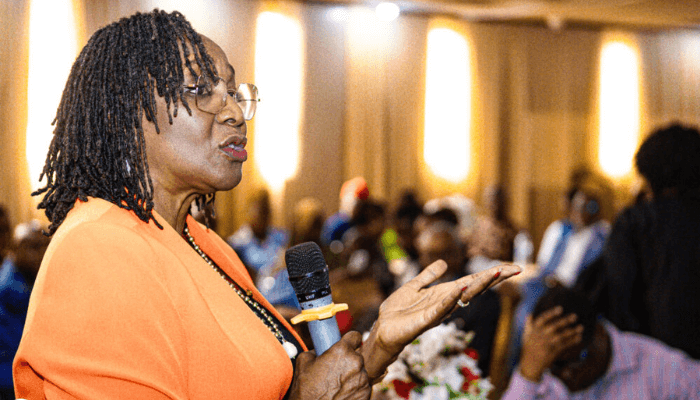
Florence Obi, former Deputy Vice Chancellor, University of Calabar warned that any country that neglects knowledge resulting from educational activities sets itself back by a decade, noting that “any nation that does not pay attention to the educational needs of its population is likely to face difficult times in the future.”
She further pointed out that higher education in Nigeria has been experiencing loss of facilities, deterioration of equipment and plants, and uncompleted projects as a result of financial crisis facing the system.
On his part Peter Okebukola, former executive secretary of the Nigerian Universities Commission (NUC), said he expects the Muhammadu Buhari administration to improve funding across all levels of education.
He observes that such a move would increase capital development to aid teaching and learning, adding that the Nigerian education system is not up to the level it should be.
His recommendation for academics should the needed funding see the light of day is that “a lot of improvement in research should be the focus by our universities in the next 10 years. There should be an improvement in our research infrastructure; there is the need to improve the capacity of our research for people to do quality research that will find their way into globally acceptable publication outlets.”
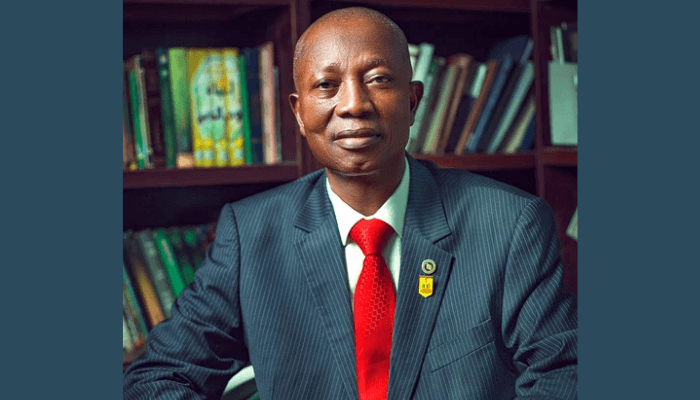
For Isaac Adeyemi, former vice Chancellor, Bells University of Science and Technology Otta, Ogun State if the nation’s education system is to position itself on a platform of any relevance, the present administration must prioritise education through proper funding and policies that will enhance the sector across the board.
“If Nigeria will survive in this 21st century global village, the education system must be the catalyst and agent of change in the society,” he said.