|
Getting your Trinity Audio player ready...
|
As oil prices continued to rally above its highest price in 2014 of $72, Organisation of Petroleum Exporting Countries (OPEC) and non OPEC’s Joint Ministerial Monitoring Committee (JMMC) will meet in Jeddah, Saudi Arabia this Friday to discuss and recommend to OPEC on whether or not the production cut deal should extend beyond 2019.
Emmanuel Afimia, Energy Economist at Afimia Consulting Services said OPEc’s JMMC will be addressing how to increase global demand for crude oil and drive investment in cleaner technologies whose major input is crude oil.
“If the production cut extends beyond 2018, given the prospect of fresh sanctions on Iran by US, there is every likelihood that oil prices will rise above $100 per barrel in 2019, all other things being equal,” Afimia said.
Nigeria and Libya were originally exempt from cutting supply because their output had been curbed by conflict and unrest; however this meeting which will have about 20 oil ministers from OPEC and Non OPEC’s member’s is expected to provide substantial guidance on how OPEC and its partners will proceed at their June 2018 meeting in Vienna.
Abayomi Fawehinmi, an energy analyst at a Lagos-based consulting firm expects OPEC’s JMMC to maintain the status quo expect there is a major supply shortage occasioned by a force majeure like war.

Crude oil production by the Organisation of Petroleum Exporting Countries (OPEC) fell in March to an 11-month low as a result of declining Angolan exports, Libyan outages and a further slide in Venezuelan output, thus increasing compliance with a supply-cutting deal by the oil producers to another record.
During the last meeting in February, JMMC said OPEC and non-OPEC producing countries achieved a level of 138 per cent compliance in voluntary oil production adjustments.
“The Declaration of Cooperation continues to have a transformative effect on the global oil industry. Participating countries, working in concerted action, have once again demonstrated their dedication to expediting the rebalancing of the oil market. This has benefitted a broad range of energy stakeholders, including producers and consumers, as well as the world economy,” JMMC said after its last meeting in February.
Oil surged to a three-year high last week as geopolitical risks including the conflict in Syria and tensions between Saudi Arabia and Iran-backed rebels in Yemen raised concerns over potential supply disruptions in the Middle East.
International Energy Agency (EIA) acknowledged that OPEC and its 10 non-OPEC allies compliance to reduce production by 1.8 million barrels have being stunning.

Since the production cut agreement 15 months ago, Saudi Energy Minister Khalid Al-Falih has been trying to create a more enduring framework beyond the tenor of the Agreement of Cooperation which is currently scheduled to run through the end of the year.
Since oil price recovery from its two- decade low of $28 per barrel in January 2016, OPEC has had its Upsides and downsides.
Given that the inventories situation is getting tighter supply shortages and demand increases can matter.
On the downside, there is uncertainty over just how much incremental non-OPEC supply will reach the markets.
The IEA predicts 1.8 million bpd, but that could increase, depending on how much more shale production will expand as oil prices rise.
There is also the worry about potential trade friction.
Al-Falih and his Russian counterpart Alexander Novak who are both scheduled to be in the meeting will need to steer the conversation to come up with an assessment of what is needed to keep the inventories at this level.
On one hand, domestic producers are exerting pressure on Novak to accommodate about 700,000 bpd of new capacity. On the other, Russia is very interested in a higher oil price especially as sanctions begin to bite.
“Nigeria benefits with status quo what we must not allow is a peg on our production that’s lesser than what we are currently doing,” Fawehinmi added.
The Nigerian economy has been hammered by a lengthy collapse in oil prices that began in mid-2014, and snowballed into a two-decade low of $28 per barrel in January 2016.
Independent producers in Nigeria are ramping up crude oil production with output projected to hit 250,000 bpd by 2020. This is in response to the plan by the ministry of petroleum resources to raise Nigeria’s crude oil production to 2.5million bpd.
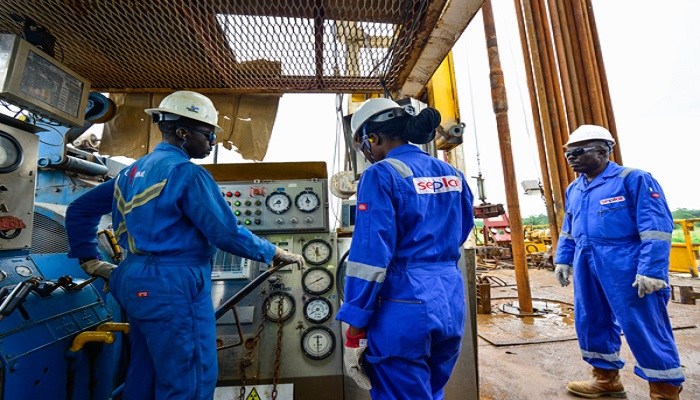
Key producers Aiteo, Shoreline, and Seplat are seeking to double their output before the end of 2018 and this may raise Nigeria’s production above the supply cap of 1.8million imposed by OPEC.
Shoreline early this year agreed a $530 million deal with financiers led by Vitol Group, the world’s biggest independent oil trader in a bid to double crude output to 100,000 barrels a day by the end of the year. There are at least a dozen small to mid-sized Nigerian producers pumping between 5,000 and 100,000 barrels each day. Together, they plan to add incremental supply of at least 150,000 barrels a day this year.
A barrel of Brent oil sold for $72.68 on Wednesday April 18, according to data obtained from the Bloomberg terminal as oil production hit 1.8 million barrels daily in April 2018, representing a 50 percent increase from the 1.2 million barrels produced in the thick of militant attacks, according to the most recent OPEC data.
Dipo Oladehinde