|
Getting your Trinity Audio player ready...
|
With the prevailing surge in the number of Nigerian children with special education needs, industry expert in the field of Education has called for public private partnership to address this trend.
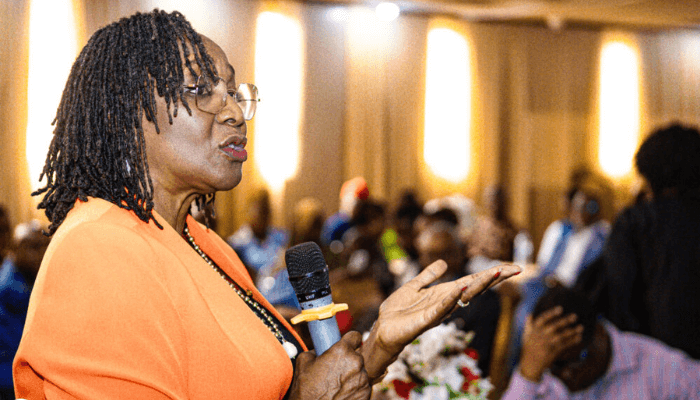
Nike Agunbiade-Etiebet, Chief Executive Officer, HIIMA International Education Network, called on the Federal Government to implement policies that would encourage educational institutions at the primary and secondary levels to practice inclusive education to cater for children with learning difficulties.
Etiebet observes that about 98 per cent of Nigerian schools do not accept special needs students, thereby pushing parents to isolate such children at home.
While speaking during the HIIMA Business Opportunity Meeting with education stakeholders in Lagos, Etiebet reiterated the need for inclusion in Nigerian schools at all levels adding that if a child finds it difficult to perform tasks children his/her age can perform; such a child has special education needs.

According to her, “A child has special educational needs when he or she has significant learning difficulties that make it more challenging for him or her to learn like other children of the same age. Special educational needs include intellectual disabilities, medical or health conditions, learning difficulties, behavioural, social, and emotional difficulties, sensory/physical needs”
Etiebet while explaining the meaning of Hiima said it depicts ‘High Love of Children’ stressing that the model recognises children’s individual differences thus it teaches them with love and respect to unleash their potential for greater heights and to make positive difference in the world.
To her, “Hiima professionals have been in education for over two decades teaching in the early years up to the sixth form with unique, well proven and result oriented methodology based on the inherent attributes and the child’s capacity to learn, using the absorbent mind and the sensitive periods according to Maria Montessori as well as the idea of Multiple Intelligences of Howard Gardner.”
The educationist said the model believes that the child has natural propensity, predisposition and talents to succeed, to explore, to create, innovate and better the community. “These talents in an individual child can be exposed through loving cooperation stakeholders of the child’s education viz-a-viz the parents, the child, the teacher, the environment and learning sets.
She further observe that the absence of qualified teachers to handle children with special needs in most mainstream schools account for why such school rejects students with learning disabilities.

“High percentage of schools in Nigeria doesn’t practice inclusion because it is a bit expensive to practice. It requires having a special educational needs coordinator, assistant teachers, and sometimes therapists. Also teachers in Nigeria are not trained to handle or teach children with special educational needs.
In her words, “Government can assist schools by providing special educational needs training for their teachers and also make law of inclusion in Nigerian schools. That is a law that compels schools to practice “functional Integration” of children with special educational needs in mainstream or regular schools.”
KELECHI EWUZIE