|
Getting your Trinity Audio player ready...
|
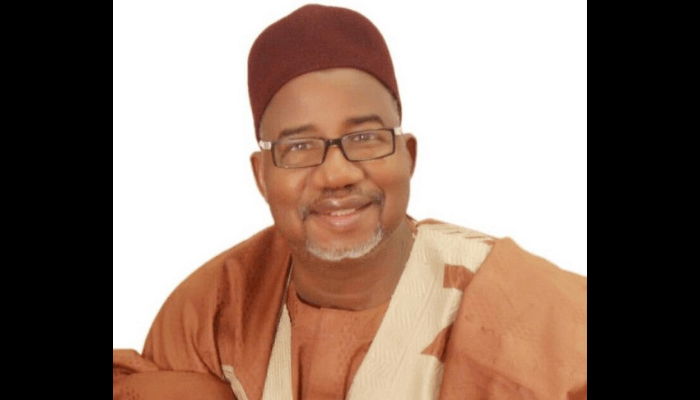
Afe Olowookere is a member of the House of Representatives. He is representing Akure South/North Federal Constituency. In this interview with a select group of journalists in Akure, Ondo State capital, he spoke about the 2018 Appropriation Bill and 2019 general election, among other issues. YOMI AYELESO was there. Excerpts:
Could you tell us what is delaying the passage of the 2018 Appropriation Bill?
The National Assembly is seriously working on the document submitted to us. Very soon, I am sure before the end of March, we will be able to pass the appropriation bill into law. It is not an easy thing as you assume it to be. There are over a thousand ministries, departments and agencies. For us to do a thorough job, we have to invite the leadership of these MDAs to defend the money appropriated to them in the year 2017. If you cannot justify what was given to you last year, you don’t deserve to be given extra money.
So, these things take time to attend to. We cannot just pass the bill leaving one or two out. We just have to attend to all of them. We are already doing that. You will agree with me that after the appropriation bill was presented to us, we went on recess for Christmas and New Year celebration. That took some from the time we were supposed to spend on the bill. By the grace of God, by the end of March, we should be able to complete the job.

Also, don’t forget that the appropriation law has a life circle of twelve months. It does matter if we start the implementation of the law in either May or June. We feel that if the budget was passed in December or January, that would be an end to the 2017 budget. But we want the executive, within the confines of the law, to execute the projects in the 2017 budget to a certain level.
And by the grace of God now, we are aware that at least 70 percent of the funds has been released to the MDAs. By January 50 percent was released across board. This February, 20 percent has been released. We believe that by the time we pass the 2018 appropriation bill by the end of March, the government would have achieved 80 or 90 percent in the implementation of the 2017 budget. That is commendable.
In the last ten years, no government budget has been executed up to 50 percent. So, it is a commendable performance even in the face of paucity of funds that the federal government is experiencing. It is the legislators that are driving these projects because we don’t want our government to be guilty of financial recklessness or whatever.
You seem to be a staunch supporter of local government autonomy. Why do you think the third tier of government should be autonomous?
My position coming from my own political background as a councillor at the local government level between 1991 and 1993, the period that can be referred to as the golden era of the local governments, I believe that there is nothing that is better than for the local governments to be autonomous. Now, there are two things that the state governments are using to hold down local governments. Number one is this issue of state-local governments joint account. Number two is the state independent electoral commission. I have sponsored bills on the abrogation of the two when we were considering constitutional review.

Yes, as it is, the Ondo State governor is correct by saying that it is unconstitutional. But I disagree that it is not practicable. It is practicable. But as at today, the constitution does not back it. Until we amend those two provisions in our constitution, that is, to abrogate the SIECs. As long as that exists, we will not have local governments that will be autonomous because the state governors will continue to use that instrument to determine the party that will win council elections.
You are aware that there has never been any state in the country where opposition parties won council elections. That is made possible by the state Independent Electoral Commission because who pays the piper dictates the tune. Even in Lagos when an opposition party won, APC candidate was declared winner and the opposition candidate was asked to go to court.
Between 1991 and 1993 that I served as a councillor, local governments were enjoying almost total autonomy. We were receiving allocations directly from the Federation Account. We were responsible for the recruitment of primary school teachers. Local governments were responsible for the recruitment of primary health care workers. It was the golden era of the local governments in the country. What we are having today is not local government. It is just local administration. There is a difference between local government and local administration. Today, no local government can do anything without taking instructions from the state. They only act the script that is written for them. This anomaly is through all the state.
Another instrument is that joint local government state government account. During the first term of Fayose in Ekiti, we heard that he would just call the chairmen, ask them what was the wage bills, give them that and additional two million naira to each of them and keep the rest. But if we abrogate that … Governors deliberately will not constitute the commissions so that they will not be compelled to conduct local government elections. That will give them a leeway to appoint caretakers.
Using caretakers to run local government is strange to the Nigerian Constitution. It is an amorphous arrangement and we will continue to say it is alien to our constitution and should not be allowed because these appointed caretakers are not responsible to the people. They can’t be accountable to the people. They were not voted for and this is why they are only answerable to those who put them there. This has not helped to strengthen and deepen our democracy.
I was one of the first set of legislators at the local government level. And that has helped me a lot. In fact the experience I gathered while in the council gave me an edge over and above my colleagues when I was a member of the Ondo State House of Assembly to outshine them. Also, the experience coupled with the one I had in the State Assembly gave me an edge over other first timers like me in the House of Representatives. Even if you are a professor, if you get to the legislative house, there are some things that require technicalities that your professorship will not enable you to do. It may take you two or three years to understand what’s going on there. There are technical ways of writing bills and motions. And by the grace of God, the 16 motions that I have moved so far in the National Assembly were written by me. I also prepared the six bills that I have sponsored by myself.
The amorphous arrangement that exists at the local governments today has deprived our people the opportunity of learning at that level so that they can become versatile either at the state Assembly or National Assembly level. That is why you will have some people in the National Assembly that will not even second a motion in four years. Local government autonomy is the best if we really say we are practicing democracy. If at that level, we can’t practice it, what is the essence of our democracy. Local governments should be run by democratically elected councils. It is there in the constitution. It says people should be allowed to participate in their government. And it is at that level that they can really participate in their own government.
Does National Assembly have the constitutional powers to determine the sequence of elections in the country?
Let me say this that the National Assembly has the constitutional power to determine the order of elections since they have to pass the electoral act. And the arrangement for elections is part of the electoral act. The act is the prerogative of the legislative arm. So, it is the constitutional duty of the legislature to do that.
Why did the lawmakers decide to change the order of elections released by the INEC?
By the special grace of God I read political science in the university. There is a concept that is called ‘majority tyranny’. And what does that mean? Majority tyranny means that even some times, the majority may be wrong. Since they are in the majority, their decision prevails. It happened to me when I was a member of the Ondo State House of Assembly when certain decisions were to be taken and I opposed it. We were 24 at that time and we put it to vote. It was 22 against two. Only one person supported me. But I was convinced that it was majority tyranny that was at play. Because I was not satisfied, I decided to be different. I wrote a letter to the speaker and the clerk then that I was not going to be part of it. That made my colleagues to regret that action.
As regards the re-ordering, it was an idea of some members. They brought it in form of a bill and it was discussed. But there were some of us who were not in support. There were some of us who argued that the re-ordering would even cost us more money because instead of having the election two times, it will now be three times. We are going to have the National Assembly elections in a day, the governorship and state House of Assembly in another and presidential election yet in another.
But since the majority opinion favoured re-ordering, it is binding on all of us. All of us will have to accept responsibility for it. So, I cannot come here now to say I was not part of it. But then, even though I have argument against it, I also have argument for it. This is not the first time we are going to have it like this. I remember that I contested a House of Representatives seat in 2003 on the platform of the Alliance for Democracy. That was the order of elections then. The National Assembly elections were the ones conducted first. So, this is not the first time and if it is not the first time, there is no need for cries. The president still has the power of assent. The National Assembly also has the power to override his refusal to assent to the bill.