In the last two years, we have engaged in evidence-based research activities focused on digital financial services (DFS) for financial inclusion. In all our engagements and debates, Africa’s mobile money success story, M-Pesa in Kenya, is frequently cited and referenced. However, DFS and financial inclusion have also been successful in other Eastern African countries.
The Kenya model is only one example. In this piece, we want to commence the discussion of the Nigeria model. We will start by benchmarking Nigeria with several peers and identify components we can label, the Nigeria model. The benchmark countries are Kenya and Ghana (our Western African neighbour that struggled with DFS until 2015). We will also look at Asian countries, India and Bangladesh, that have similar population sizes but have thrived when it comes to DFS.
Kenya
Kenya is the jewel of DFS and financial inclusion with the M-Pesa service. Vodafone’s Kenya associate, Safaricom, operates M-Pesa that was developed with the support of a grant from the Department for International Development (DFID). In 2007, M-Pesa commenced operations with a letter of no objection issued by the Central Bank of Kenya (CBK) after addressing due diligence issues relating to its legal status and other factors.

In 2016, about 6 billion transactions were conducted using M-Pesa, a monthly average of 614 million transactions. The service has 18 million Kenyan subscribers (more than two-thirds of the adult population).
Part of M-Pesa’s success can be traced to the relatively relaxed regulatory environment as the CBK permits the participation of banks and non-banks (including mobile network operators) in the provision of DFS. Today, financial inclusion stands at 69 percent with mobile money accounts outnumbering regular bank accounts.
Ghana
Despite the presence of mobile money in Ghana since 2009 when the first mobile money operator launched, financial inclusion remained a dilemma.
Not until 2015 when the Bank of Ghana (BoG) changed the regulatory framework guiding the delivery of DFS. The new guidelines explicitly stipulate that non-bank entities can be licensed and supervised by Bank of Ghana as dedicated e-money issuers (DEMIs). Before this edict, only deposit-taking financial institutions (banks) could participate as e-money issuers. Other non-bank entities could play through partnerships.

Today, Ghana has a 48 percent financially included population with about 36 percent of adults having a registered mobile money account. Apparently, permitting mobile network operators to participate was the key lever to jumpstart mobile money adoption.
Bangladesh
As at 2016, financial inclusion in Bangladesh stood at 34 percent with 13 percent of the adult population holding a mobile money account.
To say that mobile money in Bangladesh grew fast is an understatement. In 2014, Bangladesh added 12 million new registered accounts, making it one of the fastest growing markets by total accounts in the world. Bangladesh is also home to bKash, the second largest mobile money provider in the world, only behind Kenya’s mPesa. bKash is responsible for over 80 percent of mobile money transactions through its 80,000 strong agent network.
Since the introduction of DFS into the Bangladesh market in 2011, Bangladesh has operated a bank-led regulatory model that forbids the direct participation of non-bank operators. Today a total of 10 banks in Bangladesh are licensed to provide DFS. Other DFS providers have partnered with banks in order to offer DFS. In all, Bangladesh has a total of 19 DFS providers.
As for mobile money agents, Bangladesh is a competitive, non-exclusive market with new providers using established agents. Agents also serve multiple providers.
India
Financial inclusion in India stands at about 63 percent. But the journey there has been rough. Until recently, nearly all financial transactions were conducted in cash. India had (and still has) a vast unbanked population, most of whom stay in the rural areas. Currently, the estimated unbanked population of India is 40 percent.
Late in 2016, the government of India took revolutionary steps to end the country’s reliance on cash. In November 2016, in a demonetisation exercise, India’s prime minister banned the use of high currency notes (500-rupee notes and 1,000-rupee notes) with little warning. The exercise wiped out four-fifths of India’s paper currency, and millions of people suddenly couldn’t use cash for goods and services.
The following year after the demonetization exercise, mobile money wallet activity and number shot up significantly (about 475 percent) according to a MediaNama report. During the month of demonetization, 70,000 DFS agents were reportedly being signed up daily.
Another lever the Reserve Bank of India (RBI) pulled which has been key to triggering mobile money adoption was the establishment of Payment banks. Payments banks can offer payments services, but they cannot lend money. In February 2015, the RBI invited applications from interested providers. It cleared 11 applications which included mobile operators.
Today, mobile network operators can provide mobile money services along with the 21 public-sector banks and their 26 private-sector counterparts.
Another push that aided digitisation in India was the implementation of the India stack and Aadhaar identification system that uniquely identifies Indian citizens. Despite various legal challenges, Aadhaar has successfully captured the identity and biometrics of over 1 billion Indians since the 2009 launch.
Conclusion
Like Nigeria, all these countries have similar conditions in terms of rural populations and literacy, and yet, they are making progress with financial inclusion. Hence, these constraints are simply smokescreens that shield us from the real issues driving success.
So what’s common across the cases that have reported DFS successes? The first is the development of structures that support the entire value chain from product development and innovation to distribution. In Kenya and Bangladesh, this support was through grant funding for the development of M-Pesa and the rollout of bKash agent networks respectively. In India and Ghana, it was through direct private sector participation of the mobile network operators and other actors. The second lesson is the regulatory environment. Kenyan authorities encouraged innovation and decided to simply issue letters of no objection to licensed mobile operators. Ghanian regulators were wise to the fact that collaborative partnerships were not as effective as direct participation. In Bangladesh, given the difference between payments and banking, banks are allowed to establish subsidiaries (and different brands) with other more experienced players. Also, the sheer resolve of the Indian regulators in providing flexible frameworks for the advancement of financial inclusion.
Finally, the political will and courage of the Indian Government to embark on disruptive initiatives such as demonetization and Aadhar cannot be overstated.
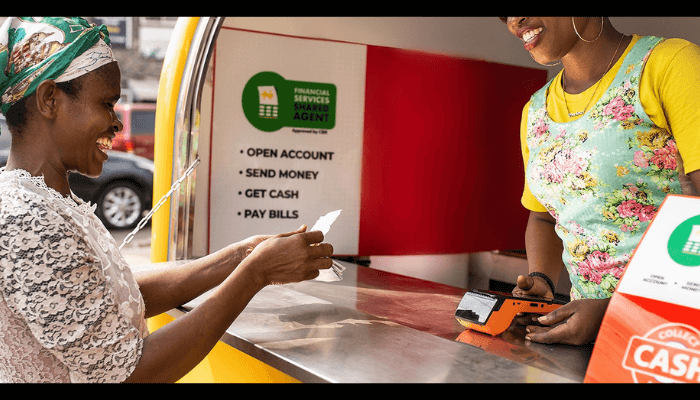
Like all other models, we can safely conclude that the Nigeria model also needs to support all value chain activities through strong political will and courage. In the absence of grants or other patient funding sources, we need to enable private sector operators to take the bull by the horn through flexible regulations that promotes a market-led environment. And most of all, we need to grow the distribution network of agents. Estimates have put this number in the areas of 180,000 to 200,000 agents to meet our population and geographical spread. Most of all, all ecosystem actors – operators, regulators and consumers – need to be agile enough to learn and re-learn.
Ibukun Taiwo & Olayinka David-West