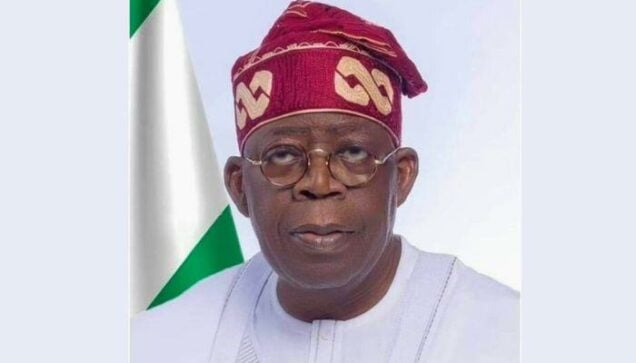
It is no longer news that the Monetary Policy Committee (MPC) of the Central Bank of Nigeria (CBN) could not hold its first meeting for the year due to executive-legislative politicking that has continued to delay the confirmation of soon-to-be MPC members. To make up for this, the CBN in a statement signed by the Governor, Godwin Emefiele, maintained the decisions that were taken in the last meeting of 2017. While this was a timely move that helped calm financial markets, some analysts criticized the development and tagged it a one-man committee decision.
However, even though it is true that monetary policy decisions in Nigeria should be taken by a 12-member Committee as provided in the CBN Act 2007, it is important to mention that there are examples where powers to take such choices are vested in only one individual. A typical example is the Reserve Bank of New Zealand where the Governor takes monetary policy decisions after briefings from a monetary policy committee that comprises senior bank officials. The committee is not backed by legislation, the members do not vote and minutes of the meetings are not published.
This committee may be likened to the Monetary Policy Technical Committee (MPTC) of the CBN that is saddled with the task of reviewing monetary developments and making recommendations to the MPC. Other countries where the central bank governor takes full responsibility for monetary policy decisions are Israel, Madagascar, Malta and Papa New Guinea. Nevertheless, the prevalent practice is for a central bank to have a committee that is saddled with powers to take monetary policy verdicts. The size of such committees however differs depending on country-specific structural and institutional arrangements. For example, the Bank of England (BOE) has nine members, Federal Reserve (FED) 12 members, Bank of Japan (BoJ) nine members and Bank of Canada (BoC) six members.
Apart from the size of the committee, empirical studies have shown that the Governor of the Central Bank who is chairman and head of the committee is rarely on the losing side when members vote for policy decisions. For example, in an attempt to understand the voting pattern of the CBN sometime ago, I found that the Governor, the four deputy governors and the three members nominated by the Governor, in most cases have similar voting pattern. This is understandable given that the preference of the Governor and the deputy governors would normally be similar as they are saddled with the day to day management of the bank. In addition, because the CBN governor nominates three members to the committee, these persons would also likely have similar inclination with the Governor.

Therefore, when the members cast their votes, the Governor is in most cases on the side of the majority. As such, the monetary policy stance taken by the CBN in the absence of the MPC meeting in January 2018 would not have been different if the committee had met. This therefore means that the public in general and financial markets in particular would normally consider as ‘news’ statements by the Governor of any central bank, including the CBN. Whether such ‘news creating’ comments by Central Bank governors result in ‘noise reduction’ in the financial markets is another issue altogether.
The CBN Governor made the headlines in the past week when he opined that the MPC may cut interest rate before July 2018. Specifically, he was quoted as saying that ‘Once inflation gets to low double digits and high single digit happens, then it should be easy for the MPC to begin to look at easing’. He was further quoted as saying that “I want to think that between the end of the first and second quarter, we should begin to see easing’.
In technical parlance, what the CBN Governor has done is to provide some form of forward guidance for short-term monetary policy posture based on his expectation for inflation. Forward guidance is an approach of monetary policy communication where Central Banks attempt to explain what their future monetary policy actions will be. By using this messaging approach, the CBN Governor may be trying to calm financial markets and check the general uncertainty resulting from the inability of the MPC to hold its first meeting for the year. Besides, verbal forward guidance which the Governor used is considered to be an effective policy tool for signaling accommodative monetary policy stance as opposed to those made in written communications like speeches and communiques.
Governor Emefiele no doubt has done well in communicating the monetary policy posture of the CBN in the absence of a committee decision. The timing of his verbal forward guidance of likely monetary easing if and when inflation declines further is apt. However, it is important to appraise his assessment that inflation may moderate in the coming months.
A review of the year-on-year headline inflation trend shows that it weakened from 15.90 percent in November to 15.37percent in December 2017 while core inflation which excludes certain items that face volatile price movements also moderated marginally from 12.2 percent to 12.1percent. Food inflation was down from 20.31percent to 19.42 percent. When the 12-month moving average method of calculating inflation is considered, we see that headline and core inflation rates declined from 16.76 percent to 16.50 percent and 13.93 percent to 13.46 percent respectively, while food inflation increased from 19.39percent to 19.55 percent. While historical inflation rates are useful for trend analysis, future inflation rates are more important given the macroeconomic implications of price movements.

Besides, inflation is a lagging indicator, meaning that it changes only after the economy has begun to follow a particular pattern or trend. Thus, is inflation likely to moderate further in early to mid-2018 as hypothesized by the CBN Governor based on developments in the economy in the last couple of weeks and months?
The perennial fuel scarcity and poor power supply that were magnified in November and December last year have continued till date. Prices may therefore remain sticky downwards given the effect of these on the cost of doing business and general economic and commercial activities. Although imported inflation has been muted because of the relative stability in exchange rate, domestic challenges such as the petrol shortages and epileptic power supply will continue to result in cost-push inflation.
The recovery in global oil prices is good for revenue accumulation and external reserves accretion which will further give the CBN the leeway to support the naira. The downside however is higher cost of subsidizing imported petrol. Government will either continue to be burdened by huge subsidy payments or non-payments which results in scarcity of petrol or take measures to completely liberalize the downstream petroleum sector. Above all, politicians are ready to commence their spending spree with implications for money supply and inflation. When all these parameters are considered, my expectation is that inflation may remain at mid-double digit, thereby constraining the CBN from taking accommodative stance if the preference is solely to ensure price and exchange rate stability.
Maxwell Ekor
Maxwell Ekor writes from Abuja