Nigeria’s declining rice imports from major sources such as Thailand and India has indicated the need to expand on efforts to empower more farmers to cultivate the staple year-round, and also improving extension services to offer the required support.
The volume of rice exports to Nigeria from Thailand, one of the world’s leading rice producers have dropped sharply between 2015 and 2017, in what appears to be a result of ongoing efforts in the country to reverse the $1 billion spent on rice imports annually.
Data by the Thailand Rice Exporters association shows that 644,131 metric tonnes of rice were exported to Nigeria in 2015, while 58, 260 MT was exported in 2016, and as at September 2017, rice exports to Nigeria stood at 20, 973 Metric tonnes. This represents a 58.5 percent decline between January and September 2016 and the corresponding period in 2017. However, when compared to 2015, Thai rice exports to Nigeria have dipped 96.74 percent.
Considering the surge in exports to neighbouring countries such as Benin and Cameroun, it also dawns on industry watchers that the volume of smuggling has increased significantly. The formal restriction on rice imports, with a discouraging 70 percent tariff, however, implies that local producers stand a chance of leveraging on this to scale up exponentially.

REA ALSO: FG signs MoU with Biovaccine for local production of vaccines
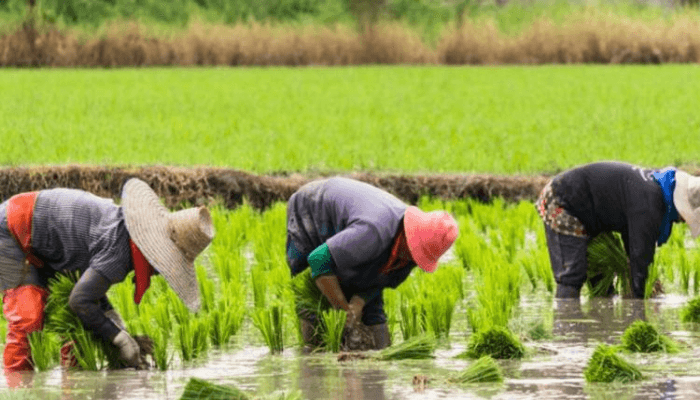
“I stopped farming rice for more than 15 years but the ban imposed on rice importation has now made me go back to farming,” said Sunday Oketa, chairman of rice farmers in Nkeleke Unuhu community, a rural settlement in Izzi Local Government Area (LGA) during a visit to rice farms in Ebonyi state.
“Importation of foreign rice was responsible for the Made-in-Nigeria rice to become relegated, but since the ban on rice importation, we farmers have been encouraged to return to our farms and cultivate more rice,” Oketa added.
David John Dada, head, Out-growers Unit at WACOT rice mill, however, observed that the Anchor Borrowers’ Programme is not fully deployed by the government and it cannot help to stop importation as it is not reaching many bona fide farmers. According to him, the imported rice remains cheaper than the locally-produced ones, putting local producers at a disadvantage.
A lot is still required for local production to scale up, particularly as it pertains to cost of production, and challenges with smuggling.

Garuba Dandiga, Kebbi state’s commissioner for agriculture told BusinessDay, that in rice cultivation, “the source of irrigation is usually through wells and water pumps”, invariably the cost of fuel and what is required to irrigate is substantially high and hampers what would have been profitable for farmers. Other factors such as high inputs costs and even availability of quality variants as well hamper the ability of farmers to produce more than presently being done.
Tunji Owoeye, group managing director, Elephant Group PLC, who also chairs the Rice Investors Group, believes restrictions on importation have “some positive impacts because it is making value chain operators to look inwards and ramp up production. Maintaining the tempo of paddy production, and expanding milling capacity also needs to be stepped for Nigeria’s aspirations to be met. But, what we need Government to do is to enforce restrictions at the borders to ensure that all the smuggled rice no longer come in.”
However, like other stakeholders, Owoeye reiterates that “the major issue is still smuggling. If the issue of smuggling is not dealt with, it will set back the whole achievements (in ramping up rice production).”