|
Getting your Trinity Audio player ready...
|
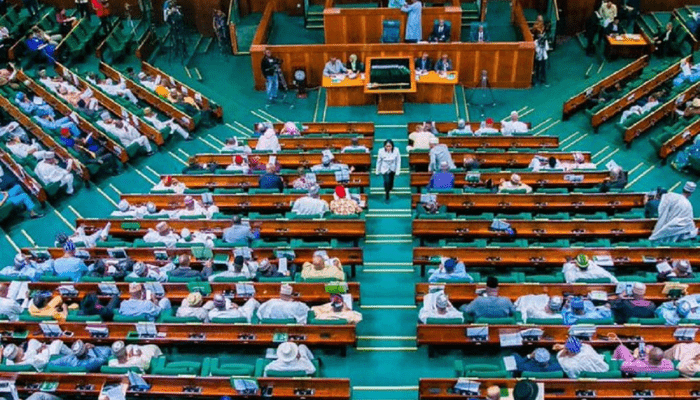
The House of Representatives has passed the bill which seeks to establish Electoral Offences Commission and Tribunal in Nigeria, through third reading.
The Commission which is to be headed by a chairman who has held office as a Judge of a Superior Court of Record, not below the rank of a retired Justice of Court of Appeal, shall establish offices in the 36 states of the Federation and FCT.
The Tribunal which is considered as a Superior Court shall have equal status with any High Court, is to be headed by a President along with 17 Judges, who shall be appointed by the President on the recommendation on National Judicial Council (NJC).
The bill also provides for stiff punishments for various political offences committed by individual or political parties.

Meanwhile, the bill provides for forfeiture of any fund or assets given to any political parties, such party is guilty of an offence and in conviction shall not liable to a fine of N500,000.
READ ALSO: Nigerian Military decimates bandits’ camps, kills scores in North
According to the provisions of the bill, every electoral offence shall be bailable for the purposes of the Criminal procedure, every person arrested may be released from custody on his executing a bond with sureties as the officer of the Commission requires.
The bill also prohibits political parties from using slogans tainted with abusive language directly or indirectly likely to injure religious, ethnic, tribal or sectional feelings; as well as use of places designated for religious worship, police station and public offices for political campaigns, rallies and procession.
Anyone found culpable shall be liable to one year imprisonment or maximum fine of N1 million while any person or group of persons who aids or abet a political party shall be liable to N500,000 fine or three years imprisonment.

The recommendations were contained in the 69-page report of the House Committee on Electoral and Political Matter, chaired by Aisha Dukku (APC-Gombe).
Aisha Dukku while speaking on the report, explained that the report was a product of several contributions from different organizations and professional bodies, such as: Nigerian Bar Association (NBA), Independent National Electoral Commission (INEC), International Federation of Women Lawyers (FIDA) and various political parties.
The committee of the whole, Chaired by the Deputy Speaker of the House, Lasun Yusuf, passed the bill after several amendments where made by the members.
However, efforts by Ossai Nicholas Osai (PDP-Delta), to step down the consideration of the report to allow members ample time to scrutinize the document, was rebuffed by the Deputy Speaker, noting that members already had the document for more than four weeks.