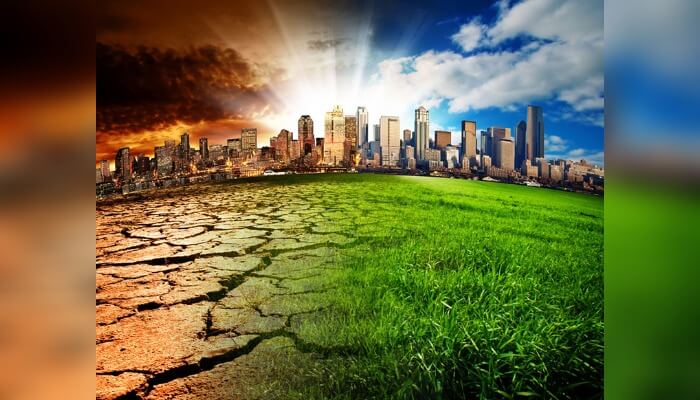
Water connects sectors, as they all need water to operate sustainably. The inextricable linkages between water, energy and food require a holistic approach if water and food security, sustainable agriculture and sustainable energy production are to be ensured. Inter-linkages are compelling governments, the private sector, communities, academia and other stakeholders to explore integrated solutions. This approach eases pressures and helps explore development avenues based on sustainable and efficient use of limited resources. This interlinking approach requires continued dialogue between the different communities, highlighting the significance of forums like the CoP23 and the upcoming World Water Forum in March 2018 in Brazil, to meet the Paris Agreement goals.
READ ALSO: Herders-farmers conflicts: The climate change connection
Optimal water management and investment in water infrastructure require a top-down and bottom-up integrated strategy. Therefore, local solutions for local problems are often most suited to meet water challenges, as highlighted by Aziza Akhmouch, acting division head at the Organization for Economic Co-operation and Development (OECD),
“Cities that are resilient are actually cities that fix upstream their water problems.” The profound knowledge and mindful resource management for seamless adaptation already exist. It simply requires being shared across sectors as a means to best confront the adverse effects of climate change. It is increasingly evident, for example, that efficient water usage in agriculture is possible. Up to 70 per cent of water is consumed by agriculture, compared to 20 per cent by industry and 10 per cent for domestic needs. The agricultural sector, through shared information, could follow best practices pioneered in unrelated areas by applying shared experiences. “We would be wise to apply lessons from across the world, even traditional rural populations in Africa or Asia, which have the potential to inform innovative, sagacious and responsible resource management, to adapt our planet to climate variation’s onslaught. The knowledge is there, we just have to listen and tap into it,” explains Maggie White, Manager International Policies, Stockholm International Water Institute (SIWI), Co-Chair, Alliance for Global Water Adaption (AGWA) and Steering Committee Member of the ClimateIsWater Initiative.

READ ALSO:Promoting sustainability and climate resilience during a pandemic
Loïc Fauchon, honorary president of the World Water Council (WWC) which coordinates the ClimateIsWater initiative, moderated the outcomes discussion from the Water Action Day. He indicated that “Innovative technical solutions are key to have better and cheaper solutions that drive global water security.”
He further underscores, “The political obligation of cooperation on all levels–from local to basin-wide, to city level, national and international level in governance, financing and knowledge sharing–this should translate to enhanced efficiency in optimized integrated water management and should be complemented by horizontal collaboration between all sectors including the 5 main ones: water, energy, food, health and education.” He continues by saying that, “To ensure water security, government agreements are needed: A global pact under the UN umbrella to provide a further framework for implementation of the climate change goals and commitments and financial engagements from development banks and funds, but also local pacts and agreements, per water basin and metropolis.”
Creative solutions for sustainable agriculture under a changing climate necessarily carry water at their core: drought-resistant crops, improved salt tolerance of different crop varieties, enriched seed varieties, developed cultivation practices such as conservation agriculture, improvements in soil organic carbon, organic practices. By sharing specialised experience and wisdom across the agricultural, hydro and energy arenas, climate-smart solutions have the potential to be three times as effective. And the most recurring factor in this equation is water dependency and vulnerability. “Some of the smartest applications of sustainable farming come from countries and regions such as the south of Morocco or Pakistan, to name just a few, which are naturally poor in access to water from rainfall and riverbeds”, comments James Dalton, Coordinator, Global Water Initiatives, International Union for Conservation of Nature (IUCN).
“Climate change impacts freshwater availability, but the greatest impact is made evident in how we manage precious resources. Water scarcity is not the only issue; mismanagement is. To this end, we need to tackle how water is distributed globally. Despite Brazil, to mention an example, being home to nearly one-fifth of the world’s freshwater, Sao Paulo recently lived through one of the biggest crises in its history when it experienced an unparalleled drought. Furthermore, at this very moment, droughts are also being experienced across the world in places like the northern U.S., Australia and even China. In Puerto Rico, the opposite is true. Despite a horrific flood following a mega-storm, less than half of the island’s population had access to drinking water,” highlights World Water Council President, Benedito Braga.

Modestus Anaesoronye