Oil reached levels last seen more than two years ago as traders began to price in geopolitical risks from Saudi Arabian King Salman’s anti-corruption drive just weeks before major producers gather to discuss prolonging historic production caps.
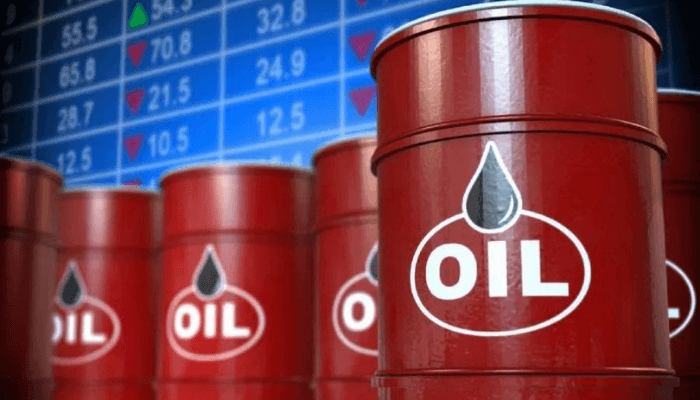
Brent crude was up 2.84 percent to $63.83 per barrel on Monday, according to Bloomberg data.
Futures jumped 2 percent in New York, closing above $55 a barrel for the first time since July 2015.
“It is very positive for Nigeria. We should begin to see improved foreign interest in our fixed income instruments and equities, given that higher oil prices spurs positive sentiments about Nigeria,” said Ayodeji Ebo, managing director at Lagos-based financial advisory firm, Afrinvest Securities.
“It sends a signal to foreign investors that the Central Bank has firepower to defend the naira.”
Oil has advanced for four straight weeks in New York on signs that a global glut is shrinking in response to output caps implemented by the Organization of Petroleum Exporting Countries and allied producers including Russia.
Higher oil prices is positive for Nigeria, whose 2017 budget is pegged against an oil price of $44.5 per barrel.
It also holds upside for the naira which has appreciated in the past months against the dollar helped in part by increased CBN supply on the back of higher oil revenue.
The naira traded at N360 per US dollar at the newly created Investors’ and Exporters’ window on Monday, while it continue to tared tightly at N306 per dollar at the CBN window.
The country’s external reserves currently sit at a two-year high of $33 billion, according to CBN data.
At a Nov. 30 gathering, Saudi Arabia, Iraq and other major suppliers are expected to make the case for extending the limits beyond their March expiration.
The purge in Saudi Arabia (under the guise of an anti-corruption push) eliminated potential rivals to Crown Prince Mohammed bin Salman and included a member of the royal council overseeing state oil producer Saudi Aramco and one of its directors.
The arrests of princes, government ministers and billionaires may cast a shadow over the Nov. 30 OPEC meeting, analysts say.
Meanwhile, the minister for Nigeria’s oil-producing Delta region said on Monday the government was ready to meet militants days after they called off a year-long ceasefire on Friday.
Usani Uguru Usani asked the Niger Delta Avengers to be patient and said the government was pushing through development schemes in the southern territory where rights groups have long complained about poverty and pollution.
Nigeria pumped some 1.861 million barrels of crude oil per day in August, according to most recent data from OPEC, as production recovers from militant attacks last year. That’s 8 percent higher than it pumped in July and 20 percent higher than the 1.557 million barrels daily pumped in 2016.
“I wouldn’t expect a change of strategy for Saudi Arabia” in terms of production and OPEC policy, Rupert Harrison, chief macro strategist at BlackRock International Ltd., said in a Bloomberg television interview monitored by Businessday. “But clearly the risk is always from disruption, and that’s the uncertainty that hangs over this and is always very hard to call.”
LOLADE AKINMURELE, OKAFOR ENDURANCE & DIPO OLADEHINDE