



|
Getting your Trinity Audio player ready...
|
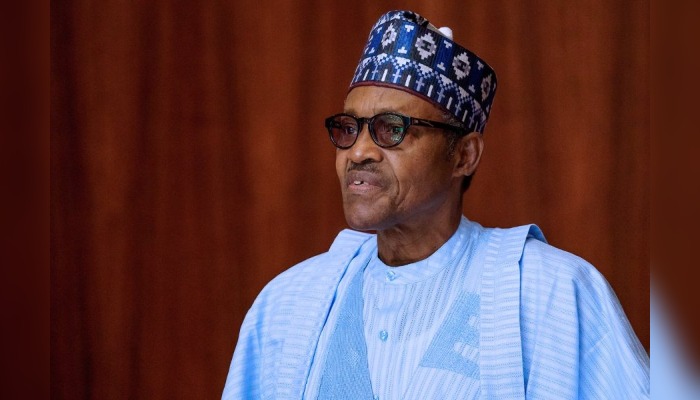
As President Muhammadu Buhari presents the 2018 Appropriation Bill to the National Assembly today, there are already concerns that the budget would, again, face hitches like in the past, particularly as copies of the Medium Term Expenditure Framework (MTEF) and Fiscal Strategy Paper (FSP) were yet to be circulated among the federal lawmakers as at last night.
Buhari’s government had assured to use the 2018 budget, to correct the anomalies and delays which had been common with the federal annual budgets in recent years but indications have emerged that the National Assembly will be unlikely to pass the budget before the end of the year.
The MTEF/FSP is a medium-term strategy, which among other things contains assumptions on which the national annual budget should be premised.
According to section 18 of the Fiscal Responsibility Act, “Notwithstanding anything to the contrary contained in this Act or any other law, the Medium-Term Expenditure Framework shall: (1) be the basis for the preparation of the estimates of revenue and expenditure required to be prepared and laid before the National Assembly under section 81 (1) of the Constitution.
(2) The sectoral and compositional distribution of the estimates of expenditure referred to in subsection (1) of this section shall be consistent with the medium-term developmental priorities set out in the Medium Term expenditure Framework.”
BusinessDay was reliably informed that members of House of Representatives had not received copies of the Medium Term Expenditure Framework (MTEF) and Fiscal Strategy Paper (FSP), less than 20 hours before formal presentation of the 2018 budget estimates by the President.
READ ALSO: Buhari’s proposed budget heightens support for government’s ease of doing business drive

Buhari is scheduled to lay the N8.60 trillion budget estimates before the joint session of the National Assembly by 2 pm today (Tuesday).
Abdulrasak Namdas, Chairman, House Committee on Media and Public Affairs via phone chat told one of our correspondents that copies of the MTEF/FSP sent to the House penultimate week has not been circulated.
“I have not seen anything yet,” he said. “We have not done anything yet,” the House spokesman explained.
He however assured that the National Assembly will pass the MTEF/FSP before considering the 2018 budget as stipulated by the Fiscal Responsibility Act.
Johnson Chukwu, Managing Director of Cowry Assets, in his reaction say these kinds of delays and developments violate provisions in the Fiscal Responsibility Act 2007 and have grave implications for the entire budget and economy just coming out of a recession.
“The National Assembly should consider the implications of considering a national budget ahead of their own review and approval of the MTEF. This is because the MTEF defines the parameters with which the budget assumptions are based on,” Chukwu told Businessday in a telephone conversation.
“Ordinarily, I would have thought that the Fiscal Responsibility Act required that the MTEF/FSP is considered ahead of the presentation of the budget.
“But if the budget is now presented ahead of the consideration, though it has been submitted to the NASS, it is not proper unless we are going to assume that the assumptions in the MTEF/FSP would be adopted as they are, then there is actually no need sending to the National Assembly for consideration.
“The key to this is that we may now go through the period of attrition where the budget will now be returned to incorporate the real assumptions adopted by the NASS and we keep going back and forth.”
According to the Medium Term Expenditure Framework and Fiscal Strategy Paper transmitted earlier by the President to the National Assembly, the aggregate expenditure for 2018 fiscal year is N8.6 trillion against N7.44 trillion for 2017, showing a difference of N1.16 trillion or 15.5 per cent increase compared to the 2017 Appropriation Act.
The total sum of N6, 128,290,144,686 is expected from oil sector while N5, 596,745,945,657 is expected from non-oil subsector for the incoming year.
Total sum of N350 billion proposed for special interventions (recurrent); N2,597,246,628,719 is for capital expenditure for 2018 while deficit is pegged at N2,948,777,905,500 (2.61% of GDP).
The total oil production is pegged at 2.51 million barrels per day while budgeted oil production volume net incremental was pegged at 2.3mbpd; $45 oil benchmark; while the exchange rate was pegged at N305/$ for 2018 fiscal year. The fiscal deficit is to be maintained at 3 per cent level as stipulated in the Fiscal Responsibility Act, 2007 but at an average of about 1.93 per cent of GDP, but declining to less than 1 per cent by 2020.
READ ALSO: Nigeria’s 2020 budget needs a rethink

Expected to accompany the President to the National Assembly chambers are key members of the Federal Executive Council namely: Udoma Udo Udoma, Minister of Budget and National Planning and Kemi Adeosun, Minister of Finance.
Others are Ita Enang, Senior Special Adviser to the President on National Assembly Matters (Senate) and Ismaila Kawu, Senior Special Adviser to the President on National Assembly Matters (House of Representatives). But ahead of the presentation of the 2018 budget to a joint session of the National Assembly today, lawmakers from both chambers have intensified their opposition to the budget presentation.
Findings by BusinessDay revealed that this may not be unconnected with poor implementation of the 2017 budget. At an interactive session with the joint committee on Appropriation and Finance last month, Finance Minister, Kemi Adeosun, had put capital releases at just N440.9 billion out of the capital expenditure of N2.177 trillion for the 2017 budget.
With speculations that the National Assembly will embark on Christmas break in the next five weeks, it is yet to approve the N135.6 billion virement, $5.5billion foreign loan as well as 2017 budgets of over 38 federal agencies.
Lawmakers are also unhappy that the Executive is yet to release Constituency Projects running into N100 billion.
A top National Assembly source insisted that lawmakers from the two chambers are not in a hurry to pass the budget unless the Executive releases funds for constituency projects, which they would showcase to the constituents as the 2019 elections approach.
On Monday, it emerged that the increasing tension around the President’s bid to present the budget proposal had degenerated to the extent that some groups of lawmakers had begun to perfect strategies of truncating the budget presentation.
The body of opposition which cuts across political and ethnic-regional boundaries in the National Assembly anchored their protest against the budget presentation on what a lawmaker described as the attempt by the Executive arm of government to sabotage their political fortunes in their constituencies.
“How else can one’s political career be frustrating? Since 2015, we have never had a single budget that recorded 50 per cent success in terms of implementation, particularly with regards to capital projects. We had hoped that all these would be corrected in the 2017 budget but no! When we asked questions, no concrete response is forthcoming; and you expect us to just keep quiet and allow the President to present another budget that may go the same way.
READ ALSO: Buhari to sign N10.8trn revised 2020 budget Friday
“Remember that the 2018 budget is the last one to be executed fully by this administration. What will the President count as his legacy in terms of budget implementation? Also, take note that all these budget failures have very damning effects on members of the National Assembly who are the real representatives of the people. What do they expect us to tell our constituents? It is really a sad moment for us,” the source said. Investigations also indicated that the Senate leadership met with the two-party caucuses on Monday, during which it got assurances that the budget presentation would not be disturbed.
Meanwhile, the new Secretary to the Government of the Federation (SGF) Boss Mustapha, met briefly with the Senate leadership on Monday for reasons not unconnected to the 2018 budget presentation.
For over 45 minutes, the SGF met behind closed doors with Senate President Bukola Saraki and other principal officers during which he was reassured that the Senate was not leaving any stone unturned to have a hitch-free budget presentation.
Aside from the peace meetings, a meeting of the Body of Principal Officers of the National Assembly has been scheduled to hold on Tuesday morning in the National Assembly to review the success or otherwise of the peace efforts so far made.
Meanwhile, the management of the National Assembly via a circular with Reference Number NASS/189/3/1 dated 6th November 2017 directed all the staff to stay away from their offices on Tuesday.
“President Mohammed Buhari will be presenting the 2018 budget estimates to the joint session of the National Assembly on the 7th November 2017 by 2.00 pm.
“All staff are by this directive to stay away from their offices except those whose names have been submitted to Sergeant-at-arms as staff on essential duties.”
However, Businessday checks reveal last minutes efforts were however being put in place yesterday by relevant Ministers to ensure a hitch-free presentation.
But Senate Leader, Ahmed Lawan, while speaking with State House Correspondents after meeting with President Muhammadu Buhari advanced reasons why it may not be possible for the 2018 budget to take off in January, next year.
Lawan stated that the National Assembly needed to “do a thorough job that should ensure fair, just and equitable distribution of projects across the country. The National Assembly will not sacrifice such noble requirements, to rush into approving the budget.”
He also cited the poor implementation of the 2017 budget and late presentation of the 2018 budget, as some of the factors that may mar such projections.
Tony Ailemen, Kehinde Akintola, Owede Agbajileke, Innocent Odoh & Harrison Edeh



