|
Getting your Trinity Audio player ready...
|
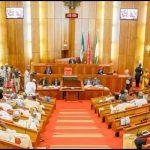
Hope rises for a possible passage of the Petroleum Industry Bill (PIB), as the three major contentious components of the bill are set to be presented for public hearing by the Senate in about three weeks from now.
Also, the Nigerian National Petroleum Corporation ( NNPC) said that it would start the incorporation joint venture (IJV) in 2019 after it would have completely exited the cash call arrangement by 2018.
According Osten Olorunisola , the former director of the Department of Petroleum Resources and now consultant to the Senate on the bill, he said that the bills are drafted in such a way that there would be level playing field for all stakeholders.
The Bills according to Osten Olonisola who spoke at the 55 anniversary of the Oil Producing Trade group (OPTS) Of the Lagos Chambers of Commerce and Industry (LCCI ) in Lagos mentioned the bills as: the Host community bill, fiscal bill and the Petroleum Administration bill . The Petroleum Industry Governance bill (PIGB) which is the forth part of the bill have been passes earlier.

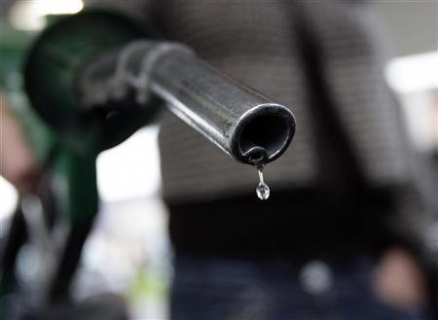
While given further insight to what is expected from the bill, Olorunisola said it is not good for Nigerian oil and gas industry to have the highest production cost in the world , replete multiple taxes, no refining capacity and lack of investment, all of which have contributed to the problems of the industry. He said all these must be mitigated against so that investors can be attracted into the industry.
According to him, in the new bill emphasis is on results, reward of excellent rather than penalties, sustainability, stability and adaptability.
Royalty he said, would be predictable while windfalls and taxes would be equitably shared among stakeholders. He said incentives would be based on value addition or creation, adding that by the time the bill is out it would be radical in terms of legislative provision.
Maikanti Baru, group managing director of NNPC who was represented by Roland Ewubare, group general manager NAPISM said arrangements are being finalised to see that the incorporation Joint venture scheme takes off in 2019.
He said bilateral agreement have been entered into with each of the joint venture companies for a five year tenure and that royalties are being paid in kind now and not in cash.

Osagie Okubor, chairman OPTS and shell groups of companies in the country, in his remark, he said, “over the years as the needs for Nigeria has grown, so has the oil and gas industry constantly responded positively. Even in the face of economic challenges and low oil price regime , OPTS members have shown resilience and commitment
In his comment, Bismark Rewane, managing directors of Financial Derivatives, he said that the country still need to invest in oil and gas to bring out more oil to the markets so that the country can make more money.
Meanwhile Vice President Yemi Osinbajo, has said Nigeria must use its oil wealth to prepare for a future when the world no longer runs on fossil fuels, the vice president said .
He said the nation, a member of the Organization of the Petroleum Exporting Countries, needed to develop renewable energy and help other businesses flourish to “adjust to the reality of the dwindling significance of fossil fuels”.
“It is no longer a question of if but when,” Osinbajo said, referring to global efforts to shift away from oil as a fuel.
“Oil-rich countries, such as ourselves, have an obligation to prepare for a destiny that may well be beyond oil,” he told the Oil Producing Trade Section (OPTS) conference in Lagos.
Nigeria’s government has long talked of diversifying Africa’s largest economy away from reliance on oil, but earnings from output of crude still provide two-thirds of state revenue.
The vice president called on oil and gas majors in Nigeria, many of them represented in the audience, to invest in renewable energy research and development to help Nigeria prepare for a “clean energy economy” and the “post-oil world”.
Ailing power infrastructure means that, despite its oil wealth, blackouts are common in the nation of 180 million people. Many businesses rely on costly generators to operate.
The government has previously said it wanted to diversify the power supply.
In the past few months, it has announced a $5.8 billion deal to build the 3,050 megawatt (MW) Mambilla hydroelectric plant, and purchase agreements with 14 solar companies for 1,300 MW of power, are part this drive.
Osinbajo said the country needed to reduce “bureaucratic bottlenecks” in contract awards and approvals.
This week, the World Bank said Nigeria was among the 10 economies showing the most notable improvement in its Ease of Doing Business list.
Nike Akande, President LCCI her speech said commended the choice of the theme of the occasion which is Nigerian: An investor-friendly Destination . She said the theme addresses one of the most important priorities for us as nation and that she has no doubt that the speakers will do justice to the topic.
“Oil and Gas sector remains very critical to the economy of our country. We need the resources from the sector to power our economy diversification drive as contained in the economic Recovery and Growth”, she said.
Olusola Bello