The Senate has expressed concerns that Nigeria could return to economic recession due to poor implementation of the 2017 budget.
Specifically, the upper legislative chamber raised the alarm that the Central Bank of Nigeria (CBN) spent $9billion to stabilise the naira.
It expressed worry that with barely three months to the end of the year, only about 14 percent of the N2.177trillion capital component of the 2017 budget has been released so far.
Recall that the then Acting President Yemi Osinbajo signed the N7.441trillion 2017 budget into law on June 12, 2017.

To this end, it summoned the Minister of Finance, Kemi Adeosun and her counterpart in Budget and National Planning Udoma Udo Udoma, to appear before it in plenary to explain the failure to release money to fund the budget.
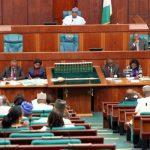
Two separate motions which were passed by the upper chamber on Tuesday on the issues of recession and budget implementation raised critical questions about government’s intention in reviving the economy.
One of the motions titled: ‘Inadequate releases in the 2017 Budget and the need to expedite releases in Order to Stimulate the Economy’ was sponsored by Gbenga Ashafa (APC, Lagos East) and co-sponsored by six others.
Earlier this month, the National Bureau of Statistics (NBS) had announced that the country had exited recession after it reported that the economy grew at 0.55 percent in the second quarter of 2017.
But in their separate contributions, senators expressed worry that failure to expeditiously release the capital component of the budget to Ministries, Departments and Agencies (MDAs) might return the country to recession.

Ashafa urged the Federal Government to maximize the upcoming dry season in funding the budget infrastructural projects contained in this year’s budget tagged ‘Budget of Economic Recovery and Growth’.
“The Senate concerned that since the 2017 budget was assented to by the President, about N310 Billion Naira has been released by the Federal Government to Ministries, Departments and Agencies as funding for capital projects which is far too low to stimulate the economy to address our present economic challenges.
“Worried that the governor of the Central Bank of Nigeria in line with the prevalent concern of financial analysts stated during the Monetary Policy Committee meeting of the bank which took place on 25th July, 2017 that ‘the government needs to move quickly to start capital expenditure spending as contained in the 2017 budget to reflate the economy in a way that will impact Nigerians positively’.
“Aware that the livelihood of millions of Nigerians is directly tied to the funding of the budget and execution of projects, considering that the more projects are executed, more Nigerians would be engaged at various levels of the employment value chain,” Ashafa said.
The motion was seconded by the Deputy Senate President Ike Ekweremadu.
Also in another motion, the upper legislative chamber raised the alarm that the Central Bank of Nigeria (CBN) spent $9billion to support the naira and stabilise the exchange rate of N360 to $1 (parallel) and N305 to $1 (official).
It decried the lack of harmonisation between fiscal and monetary policies with a view to drastically reducing the high interest rate, which they said has adversely affected borrowing for investment by the real sector of the economy.
The legislative body therefore urged the nation’s “Economic managers to remain focused and ensure that the current weak growth of a mere 0.55% is built upon and increased substantially in the months and years to come”.
The motion titled: ‘Stabilizing and sustaining postrecession growth of the economy’ was sponsored by Yahaya Abdullahi (APC, Kebbi North).
The motion which was unanimously passed by senators lamentated that “relatively stable exchange rates of N365 to the dollar (parallel) and N305 to the dollar (official) was achieved at a great cost to the nation” adding that “the Central Bank has spent nearly $9billion to support the Naira”.
Asking the Executive arm of government to do everything possible to avoid relapsing into another recession, the Senate “urged the national economy managers to remain focused and ensure that the current weak growth of a mere 0.55% is built upon and increased substantially in the months and years to come”.
The motion also “urged fiscal authorities to drastically reduce the accumulation of domestic debt in order to free the market for better access by the private sector”.
In his submission, Barau Jibril (APC, Kano State) who seconded the motion asked that the managers of the nation’s economy be put on their toes so that they would not be complacent.
According to him, the failure to release money to fund the budget has become a serious threat to the economy.
In his own contributions to the motion, Dino Melaye (APC, Kogi State) claimed that “our economic managers are just joggling the economy using ways and means to manipulate it”.
He added: “If it is true that the foreign reserve has grown from $25 billion to $34 billion, why are we incapacitated in funding the 2017 budget? We must say the truth. We must go back to the drawing board and take key decisions. We must engage in massive production and we must engage in massive spending too. What we have done is not a geniune approach to addressing the problem of the economy and getting out of recession.”
Also in her contribution, Deputy Minority Whip, Biodun Olujumi (PDP, Ekiti State) noted that while Nigeria is only technically out of recession, Nigerians are still languishing in economic hardship.
She argued that the major problem is that the economic managers were yet to develop a viable economic blueprint.
OWEDE AGBAJILEKE, Abuja