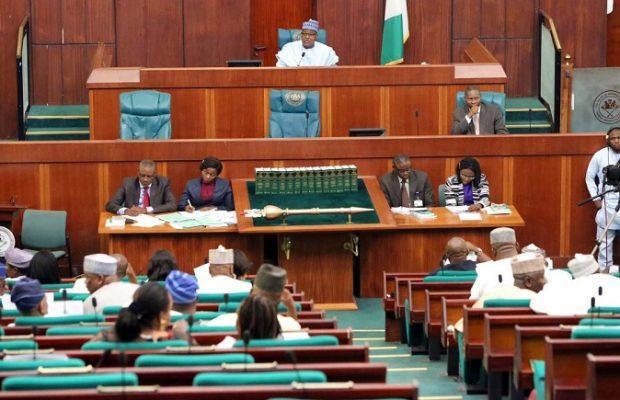
Many more Nigerians are throwing flaks at the proposed bill before the House of Representatives to regulate non-governmental organisations (NGOs) in the country.
If the NGO Regulation Bill is passed, NGOs will need permission to raise or spend money and every of their projects must be cleared by the Federal Government.
While Umar Jibril, Deputy Majority Leader of the House of Representatives and sponsor of the bill, is vehemently defending the bill, alleging that “some NGOs collected funds for North East IDPs and disappeared”, many Nigerians, including legal practitioners, say the proposed bill is unnecessary, stating that at a time of poor public finances, it seeks to create yet another pointless parastatal and add to government overhead.

“The House of Representatives is presently considering what perhaps qualifies as the most dangerous piece of legislation to come before the National Assembly since the return of civilian rule in 1999. The bill is stunning in its audacity, far-reaching in its scope, and a danger to elective government in Nigeria. It should not be allowed to pass,” argued Chidi Odinkalu, lawyer and former chairman, National Human Rights Commission (NHRC).
“The NGO Regulation Bill is the latest among these measures to constrain the civic space and destroy dissent. It comprises 58 sections of extraordinarily bad drafting, jumbled thinking and un-concealed ill-will,” he said.
He explained that the Bill proposes to create an NGO Regulatory Commission, which will be headed by an executive secretary appointed by the president for five years and a 17-member Governing Board, led by a chairman, all of whom shall also be appointed by the president.
“The Board will have powers to license all NGOs. Without the licence of the Board, no NGO can operate. The licence of the NGO Board alone (not registration with the Corporate Affairs Commission) will confer legal personality and perpetual succession on NGOs,” Odinkalu said.
“However, such a licence must be renewed every 24 months. If not, legal personality is lost. Clearly, no one told Hon Jibril that the idea of renewing legal personality defeats the entire purpose of corporate personality,” he said.

Odinkalu further explained that the bill empowers the Minister (of Interior) to direct the Board at his whim as he deems fit, including, presumably, to register or de-register any NGO.
“All NGOs must submit reports to the Board of their money, where they get it from and how much. Before an NGO spends any money received, it must secure the permission of the NGO Board. If it does not, it violates the law. That’s a crime under the Bill.
“The Board will also license NGOs on cooperation with international bodies. The Bill requires NGOs to comply not merely with all laws but also with ‘all national and foreign policies’, whatever that means,” he said.
He added that the Board will also enjoy substantial immunities under law and from process and any judgment against it cannot be enforced except with the express permission of the serving Attorney-General of the Federation.
“As if these were not enough confusion, the Bill proposes that the Board will also oversee a Voluntary Code of conduct for NGOs to be adopted by ‘the first one hundred NGOs to be registered by the Board’. The Code will be operated by a National Council for Voluntary Agencies,” he said.
On Friday morning, Odinkalu was also on Channels TV breakfast show, Sunrise Daily, contending that the Bill may also be intended as a tool by politicians to emasculate civil society organizations (CSOs), which often give voice to the opposition, ahead of the 2019 general elections.
But Jibril, in a press release posted on the House of Reps social media platform, said, “NGOs (Non-Governmental Organizations) and CSOs (Civil Society Organizations) are voluntary organisations that are registered to partner government at all levels to fill gaps wherever they exist. They are supposed to be partners in progress with the government; therefore, the need for a commission to serve this purpose arises.
“Secondly and naturally, for them to carry out their activities, the NGOs and CSOs solicit for funds from all over the world and collect billions of naira on behalf of Nigerians!
“Thirdly, they recruit expatriates to help them run their activities in the country with lots of abuses.”
But reacting to the statement that some NGOs collected funds for the North East IDPs and disappeared, some Nigerians asked the House to deal with the problem that led to the country having millions of IDPs rather than making laws to promote IDPs.
“In the first place, are we supposed to have IDPs?” queried an unnamed public affairs commentator.
Others urged the Jibril to go after the NGOs and CSOs with the existing laws of the land.
“This is baseless and toothless. Are there not enough laws dealing with duping, ‘419’ and stealing?” the public affairs commentator asked.
One respondent, George Ter Ayua, said, “The best global practice of NGO activities to check all the issues mentioned is through Civil Military Coordination, CIMIC. You have anti-terror laws and other laws to check whatever, but no. Why don’t you explore CIMIC as a coordination platform? The primary duty of managing this country, you are failing. Is it NGOs you want to regulate well?” he asked.
Ayua went on to accuse politicians of a desire to control everything.
“They are done destroying government institutions, now they want to destroy NGOs,” he said.
“Once this bill scales through, NGOs employment method will change and the usual ‘wuruwuru’ of recommendation from MPs and senators will begin. NGOs are the only organisations in this country that the politicians have not dominated for themselves. That is why MPs want this bill,” Ayua alleged.
Chris Akiri, a lawyer and social analyst, in an article said the proposed bill had “an anti-social intendment”.
He said the proposed “anti-progress bill” is designed to starve NGOs of funds, citing section 23 of the bill which provides that “any organisation registered under this Act shall not be entitled to diplomatic or consular privileges or immunities”.
“Then section 24 covers the field, as it were, by providing that” contravention of the provision of the law attracts a “prohibitive fine of N500,000 or imprisonment for eighteen months”, Akiri said.
The section referred to says, “It shall be an offence for any person to operate a Non-Governmental Organization in Nigeria for welfare, research, health relief, agriculture, education, industry, the supply of amenities or any other similar purposes without registration and certificate under this Act.”
According to Akiri, “If and whenever an NGO obtains any funds from any quarters, national or international, according to this Bill, the NGO must not only disclose its source(s) of income but must render an account (a financial statement of its expenses, subject to periodic audit by the Federal Government).
“In default of this provision, the defaulter(s) will be liable to imprisonment for up to 18 months. Imagine the les Medicins Sans Frontieres (MSF) (Doctors without Borders), a Non-Governmental Organization, advancing the cause of humanity and best known in war-torn regions and in developing countries afflicted by endemic diseases, being required by the French Government to show the sources of their income and the use thereof or creating a Commission and a Board to supervise their activities! The NGOs in Nigeria are to this country what the MSF is to the international community.”
Akiri said the 1999 Constitution of the Federal Republic of Nigeria (as amended), though an amalgam of irreconcilable inconsistencies, enshrines secularity in its section 10 and the fundamental freedoms of worship, speech and association in its Chapter Four.
“Similar and identical provisions can be found in the United Nations’ Universal Declaration of Human Rights (1948), in the African Charter on Human and Peoples’ Rights (domesticated as Cap. 10, LFN. 1990) and in several Treaties and Conventions to which Nigeria is signatory. The NGO Regulatory Bill must NEVER become Law,” he said.
MABEL DIMMA