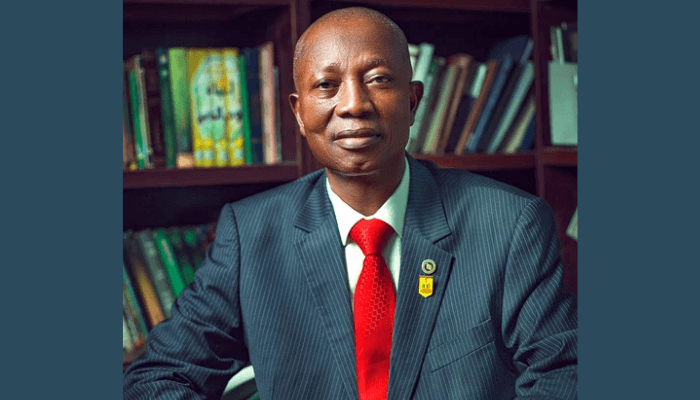
Chancellor and Founder of Gregory University, Uturu, Abia State, and the managing director, Skill ‘G’ Nigeria Limited, Gregory Ibe, in this interview with John Osadolor, Harrison Edeh and Laide Akinboade-Oriere, speaks on inclusion of private university in TETFUND intervention, standard of education, among others. Excerpt:
What makes Gregory University different from other universities, because there is this claim that private universities charge higher fees?
Of course, I founded the Gregory University, Uturu, not for business sake, but being led by passion for education, and the passion for education came as a result of my inability to conclude my Chemistry and Physics majors in my secondary school. I felt so sad that West Africa Examinations Council, WAEC, seized my results.
They wouldn’t know what was in my mind because I was a class prefect for Chemistry and Physics. They must have thought it was cheating, but there was no cheating in it because I did my job well, so I was diverted. It was total confusion that I had to go and do accounting because going back to secondary school again to do Chemistry and retake exams was neither here nor there for me. I had already taken GCE. So, I went to go and study accountancy. It’s like derailing me. But each time I remember that I’m no more a science student, it pained me.

But in pursuit of life, I came back to start promoting the study of science and mathematics in Nigeria. Today, my company, Skill ‘G’ Nigeria Ltd is the sector leader in terms of promoting and supply of all instructional materials in primary mathematics, secondary mathematics, primary science, secondary science and then technical and vocational education system, scientific engineering training, laboratories adoring all polytechnics in Nigeria and all universities in Nigeria, all colleges of education in Nigeria and indeed, all unity colleges in Nigeria.
So, you can imagine, having done all these, starting from the project I did for World Bank on the issue of science and laboratory equipment, I felt that the exposure is not something I will allow to fall again. So, I now concentrated on the science that I know better: my childhood dream of being a scientist.
Having all those and the incessant problem you witness by the people you train each year; there is no major continuity in all the systems because you train lecturers or technologists today, in few more years they are retired and they’ve gone; the equipment are left to the universities but not being used.
So, all those flaws, all those problems that you keep noticing, there is apathy in the usage of kits by students; students don’t even care to come to science education; they hate mathematics. So, you keep on wondering where we are going. There is this attitude that it’s public, so what happens? Of course, government’s involvement in critical level of education in Nigeria is hurting because the world has developed to the point that university education is not a cheap thing.
And when it gets to the Higher Institution, the government ought to start to re-plan. In 1960, Nigeria was just 25 million people and today, by the statistics of the population census, we are heading to 180 million. We never planned for educational development.

But Nigeria seems to be catching up on daily basis. One thing that Nigeria must catch up is that we cannot continue to support free education at the tertiary level. Rather, Nigerian government should do what is needful by offering financial aid to every eligible candidate to go to university education, so that when you borrow this money and go to school, you will in turn pay it back when you are working. It’s revolving money.
You know that your children are sure, no favouritism; everybody is open to it due to your father being a good tax payer or your sponsors; they will sponsor you and you get this loan and then you will be attracted to the tax net of Nigeria.
So that increase in taxes will come; money will be available to give to children to go to universities.
What can be done to improve the quality of education in Nigeria?
What is the quality? You’ve tried sequentially; a public institution and quality is not improving. So, why not change the game and privatise the institutions as well, and do total regulation of what happens in there by the Ministry of Education. No matter what these our bodies that inspect us do, they are still incapacitated.
National Board for Technical Education, NBTE, is struggling to have control of all the universities, but can you control? You can only control yourself. They normally say in our adage, ‘you can only be sure of yourself’. The monkey says I can only be sure of myself and the one inside my stomach; but the one that I’m backing, I don’t know what they are doing.’
National Universities Commission, NUC, cannot vouch for all the lecturers and what is going on in all the public institutions. So, the regulation is now tougher for private institutions to see how quality can come to bear, so that Nigerian can receive ranking.
An average Nigerian today, the daughter goes to private kindergarten. 70 percent of any earner in Nigeria does private education in terms of nursery and primary. From two and half years, five years or 10, you do 15 years, you do 18 years. You say this is kindergarten; this is primary school, the same way secondary school and then university or tertiary.
The person can decide to say okay, at this place, I’m paying N50,000 or N30,000. So, when the child is eight, he pays N50,000. And then when he is ready for primary school, you will start paying N70,000. When the person is ready for secondary school, the person goes here and he starts paying N150,000. This is the least. The same way the scale goes.
For my university, because it’s my passion, it’s not the money that matters. What I use in comparison is to consider that the school fees paid in state universities – an average of about N160,000 is paid; before the parent pays for hostel, another N50,000 and then they will go and rent another hostel eventually and will not get the accommodation they paid for, they would have spent N100,000. Then you watch your child equip a room like he is working class, and you didn’t give your child the money and you expect your child to be responsive to you in getting education.
He has to buy generator and spend money on diesel. Before you finish the money that the family wastes, whether through the family or through the girl’s effort or through uncle or whichever makeshift way he got the money, they are spending at least N800,000 just going to a public university.
Sometimes, they buy the admission to be able to go to that school. They buy it N500,000 and in the worst case scenario, they are faced with troubles of extortion of money here and there. So, by the time you consider all these money, why keeping your children in that place? That’s why we made this available. You can choose the one that is less and is able to take care of lecturers and then no profit in the private universities, except you have all it takes to be able to make it a functional university because university in its sense is not just a point of giving knowledge.
What exactly I’m doing in my university that it is a place we’ve trained all lecturers and technologies from 73 universities on the different aspects of science engineering equipment, the usage in all our labs in 73 universities. We have pioneered a lot of things. We are not always in the press to explain what we are doing, but we are pioneering a lot of things. Our university is at a point where we combine theory and practice; the factories are there for anybody to see. If you are in engineering, you will see where to practice your engineering, you will see the productive activities, and you support production. So, somebody comes there, leaves the university to the world of work well armed and efficient.
Tertiary Education Trust Fund, TETFUND, normally give intervention to public universities. For some time now, private universities have been clamouring that they should be included in that intervention. What is your opinion?
TETFUND seems not to be considering private universities, but it’s only a question of time. Go to all the universities that are private, they submit themselves to tax to Federal Inland Revenue Service, FIRS, and when you submit your tax, if you are not making profit, you are paying minimum tax and any minimum tax; they charge you education tax and you pay that education tax for your university, and that money is remitted to TETFUND. In your business pursuit, you pay it, that money gets to TETFUND.
If TETFUND denies a Nigerian child the opportunity to have money to be educated, it’s not a good standard of measure. So, it’s just a question of time when policy will shift.
What I’m preaching is that there should be a policy change in giving financial aid to all our children to going to school, so that you give access to education; once you have 30,000 in your university, they will give you the same N1.5 million per year for each person. Within this money, you will be able to pay your lecturers. Public universities will not be writing budget or no budget and delaying activities. The same pool of money comes to you.
Then you can now go to TETFUND, based on your research capability, you can now be given grant. Based on what you are producing to the nation, you will continue to get the grant on annual basis, and then the support that you need to get as a public university as against the private. Except that is done in the future, I think there is misjudgement.
What you are saying is that private universities should be included in TETFUND intervention?
Whoever is holding tenaciously that I will not give is making a great mistake. It’s obvious that they should reconcile and start to help the private universities by giving them grant, even if they are not giving them the free money that they throw about to other universities. The infrastructures have all been exhausted. The public schools are saturated with infrastructure. How can you have 1 million classrooms and you keep building and repeating the same thing all over, when you know that you have 30,000 students that doesn’t need a classroom. What is more important is to improve on the hostels of these institutions. We’ve lost the planning attitude that we should have. That’s why we are promoting evil by outside hostels so that overzealous people will cash on it and be ripping off our children who are supposed to get good access to education.
I’m of the opinion that the way you cut Albert’s hair, you should cut Jack’s hair the same way because you don’t say you treat your children equally and show the same love when it’s all about maltreating and then a number of your younger ones are sitting at home not having access to education.
It’s assumed in some quarters that the standard of education is falling. What is your opinion?
When we talk about standard falling, there are few approaches to it. Let’s look at all the components or parameters that make up education. There must be human being, the child, pupil or student is dynamic. The curriculum for which you educate the child and then another actor to it is the teacher. There must be a child born and by age will go to school.
The curriculum is already reviewed by different arms of policy officers and whatever and then the teacher. If these are synchronised well, everybody plays his or her role, then you have quality.
But why are we not having quality? It is not the child that is just born waiting to be acculturated. Anything you put in is what you get. It’s not curriculum that is already written like a full-blown textbook. The problem is the teacher. The quality of teacher from primary school to the university accounts for the product that you have. So, let it be clear to everybody that something has to be done with improving the teacher at all times.
The World Bank has recommended a lot. It’s documented in all their papers that States and the Federal must be resource centres where teachers are trained and retrained with new methodologies taught them and they update their knowledge with it. Then the sequence of inspection and observing of a teacher, the inspectorate divisions of education residing in local government for primary schools, they are not equipped.
When they finish university with big signboard of B.Sc., you end up being a fashion designer, you end up being a contractor, and you end up to something else that you didn’t plan. In between all these problems, one thing is missing; the talent that God has given to each one of our kids has disappeared. So, the person is living on his high level of illusion and the trouble starts; restiveness.
University of Maiduguri has been a target of assault by Boko Haram. In some schools, cows are herded in to disturb activities. Some other places, hoodlums clash with students. What will be your advice to government in terms of protecting our schools from primary to universities, looking at the challenges the schools face?
By 1994 and 1995, I had worked in the University of Maiduguri in their Geology Department. All the equipment that they used there, I supplied them. I taught them how to use it; wonderful and well-built scenery; a university you like to be around and when I heard the news, like you said, it’s very disheartening. To get licence for a university, you need over 120 hectare of land. But I do know that University of Maiduguri will be counting like Zaria is counting 200 hectares of land, and it will be difficult for anybody in this situation to do the fencing of that type of university.
The challenge we have today with restiveness and the entire problems attendant to insecurity in Nigeria have exposed us greatly and you cannot count the government of Nigeria out of having allowed our youths to grow without total support and without hope of tomorrow. So, they became hopeless. So, any other person that can give them money or food or provide for them or give them new skill, they will accept it and they will use it.
Somebody can be prey to anybody if he feels that his disadvantageousness has not been addressed by anybody. It’s very bad that a citadel of learning is being exposed to this level of assault on daily basis. But I believe that advocacy ought to be and if it is resorting to self help, University of Maiduguri cannot do self help in protecting that environment; it’s not possible and so also to all the universities that have this type of land mass. It will be difficult to rim up the place with fencing.
There are lots of atrocities going on and it’s a total challenge. If we are addressing one, we should address all.
Lots of people have lamented the budgetary allocation to education. Nigeria has been unable to have the 26 percent budgetary allocation United Nations Educational, Scientific and Cultural Organisation, UNESCO, suggested to Nigeria to improve on its education. What are your views of this?
I served President Obasanjo in dealing with the reform on civil service education and the maritime education, and review of master plan. One thing I will tell you when they single out UNESCO, which we are part of the protocol that says we should invest 26 percent of our budget on education, believe me, Nigeria spends more than 46 percent on education.
But the tracking and the way this disbursement goes makes it impossible for anybody to really document and come out with the right statistics. I will give you example, if Nigeria has come to the point of accepting the proposal I dropped with government about financial aid, you can now track these quantum of money and then the budget line is all made, you cannot count where there is a different budget attitude happening in all the institutions of higher learning.
So, those expenditures, states are doing their own, different arms are just investing money; you cannot track or establish them. But just imagine the type of money that the Federal Government is pouring. And then when that budget line is approved, what arrives at the institutions probably comes to about 30 or 40 percent or next to nothing. So, how can you track it, because you didn’t see it and you think that the expenditure is not done. The best attitude is what I advocated that if it is done, it would be one stream of money coming that money is going straight on disbursement for the one that is on grant. You will see the flow and you will see the budget line of these institutions and you will be able to track the total investment that goes into it.
The Nigerian Communications Commission has been helping some public universities, spending money on education, giving them computers. How do you classify that? The state governors are busy spending money if at all they want to spend to help them pay salaries. Internally generated revenue, where do you document it? Where is the money on research and development they need to do? So, investment in education, nobody can track it. That’s why this UNESCO thing, when they repeat and repeat it, we at our own level, when we go to Paris for meetings, we normally articulate these things and that Nigeria is really investing in education, but it is not tracked, it is not serialised; it has no sequence of flow so that you can be able to track it well.
New admission process will commence in few months. How prepared is your university to get new students?
My university has eight colleges, from medicine to law to medical sciences, to applied sciences, to agriculture, to engineering, to environmental sciences. The university has moved away from the normal I grant. You license three colleges, where you don’t have money to invest to take your university to a larger pedestal, where you are expected to invest so much money in order to help develop the sector. So, our university is geared up at making sure we produce professionals, give them the right skills.
We deemphasise a lot of activities on humanities and art because I want to promote a lot of science and technology. But we have law and I thank God that NUC has made it possible that for you to study law today, you will have mathematics as well. So, these are type of things we started and preaching about mathematics and for you not to have mathematics, it discourages a lot of children from going to science. Right now, if a child needs to have English and mathematics, he has a choice to leave that law and even focus on science. We are very much ready to admit scholars. We call our students scholars.
How do you handle the issue of cultism and drugs?
The peer group influence has actually done a lot of disservice to the Nigerian youthful society. Parents for lack of control of their children have left them in the hands of neighbours and peer groups to influence them in drug taking. Before, we used to know of marijuana as a critical drug. Today, it’s beyond marijuana, and I think that the Federal Government with the health authorities should start putting and enforcing all the protocols that have to do with off- the-shelf drugs and banned substances.
If I start mentioning them now, it’s like I’m giving opportunity to tell you what people should take. But it has gone so bad. Our children are fantasising and somebody will indoctrinate them. So, what we’ve done in our universities is that we don’t want anybody to take alcohol. No alcohol is sold round the university, and because everybody lives inside the university, we deploy more security to search everybody.
At each time you take an exit or come into the university, we rip your boxes to make sure we monitor what’s coming out because these are children between 15 years and half, and the youthful exuberance could lead them to anything.
But there are these challenges that the parents that have brought their children and dumped them on institutions of learning and they think that the institution of learning will make miracles. It’s difficult to make miracles.
What advice do you have for the Federal Government in moving the education sector forward?
Every year, we talk about moving education forward. Is there any minister that came and said education is not moving forward? Anyone you see will tell you it’s moving forward. Depending on the angle you see it; everyone is moving forward. To what extent has it been impactful, we might not know?
But the minor you can do that will have manifold gains in the future is asking the ministries and the government to ban certain drugs, except it’s recommended. It would have solved a major problem over time, and it will have a backward problem it’s solving.