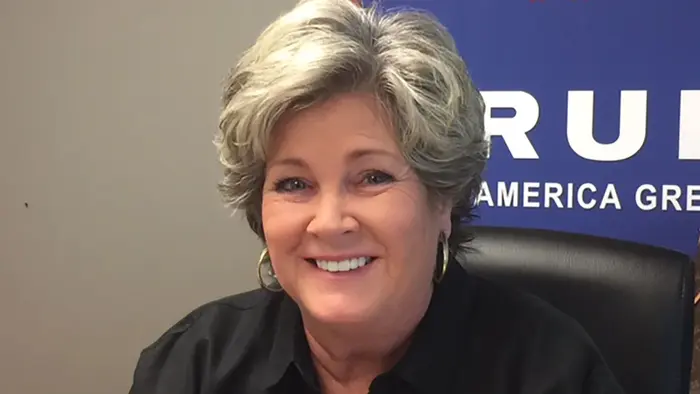
Tarang Gupta, with over 15 Years of experience in the Fast Moving Consumer Goods, FMCG industry is the Marketing Director of Friesland Campina WAMCO. His key areas of expertise include business strategy, portfolio management, long term strategy, global category management, and brand communications. He also has multiple category experience in businesses such as confectionery, foods, personal and body care, beverages and dairy. In this chat with Mabel Dimma, he talks about his experience, his brands, and the Nigerian market.
Can you share on your journey into marketing?
I have lived in 3 continents and 13 cities around the world and so diversity is part of my DNA. Likewise, the last 15 years of my career started with my marketing career in Unilever India, then later Global Marketing with Sara Lee; responsible for Personal care for Asia Pacific and finally joining Friesland Campina global marketing in 2010 before moving to Nigeria. On reflection, my most self-enduring times have been in Nigeria in the last 3 years with the economic crisis; but I’m happy to see how as a team we’ve not just sailed through the storm but grown stronger and sharper to take our brands to the next level. I am really fortunate to have a great team that believes ‘I’m-possible’.

What has been your experience as MD of Friesland Campina WAMCO? Like I mentioned, my last 3 years have been the most enduring but also the most exciting part of my 15 years career. Like any marketer would say that the last 28 months have been the perfect storm in Nigeria – shrinking economy, diminishing consumer spending, operational challenges (due to FOREX crisis), rising inflation, high input cost etc. Personally, the most important learning I have had during this period is the balancing act of short and long term. I am also optimistic with the early signs of recovery in the economy. I have learnt 3 key principles to manage brands and business during a crisis: one is staying true and honest to your consumer. Never think that a consumer does not know what you are doing.
Two, be balanced- during moments of crisis, organisations and business managers shift to short term goals and key performance indicators KPIs, thus losing sight of long term purpose and vision. I personally believe that in times of crisis it is more important to stay true to your vision and purpose and keep that as priority, while managing short term obstacles. The third is thinking positive- the most important asset any business has is its people. It is this asset that can be the competitive advantage for the organisation, especially during a crisis – where the team can either drown by the gloom or find opportunities among issues.
What is unique about the Nigerian market?
Every market in the world is unique because its history, culture and people define it and Nigeria is no exception. However, there are a few things that are quite distinctive about Nigeria. One, it’s a 3-in-1 country. The cultural diversity between the North, East and South (+west) makes Nigeria quite unique. It also poses a challenge for national brands to stay regionally relevant, nationally connected both via type of content and media channels. Second is their ‘No Wahala’ attitude. I have personally been surprised looking at their positive attitude; they know how to stay happy even in tough times. This is extremely important for brand communications, where brands should connect with consumers mirroring their beliefs and outlook to life, rather than putting pressure and juxtaposing gloom (even if that may be the reality).

Third is the ‘Young and connected. What also makes Nigeria unique is the average age of the country being 18 years (60% < 25 years) and this generation is massively digitally-connected and globally aware. Thus, brands need to keep in mind that the future evolution of this country would be much faster and steeper than any comparable benchmark. The fourth is God &Hope. Religious beliefs are strongly entrenched in the country and it defines how the country operates – ‘on Hope’. Thus, marketers need to ensure they connect to this deep rooted belief system and not stay superficial.
Having worked in a number of other markets, can you rate the Nigerian market in terms of marketing communication and brand building?
Nigeria marketing communication is still more traditional but evolving at a rapid pace. What makes it unique and interesting is that to reach a Nigerian consumer the media strategy needs to be wide and cut across channels – traditional and new age. Also the media consuming habits are highly diverse and segmented between regions and age segment. Following the principle of ‘How Brands Grow’ by Byron Sharp, my strong recommendation is to leverage traditional media to create awareness and reach and digital (especially among youth and in south and west) to create engagement. In terms of creativity, I think Nigeria stands to be highly upbeat, music oriented and emotional; the route to the head of a Nigerian consumer is through his heart. Thus in terms of creative content, marketers should focus on ‘touching the Heart first and then Connecting with the Head’. Nigerian consumers are one of the most responsive consumers and the impact of the communication can be felt immediately, if well supported with distribution.
What is your notion about the average Nigerian consumers and their reaction to brand building initiatives?
Like I mentioned above, Nigerian consumers are believers, rather than being sceptics. They trust the brands and take the message at face value. While this is a big advantage for the advertisers, it also comes with a huge responsibility of being truthful and honest. In my last 3 years in Nigeria, I have noticed that those brands that ‘Touch the Heart’, are the ones which have an instant traction and faster response from the consumers, compared to ‘functional – Talk only to the Head’ messages. During the economic slowdown we have witnessed in last 28 months, it was evident that the Nigerian consumer is down-trading and is highly price conscious. However, the Nigerian consumer is not ready to down-trade his self-esteem. Hence, brands need to ensure they emotionally engage consumers, satisfy their esteem besides being pocket-friendly.
What is the toughest aspect of managing two top dairy brands?
I was a sportsman in my youth days and my coach always told me that reaching the top is easier than staying at the top. Friesland Campina WAMCO’s brands, Peak and Three Crowns, are not just iconic but are part of the culture and life of the Nigerian consumer. Peak is a synonym to milk, but also seen as the gold standard in the minds of the consumers. As a team, we strive daily to ensure our consumers get the best in quality, taste and experience. I think this is the responsibility of the market and thought leader in any category.
How would you describe the brand DNA and the different marketing evolution?
I would respond to this question slightly differently as brands should not be described by their DNA, but rather by their purpose or reason for existence. What role the brand plays in the life of a consumer, which should be over and above the functional gratification. For Peak, the purpose lies in its name; ‘to help Nigerian consumers unlock their potential and reach for their peak’, believing that ‘what goes in comes out’, which is why it provides high quality milk to give consumers the nutrition they need to succeed and reach their peak. It’s been there for several generations and will continue to be for future generations.
Last year you launched Pecadomo; how much impact has that campaign had on your brand and for how long do you hope to sustain it?
PECADOMO which stands for ‘Peak Can Do More”, is not just a campaign, but an initiative to expand the usage of milk in Nigeria. For not being a dairy producing country, the usage of milk is not as diverse and entrenched as some other countries like India, Holland etc. Moreover, during the economic slowdown the consumption and usage of milk was reducing, thus, PECADOMO was introduced to help show consumers that milk can be much more versatile than just being used in tea or cereal. It not just adds to taste but also improves the nutritious value of the dish significantly. The response of this campaign has been extremely positive both from the consumers and from the industry. Since this is about creating new habits, we will continue to educate Nigerian consumers on usage of milk and expand the category’s sphere of relevance.
Personally, what excites you the most about the campaign?
The creativity among the Nigerian consumers; we have received some very innovative ideas on how our consumers have found different ways to use milk in their dishes. During the 2017 World Milk Day celebration, I was impressed with the exciting variations done by the school children. Some of these recipes have been put on our website
Your campaigns have bordered on encouraging milk consumption; what is the result so far?
Indeed, based on our syndicated research we have seen impact on usage and consumption.
What’s the role of Three Crowns among Nigerian diary brands?
Good question! Three Crowns wants to inspire mothers to stay healthy so they can stay fit and take better care of themselves and their families. The woman of the house is the pillar of the family and the stronger the pillar, the more stable the family; so three Crowns milk with low cholesterol and great taste is the ideal partner to the woman.
How do you feel that some of your campaigns are winning awards locally and internationally?
First of all, the credit for some of these fabulous and award winning creatives goes to the entire marketing team and our agency partners; It’s the result of their zeal, passion and relentless rigour. It’s a sign of external recognition and motivates us to keep raising the bar. We sincerely thank different institutions and bodies for honouring us with these awards and appreciation.
What is your assessment of the dairy market in Nigeria?
Let me answer this question more futuristically; the per capita consumption of milk in Nigeria is a fraction compared to some of the other more developed countries, but I personally believe that this segment would continue to grow rapidly. Moreover, with health consciousness on a rapid rise, dairy solutions will continue to have increased relevance in the lives of consumers – for different occasions (in & out of home). I also anticipate increase in local sourcing of dairy and Friesland Campina has already pioneered this with its Dairy Development Programme.