Corporate Social Responsibility (CSR), one of the positive outcomes of sound corporate governance, is impacting positively on many lives and communities in Nigeria. Indeed, as businesses act responsively and boost their performance, they devote part of their income to giving back to the society by engaging in various life-changing activities.
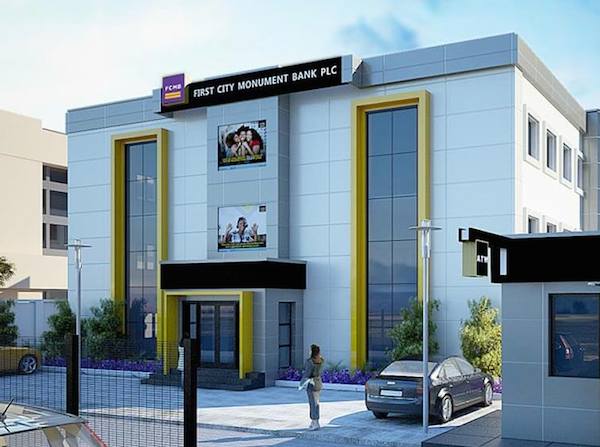
Over the years, First City Monument Bank (FCMB) has redefined and elevated this practice to a commendable height by consciously championing and executing various programmes in a manner that leaves nobody in doubt as to the commitment of the bank to use CSR as a tool to add value and ensure sustainable development.
The 34-year-old bank has been able to achieve this through its strategic interventions in various areas of human endeavour, especially in its focal CSR areas of poverty alleviation, economic empowerment and environmental sustainability anchored on its mantra of ‘Teach a man to fish’. All these gestures are in line with FCMB’s time-tested value as a helpful bank committed to creating opportunities that would further enhance the well-being of individuals, customers, groups and the entire society.
Though several corporate organisations engage in CSR projects, the nature of the projects FCMB identifies for execution and the impact they make on the overall well-being of humanity and the society stands the bank out from others.
“We are aware of the challenges faced by people and the society. Hence, our choice of bringing hopes and smiles to individuals, communities and the country at large,” said Diran Olojo, group head, Corporate Affairs, FCMB, on the bank’s CSR drive.
“This is further proof of our culture of excellence and our commitment to doing the right things at all times to ensure sustainable development across various spheres. This ethos has continued to guide our views and approach to not just business, but also CSR,” Olojo said.
Economic empowerment
FCMB’s CSR philosophy, as far as economic empowerment is concerned, is focused on helping to create an enabling environment for empowerment of individuals, businesses and the nation at large through micro-entrepreneurship, microcredit and skills acquisition.
In demonstration of this, the bank in 2016 extended its support to internally displaced women in Maiduguri, Bornu State, by providing training and financial support to 100 of them to start any small-scale business of their choice. The financial institution also organised skill acquisition and other capacity-building programmes for the beneficiaries.
Speaking at the fund disbursement ceremony, the Bornu State Commissioner for Poverty Alleviation, Hajia Inna Galadima, commended FCMB for “making a difference in the lives of the internally displaced women”.
FCMB’s intervention in economic empowerment is further seen in its partnership with Wecyclers, an award-winning company involved in recycling, on a waste-to-wealth franchise scheme. Through this collaboration, the bank is helping to tackle the challenges of waste management by deploying an innovative recycling project aimed at job and wealth creation, while promoting health and sanitation. To further deepen the project, FCMB has put in place a monthly reward scheme for top recyclers. The first batch of winners emerged in May this year and have been presented with their prizes.
FCMB’s economic empowerment activities have also impacted positively on youths. The bank has instituted a capacity-building programme for youths, tagged “Empowered for the Future”.The initiative, which is in partnership with Youth Empowerment Foundation, focuses on peer-to-peer economic empowerment and reproductive health education for in- and out-of-school adolescents. It commenced with 50 youths who were trained on various aspects of human development. The beneficiaries are expected to reach out to 750 peers over a one-year period, with focus on financial literacy, skill acquisition, sexual and reproductive health, while undergoing vocational training, job shadowing and knowledge-building programmes.
Poverty alleviation
Poverty alleviation involves the strategic use of tools such as education, economic development, health and income redistribution to improve the livelihoods of the world’s poorest people by governments and organisations. Over the years, FCMB has been carrying out series of activities, through CSR, to tackle this challenge and its attendant effects
One of such initiatives is the Priceless Gift of Sight programme, which the bank has been sponsoring since 2009 in partnership with the Tulsi Chanrai Foundation (TCF), a Nigerian-Indian non-governmental organisation. The programme involves eye screening tests, full ophthalmic medical examination, eye surgeries, provision of free medication, eye glasses and counselling for those suffering from cataract, an eye defect that could lead to blindness if not promptly treated. Over 100,000 people across Nigeria have so far benefitted from this project since the bank took up the sponsorship eight years ago. This year, FCMB sponsored 500 eye surgeries in Kebbi, Cross River and Imo States, while more than 1,000 others underwent the screening for cataract during the programme. The bank has previously carried out the programme in Katsina, Adamawa and Ogun States.
A beneficiary of this year’s programme, 78-year-old Jonathan Nwosu from Umuaro community in Nkwerre Local Government Area of Imo State, described the Priceless Gift of Sight project as a service to humanity.
“I cannot but sincerely appreciate FCMB for what I consider as service to humanity. I do not have anything to give to show appreciation, but to pray for the management and staff of the bank. I did not know a thing like this could fall by my feet just like that without anybody asking me to pay anything,” said Nwosu, a former commercial vehicle driver who plied Port Harcourt-Aba until he completely lost his sight in February 2016 to cataract.
The poverty alleviation activities of FCMB have also been extended to the Federal Nigeria Society for the Blind (FNSB). The bank recently donated 15 Braille machines to the Vocational Training Centre at Oshodi, Lagos. The gesture is aimed at effectively supporting the efforts of the FNSB towards enhancing the standard of teaching, as well as learning, of the blind students of the VCT. The centre was established 60 years ago and so far, over 2,000 visually-impaired men and women have benefitted from the various training programmes at the VCT.
FCMB is also playing a very important role in the ongoing efforts to eradicate Neglected Tropical Diseases (NTDs) – a group of 17 parasitic and bacterial infections that affect over 1 billion of the world’s poorest people. These diseases reduce economic productivity and prevent affected individuals from being able to work or care for themselves and their families. The bank’s intervention to eradicate NTDs, in partnership with Sight Savers, an international NGO, covers four severely affected states (Kebbi, Kogi, Kwara and Sokoto). This involves a mass drug distribution approach by an extensive network of volunteer community drug distributors. The intervention has gone a long way to combat the impact of the diseases.
Environmental sustainability
The commitment towards environmental protection and sustainability remains a core pillar of the CSR focus of FCMB. Indeed, the bank places a lot of emphasis on not just what it achieves as an organisation, but how it achieves it. Hence, the financial institution’s business activities and operations are designed to ensure that it lends responsibly, promotes financial inclusion, encourages diversity, adheres to health and safety standards, and reduces (or totally avoids where possible) negative impact on the environment. A highpoint of the bank’s environmental sustainability activities is its ability to identify and innovatively devise means of converting challenges posed by the environment to opportunities.
One of such is the bank’s sponsorship of a project that relates to the conversion of water hyacinths to valuable materials in partnership with another NGO, Mitimeth International, since 2015. Under this programme, which has so far been executed at Bayeku community in Ikorodu and Epe, hundreds of people have been trained on how to make handicrafts, such as baskets, lamps, dressing accessories, mugs, vases, table mats and so on, for commercial purposes from invasive aquatic materials (such as water hyacinths). With the new skills learnt, women and youths of Bayeku community in Ikorodu, Epe and adjoining communities have been empowered to turn an environmental menace into a source of income.
Furthermore, FCMB has continued to actively participate in World Environment Day activities over the years. To mark the day in 2015, the bank collaborated with the Nigeria Conservation Foundation to organise series of programmes to further raise awareness on the need to protect the environment. Among the activities sponsored by the bank was a Flora and Fauna Fancy Dress Competition among school children of ages 5-14 years involving 40 public and private schools across Lagos. Annually, the bank also uses the opportunity provided by the World Environment Day to visit the Lekki Conservation Centre.
As part of efforts to ensure a cleaner environment, FCMB is in an ongoing partnership with the Lagos State Central Business District to clean up the Marina/Tinubu Square axis of the state. The bank’s support involves the provision of cleaning equipment, apparels and payment of the salaries of the cleaners.
Through its robust activities across its three adopted spheres, as an institution, FCMB has clearly demonstrated its determination to provide the support needed to build a viable society.
IHEANYI NWACHUKWU