|
Getting your Trinity Audio player ready...
|
Nigerian Bank stocks are rallying, as money flows into the sector from domestic pension and offshore funds attracted by low valuations and prospects of rising profits from a rebound in economic growth forecast this year.
The Nigerian Banking Index has risen by 31 percent year to date, outperforming the broad All Share Index, which is up 8.9 percent this year.
The big six banks with primary listing in Lagos, namely Guaranty Trust bank (GTB), Zenith Bank, United Bank for Africa (UBA), FBN Holdings (FBNH), Access Bank and Stanbic IBTC, have seen money move into them with some reaching multi year highs.
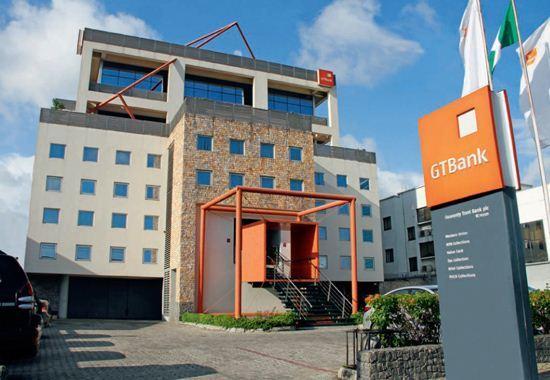
Guaranty Trust Bank the largest lender by market capitalisation, has rallied 45 percent this year and set a new 52 week high of N35.80 per share on Tuesday. GTB has also now crossed N1 trillion in market capitalisation, the only bank to do so.

Zenith Bank, the second largest bank by market capitalisation, set a new 52 week high of N19.50 per share yesterday. The stock is up 32 percent this year.
UBA is up 71.5 percent this year, while Stanbic IBTC, Access Bank and FBNH have gained 78.3 percent, 34.5 percent, and 57.6 percent, respectively.
“The large cap banking stocks provide investors with a mix of strong fundamental and valuation. This basically accounts for why money is moving into these names,” Abiodun Keripe head of research and strategy at Elixir Investment Partners Limited, said in response to questions.
“It should be noted that as prices are rallying, earnings growth is expected to pick-up over the rest of Q2 to Q4.”
The six lenders with a combined market capitalisation of N2.7 trillion, equivalent to 26.7 percent of the entire stock market, largely saw earnings growth in the first quarter (Q1) of 2017, although impairment charges for credit losses spiked.

Net income for the lenders increased by 36 percent to N159.5 billion, even as loan loss charges grew by 110 percent to N50.48 billion on a cumulative basis.
The tier-1 banks are currently trading at 6.16 x price-to-earnings ratio on a trailing 12-month basis on average, which is cheap, relative to EMEA peers, according to Keripe.
On PE basis, FBNH is the most expensive at 13.09x, followed by GTB 6.99x, Zenith Bank 4.32x, Access Bank 2.87x, and UBA 3.54x.
These ratios compare favourably with the likes of FirstRand in South Africa, which is priced at 11.95x, and Barclays Africa Group Ltd at 8.27x, Nedbank Group Ltd 9.30x, or Abu Dhabi Commercial Bank at 9.25x.
The introduction of the new investor and exporter (I&E) FX window gave portfolio investors a currency market they could access and after a hesitant start, foreign inflows to Nigeria are beginning to pick up, according to Charles Robertson, global Chief Economist at Renaissance Capital.
“What has become evident in recent weeks, is that equities are cheap enough that investors are prepared to buy the naira, even with just a small discount to the NGN375/$ fair value estimate of our 22-year REER model,” Robertson said.
Foreign inflows into the Nigerian Stock Exchange (NSE), turned positive in April, the first time in three months, as investors brought in N14.54 billion, according to data from the bourse.
Sources tell BusinessDay that Nigerian Pension Funds with N6.15 trillion in assets as at December 2016 are also buying large cap bank stocks in response to new guidelines from the National Pension Commission (PenCom) setting minimum equity holdings at 10 percent.
The Nigerian economy is forecast by the IMF to expand by 0.8 percent in 2017, from a 1.5 percent contraction recorded in 2016.
Bank bulls are also getting help from the Central Bank of Nigeria (CBN) which has maintained its benchmark monetary policy rate which leaves elevated fixed income yields intact, while boosting banks net interest margins.
Even with the rally, the large banks are still trading at a huge discount to book value.
Guaranty Trust Bank currently trades slightly below its historical price to book (P/B) level (pre 2014 market crash) of 2.2x. UBA and Access are trading at 0.6x and 0.5x Price to Book, while Zenith is trading at slightly above 1x Price to Book –a discount to its historical level.
“We believe that there’s still room for further appreciation, especially in the next few weeks leading up to the end of Q2 and anticipation of the earnings season and interim dividends,” said Tosin Ojo, head of research at Cardinal Stone Partners.
PATRICK ATUANYA