|
Getting your Trinity Audio player ready...
|
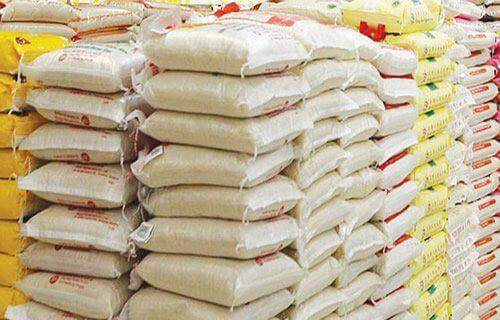
Nigeria is inching towards attaining self-sufficiency in rice production as the country’s rice production doubles in 2016, according to a report by Growth and Employment in States (GEMS4), a UK Department for International Development (DFID) sponsored project.
In the report titled ‘Mapping of rice production clusters in Nigeria’ total paddy production in 2016 was put at 17. 5million metric tons which was milled into 5.7 million MT of rice, thus bringing Nigeria’s rice production closer to the projected demand of 7million tons by the agricultural road map.
“The 2016 total paddy production is estimate at 17.5 million tons with a marketing surplus after post-harvest losses and domestic use, equivalent to 5.7 million tons milled, just below the total national demand for rice which was projected to reach 7 million,” states the report.
“This implies that the country is progressing towards its goal of rice sufficiency,” the report added.
Before now, the country’s rice production was put at 2.3 million metric tons, leaving a supply gap of 4 million metric tons, according to the country’s agricultural road map.
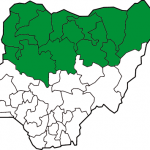
The report is a mapping exercise of rice production clusters through researchers’ and enumerators’ visits to rice production locations across 18 states; Bauchi, Benue, Ebonyi, Ekiti, FCT, Jigawa, Kaduna, Kano, Katsina, Kebbi, Kogi, Kwara, Nassarawa, Niger, Ogun, Sokoto, Taraba and Zamfara.
According to the report, Kebbi State led production with 3.56 million metric tons for the wet and dry seasons combined, followed by Kano with 2.82 million metric tons in 2016 respectively.
The GEMS4 report’s analysis showed that the country’s 2016 dry season production was 4.6 million MT or 26.6 percent of total cultivation, cultivated on 3,037,324 hectares of farmlands, while wet season production was 12.8million MT or 73.4 percent, cultivated over 859,624 hectares.
The report also revealed that 1.4 million rice farmers were involved in the wet season, representing 17.7 percent of farming families in the wet season in Nigeria. In the dry season, however, the estimated total number of farmers was 410,210, representing only five percent of the total farming families.
A conspicuous finding on the average yield per hectare was that the yields during the dry season were consistently and comparatively higher than in wet seasons for all states involved in both wet and dry season cultivation, which opens an area of great prospects for policy intervention in rice production in Nigeria.
The average yield per hectare of rice during the wet season was found to be the highest in Ebonyi, at 5.6MT but lowest in Kwara at 2.7MT. For the dry season, Niger recorded the highest average yield per hectare of 6.5MT while Kaduna had the least average yield per hectare of 3.5MT.
The report listed the challenges observed as including finding that farmers generally reported having difficulties acquiring agro-inputs, particularly quality seed and fertiliser and accessing credit.
Infrastructure such as irrigation facilities, feeder roads and storage facilities constituted an area of challenge with poor quality or a total lack of it.
Others include flooding in wet season, poor access to information on modern methods of farming and post-harvest technologies, poor access to credit, and a loss of labour through migration of young people to cities, resulting in aging farming population.
Considering the value of rice produced locally, farmers in the 18 states under consideration have generated an estimated N102.6 billion as additional contribution to Nigeria’s economy through rice production.
Josephine Okojie