|
Getting your Trinity Audio player ready...
|
The property market in Nigeria ended the first quarter of this year with location, quality building and competitive pricing dominating transactions, especially in the mid-income residential segment of the market, a new report has shown.
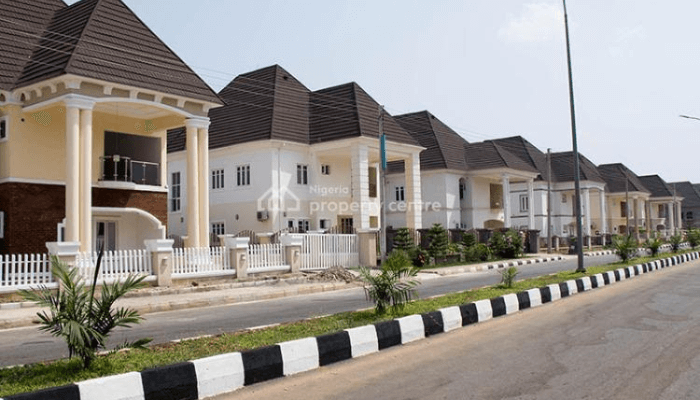
According to the report by MCO Real Estate Limited (MCORE), the market was largely supported by demand from this segment consisting primarily of terraced houses, town houses and flats with prices ranging from N25 million to N60 million (about $82,000 – $198,000) per unit.
This means that in spite of the challenges in the upper end of the market which has seen about 20 percent drop in demand and over 50 percent vacancy rate, these mid-income houses built with eyes for quality and are priced competitively will continue to find market from buyers.
For investors looking for where to invest, therefore, the middle market is a strong destination and, according to Munachi Okoye, MCORE’s chief executive, the primary areas of growth for investment are the Lekki-Ajah axis and the Lagos-Badagry axis with its investment in transport infrastructure.
“The Blue Rail Line on the Lagos-Badagry Expressway, the Badagry Deep Sea Port and Free Trade Zone suggest potential for strong growth along that corridor”, Okoye says, noting that the premium residential market consisting of property above N120 million ($393,000) continues to suffer from a fall in consumer income coupled with a fall in demand from the corporate leasing market.
“I continue to maintain that there is still market for good location, good quality and good pricing for properties. Old or new, if a property is over-priced because the owner is not interested in what the market is saying in terms of pricing, such property hardly finds market these days”, added Udo Okonjo, CEO, Fine and Country in an interview.
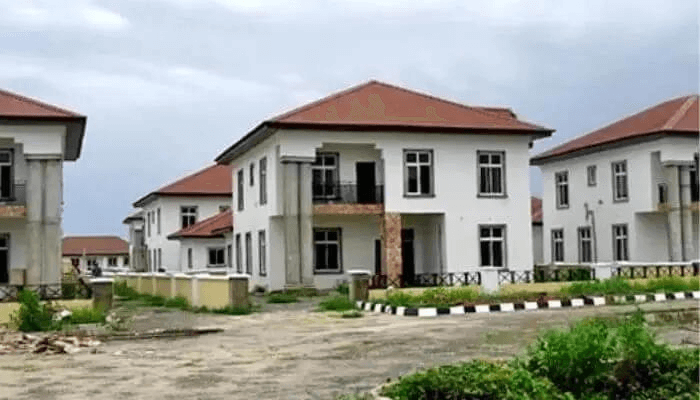
Okonjo noted that in the upper tier of the residential market, including Ikoyi, Victoria Island, the Oniru axis and, to an extent, Lekki, 40-50 percent of the high rise buildings appear to be vacant ad that some of the buildings that appear to be 100 percent empty are generally old buildings which appear to be completely abandoned.
“I think that some of those buildings have the challenges of the tension between the federal government title and the Lagos State regularization”, she said.
After the federal government in 2006 offloaded its properties into the Lagos property market in line with its monetization policy, quite a good number of the properties and their buyers ran into murky waters as the Lagos State government demanded that buyers of such properties should regularize their title leading to legal battles that left those properties unoccupied. The Federal Secretariat is a example.
In the light of the above, Okonjo noted that “lack of enabling environment is playing a key role in business people’s inability to create opportunities for people to own homes. In spite of the state of the market, especially at the high end, people still need quality properties that are well priced”.
The commercial segment, especially office space market did not fare well within the period under review as the market remained in a slump brought about by the strong growth in supply over the last three years coupled with the fall in demand on the back of the contraction in economic growth.
Okoye reveals that there is currently a total of 544,000 square metres of institutional commercial office space with 8 per cent of that number added in 2016 and 20 per cent added over the last two years alone primarily in Ikoyi and Victoria Island.
“As the market re-aligns itself to the current state of affairs, both landlords and tenants are seeking the means to protect their interests by reducing costs and increasing profits in the current challenging economic environment”, he says, adding, “intense negotiations are at play as corporate occupiers seek to convert dollar denominated rents to naira with a wide margin existing between the landlord’s idea of a conversion at a parallel market rate and the tenant’s preference to convert at official market rates”.
Prime rents have, in the past have, in the past 18 month, fallen by 20 per cent. Pro-active landlords are fighting back by seeking to lock in desirable tenants on long leases at negotiated rents. Ikoyi prime rents currently stand at US$800 per square metre while Victoria Island prime rents stand at US$700 per square metre.