|
Getting your Trinity Audio player ready...
|
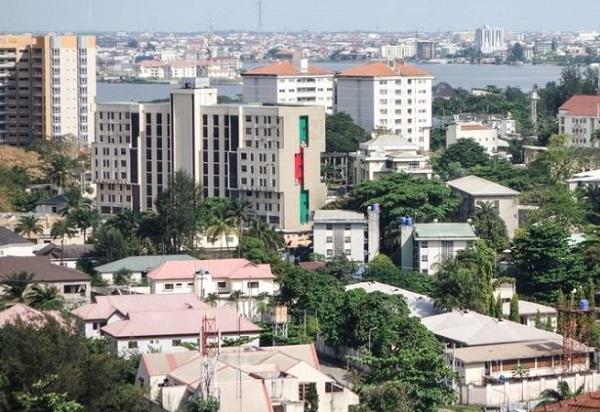
Lagos, Nigeria’s largest commercial city is the world’s second cheapest city to live in while Almaty, a city in Kazakhstan is the cheapest to live in, a new survey by the Economist Intelligence Unit (EIU) reveals.
The survey “Worldwide Cost of Living 2017,” ranks the world’s major cities by comparing more than 400 individual prices across 160 products and services including food, drink, clothing, household supplies and personal care items among others.
Other cheapest cities to live in are Bangalore in India, Karachi in Pakistan, Algiers in Algeria, Chennai and Mumbai in India, Kiev in Ukraine, Buchares in Romania, and New Delhi in India.
EIU simply identified these cities as “cheap but not always cheerful. Put simply, cheaper cities tend also to be less liveable. “As Lagos and Almaty prove, an increasing number of locations are becoming cheaper because of the impact of political or economic disruption”.
On the methodology of the survey, the Economist Intelligence Unit said more than 50,000 individual prices are collected in each survey, conducted each March and September.
The impact of fluctuating oil and commodity prices continues to be reflected in the cost of living. Oil prices bottomed-out in 2016 and the pace of decline in commodity prices slowed.
Economist Intelligence Unit researchers survey a range of stores: supermarkets, mid-priced stores and higher-priced speciality outlets. Prices reflect costs for more than 160 items in each city.
These are not recommended retail prices or manufacturers’ costs; they are what the paying customer is charged. Prices gathered are then converted into a central currency (US dollars) using the prevailing exchange rate and weighted in order to achieve comparative indices.
The cost-of-living index uses an identical set of weights that is internationally based and not geared toward the spending patterns of any specific nationality.
“Joining Almaty at the bottom is Nigeria’s biggest city, Lagos, which fell 16 places to 132nd place. Although Nigeria has been attracting significant interest and investment in recent years, the fall in global oil prices has driven a collapse in the value of the Nigerian naira, which pushed down relative pricing, despite strong local inflation.
“The relative cost of living in Lagos has more than halved since 2008, which might signal renewed interest from foreign investors, with price levels so low by international standards”, EIU noted in the survey.
“Although the Indian subcontinent remains structurally cheap, instability is becoming an increasingly prominent factor in lowering the relative cost of living of a location. This means that there is a considerable element of risk in some of the world’s cheapest cities. Karachi, Algiers, Kiev and Lagos have faced well-documented economic, political, security and infrastructural challenges, and there is some correlation between The Economist Intelligence Unit’s cost of living ranking and its sister ranking, the liveability survey”, according to EIU.
With emerging markets dominating both ends of the rankings, Simon Baptist, regional director for Asia at the Economist Intelligence Unit, pointed to three key drivers of cost of living in these countries: the exchange rate, government policies and commodity prices.
Singapore is the most expensive city to live trailed by Hong Kong. Half of the world’s ten most expensive cities to live in are in Asia, with Singapore and Hong Kong firmly defending their top two spots from a year ago.
Despite topping the ranking, Singapore still offers relative value in some categories, especially compared with its regional peers. For categories such as personal care, household goods and domestic help Singapore remains significantly cheaper than its peers, although it remains the most expensive place in the world to buy and run a car, as well as the second-priciest destination in which to buy clothes.
In terms of food and drink the cost of living in Singapore is on a par with that of Shanghai in China. Seoul, Tokyo and Osaka present the three most expensive places in the world to buy staple goods. In Seoul, topping up a grocery basket is almost 50percent more expensive than in New York.
Other most expensive cities are: Zurich in Switzerland, Tokyo and Osaka both in Japan. Other most expensive cities are: Seoul in South Korea, Geneva in Switzerland, Paris in France, New York City, and Copenhagen in Denmark.
With the dollar weakening slightly against other currencies, New York is the only North American city among the ten most expensive cities, although Los Angeles remains highly ranked, in 11th place, down from eighth place last year.
Iheanyi Nwachukwu