Managing director, Nigeria Liquefied Natural Gas Company (NLNG), Tony Attah, says Nigeria could lose immediate foreign direct investments worth up to $25 billion if the National Assembly goes ahead with the proposed amendment of the company’s Act.
This is because any tinkering of the NLNG 2004 Act would obviously violate bilateral agreements already held with international investors and also the cost this huge sum and fines at the international court.
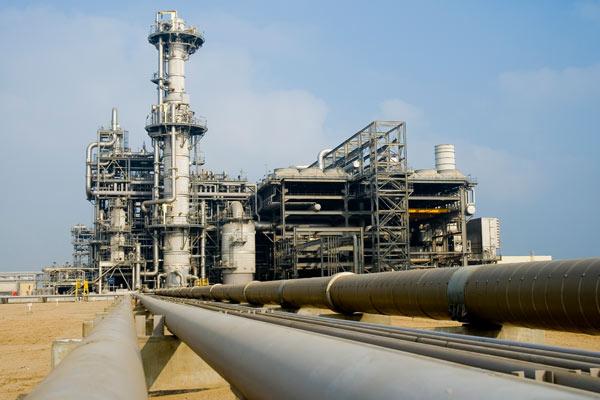
Attah stated this on Tuesday when the minister of information and culture paid a visit to NLNG plant facilities in Bonny, Rivers State. With the proposed amendment, Nigeria’s House of Representatives are seeking to cancel government guarantees, which helped unlock private investment in NLNG as well as introduce levies paid by exploration firms.
Nigeria stands to lose a total of $25 billion in respect of train 7 and 8 investments ($15bn by the upstream and $10bn for construction), which NLNG is already actively working to take final investment decisions if the amendment goes on, Attah said.
He noted that in addition to $25 billion foreign investment potential loss, it could also result in loss of income of between $53 million and $124 million, which the Nigerian government would get in form of dividends and related withholding tax with a potential loss of about 18,000 jobs required for the construction activities for train 7 and 8.
“I could say we are happy to have Lai Mohammed in NLNG at a time when we are looking for support to be able to progress the company in support of the country. In the whole of our conversation, we did say we have built six trains quite rapidly till 2007, and we have been making efforts to build train 7 and 8.
“Very imminent now, it is time for gas as we said, it’s time for Nigeria, and it’s time for train 7 and 8, but a few things have to be right. Critical element of that really, is on the proposed amendment of the NLNG act, that is not helping, and we think it would not help Nigeria, we think that is not helping, we think it would not help Nigeria, and we think it would not help us achieve train 7 and 8, and that is why it has to be stopped,” he said.
“And I speak as a Nigerian. This amendment if done will stiffen investment and dampen investors ‘ confidence without any doubt. The imposition of the 3% amount to double taxation since those they buy gas from have already paid the tax to NDDC.
“The NDDC Act says we don’t qualify. We buy gas just like the power producer s, like the fertilizer companies etc. The people from whom we buy gas have already paid the 3% tax upstream. So, for us it is double taxation and it is not real.”
According to Attah, the previous attempts to amend the NLNG Act in 2008 and later in 2013 by past sessions of the National Assembly were halted when the import significance and attendant implication became apparent.
A country like Nigeria, Attah said, relies heavily on crude oil and LNG as the cornerstone of the economy, while NLNG is being acknowledged as not just the country’s leading business but also “a foremost investor in CSR, a driver of the country’s development particularly in the Niger delta where it has expanded nearly $200 million to date, providing roads, pipe borne water, uninterrupted electricity supply, schools, scholarship etc. for the Bonny people.”
He said the NLNG is further prepared to partner with NDDC and other government agencies to develop more infrastructure in the region as reflected in its current bid to support government with 50% (N60bn) half the total cost of building the Bonny-Bodo road to open up access for commerce between the creeks and port Harcourt city.
“Our opposition to amendment of the act is not to withhold spending on development or needing incentives in perpetuity but ensuring we retain shareholders confidence and government maintain its integrity as an upholder to promises to investors thus guaranteeing the sanctity of contracts and agreement,” he further said.
“But I must emphasise that we are a responsible company. If it gets so hot and it becomes a law, we will comply. But it must be on record that we actually warned the nation about the potential damage and negativity this move can make and that is where we stand,” he said.
Speaking during the visit, the minister said Nigeria could replicate Qatar’s example in the area of developing the gas sector, “if adequate support is given to the NLNG to realise its full potential.”
The NLNG success story is one of the best success stories of Nigerian owned organisation because of the country’s larger share of 49%, while four other organisation including Shell-25.6%, he said.
“We have come out to support; I am inspired, excited and proud to be a Nigerian. This arguably the best success stories of this country, and my pride is largely derived from the fact that this company is 100% run by Nigerians. And when you look at the complexity of the operations, it’s what one is very proud of.
“Like I said during the session, all we have to do is to ensure that the vision and dream of NLNG is not dead because what we are looking at is what I call incubator for our growth in oil and gas industry because if we can leverage on NLNG, we should be able to do what Qatar did in their country,” the minister said.