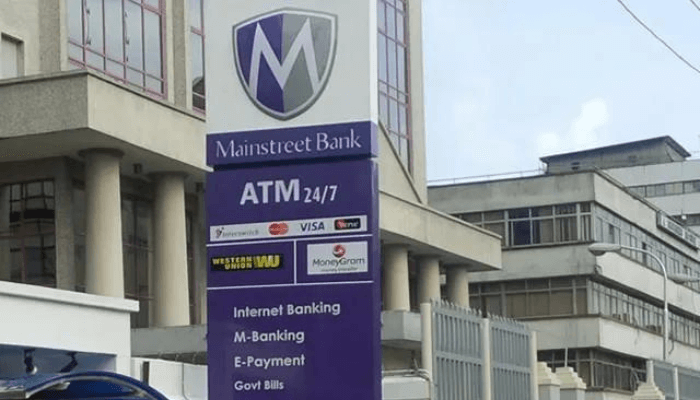
Mainstreet Bank witnessed a significant turnaround in 2012 as key performance indicators showed the beneficial impacts of recent initiatives on the overall outlook of the nationalized bank.
The audited report and accounts of Mainstreet Bank for the year ended December 31, 2012, showed that the bank turned around from its losing streak with the replacement of a previous loss of N4.4 billion with a profit of N24.1 billion.
The report showed marked improvements in all key financial indices. The report indicated that the bank grew its gross earnings to N47.9 billion within the period under review.
Other intrinsic highlights of the results showed a stable and steady performance with capital adequacy ratio and liquidity ratio of 92 per cent and 137.9 per cent respectively. Return on assets stood at 7.0 per cent, return on equity was higher at 44.5 per cent while the bank’s non-performing loan ratio was better than industry’s average target of 5.0 per cent at 3.29 per cent.

Commenting on the results, chairman, Mainstreet Bank, Mallam Falalu Bello described the report as a major breakthrough noting that the bank’s profit before tax grew by an unprecedented 397 per cent during the period under review.
According to him, the bank’s leadership and its corporate governance regime contributed greatly in the attainment of such remarkable feat.
Read also: Petrobras announces joint venture for E&P operations in the African continent
Group Managing Director, Mainstreet Bank, Faith Tuedor-Matthews, described the results as a stellar performance reflective of the resilience of the bank and the commitments of staff.
She challenged employees to rise to the future challenges by ensuring that the bank attains its leadership aspirations especially in the area of innovation, service excellence and strong ethical conduct.

“We will continue to train and retrain our staff to ensure that they do banking differently, indeed, our story will be our springboard to future triumph,” Tuedor-Matthews said.
Analysts said the results have rekindled hope across the industry especially amongst customers, financial analysts and investors who had expressed mixed feelings on the ability of the Asset Management Corporation of Nigeria (AMCON) to stabilize the nation’s financial system following the takeover of some banks under the bridge model.
Main Street Bank is one of the bridge banks that emerged on August 5, 2011 following the takeover by the Nigeria Deposit Insurance Corporation (NDIC) of the defunct Afribank Plc. It was subsequently recapitalized by its new owners-the Asset Management Corporation of Nigeria (AMCON).