




|
Getting your Trinity Audio player ready...
|
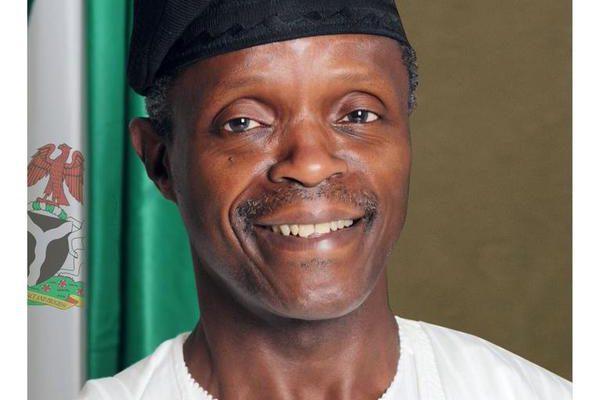
If there is one thing President Muhammadu Buhari got right, it is his choice of a Vice President. This is the view of ardent followers of developments in the country, who say that in the last 38 days, Professor Yemi Osinbajo, a Senior Advocate of Nigeria, in his capacity as Acting President of Africa’s most populous nation, has demonstrated that he is indeed made of sterner stuff as he has taken firm control of the country and is gradually but consistently proffering solutions to its myriad challenges.
Apart from the initiatives he has taken so far which, according to analysts, are expected to either bring the country out of recession or at least fast-track the process, Osinbajo, who maintains a humble mien, has continued to prophetically assure Nigerians that all would be well.
“It is not difficult for Nigeria to get out of where we are, knowing how we got there,” he had said in January in faraway Davos, Switzerland, where he had been attending the World Economic Forum before he cut his trip short to take over the big task of administering the country.
Since taking control as Acting President, Osinbajo has been traversing the length and breadth of the country calming frayed nerves, soothing anger and building bridges across troubled and hitherto sidelined sections of the country.
Pundits say he is gradually rebuilding the economy and may eventually succeed in regaining all the goodwill that the ruling All Progressives Congress (APC) had frittered following the tardy way it had handled affairs of the country since coming to power in 2015.
Osinbajo took over the reins of government as Acting President in the absence of President Buhari, who left the country on January 19 for a medical vacation. This is the third time that Buhari has gone on vacation since assuming office, consequently handing over the mantle of leadership to Osinbajo. The first was in February 2016, and the second was in June 2016. Buhari took off again on January 19, 2017 after informing the National Assembly of his intentions to proceed on a 10-day vacation. However, he later wrote to extend his vacation indefinitely even as Nigerians continue to raise concerns about the true state of his health.
Buhari, 74, had been criticised for his apparent slowness in taking critical decisions in government which, some analysts say, may have contributed greatly to the country’s slide into recession. With Osinbajo at the helm of affairs, albeit temporarily, the jinx seems to have been broken as things are getting done faster, with some industry watchers saying he has somewhat restored investor confidence with the way he has handled the affairs of the country so far.
Economic Recovery and Growth Plan
Within the last one month, Osinbajo, who is the head of the country’s Economic Team, has held one of the longest Federal Executive Council meetings in the life of the present administration. The seven-hour-long meeting, it was gathered, was spent making input into the Economic Recovery and Growth Plan (ERGP) which the government has severally insisted is the magic wand that will bring the country out of the biting recession. Officials have also said the plan would be launched at the end of the month.
International lenders whom Nigerian authorities have been engaging with for budget support have said they are awaiting the ERGP to enable them take appropriate position on the request. According to the international lenders, further actions would depend on the country’s reform agenda intended to help it turn to growth.
Nigerian authorities proposed to source N900 billion foreign borrowing in the 2016 budget to partly plunge the N2.22 trillion deficit of the N6.07 trillion budget hardly implemented due largely to funding constraints. For 2017, there has been a proposal to source N1.067 trillion externally to partly finance a projected N2.32 trillion budget deficit in the record N7.298 trillion budget which is currently being debated by the parliament.
Forex market intervention
After what insiders say was a stormy session at the National Economic Council meeting chaired by Acting President Osinbajo, the Central Bank of Nigeria (CBN) last week rolled out some measures which it says may reduce the pressure on the naira and reduce the price of foreign exchange in the parallel market.
The apex bank suddenly announced that those who need dollars for travel purposes or to pay foreign school fees could buy at nearly 20 percent above the official rate, which is still better than buying at over 40 percent at the black market.
“The CBN would meet the needs of parents, guardians and sponsors who are seeking to make payments of school and educational fees for their children and wards. Such payments must be made by commercial banks directly to the institution specified by the customer. The CBN would ensure that this process is as smooth as possible and that as many customers as possible get the foreign exchange they genuinely demand,” the apex bank said in a statement announcing the new development.
“This would also apply to customers seeking to make payments, or purchase foreign exchange, for medical bills and paid directly to hospitals. The supply of FX to retail end-users (PTA, BTA, school fees, medical bills, etc) would be sustained by the CBN,” it said.
The new development may have come as a rude shock to many. The naira has continued to slump for almost two years, with Buhari insisting on no devaluation of the currency.
Boosting ‘ease of doing business’
Last week, the Presidential Council on the Ease of Doing Business, chaired by Osinbajo, finally approved a 60-day national action plan to ease of doing business in the country and improve its rankings in the World Bank Doing Business Index 2018. Nigeria currently ranks 169 in the Ease of Doing Business Index 2017.
The Council approved a national action plan to be implemented across its three priority areas – Entry and Exit of goods; Entry and Exit of people, and Government Transparency and Procurement – over the next 60 days to deliver tangible changes for SMEs in the country.
As part of the reforms, the Corporate Affairs Commission’s online portal will be upgraded to document upload capabilities that will make it possible for new businesses to be registered online from start to finish without having to visit the CAC office. The reform will also see to the streamlining of the number of agencies operating at the nation’s ports to just six, as well as the issuance of visa on arrival and the 48-hour processing by the Nigeria Immigration Service (NIS).
PEBEC will work with the National Assembly to pass important bills like the National Collateral Registry Bill and the Credit Bureau Services Bill which would ease access to credit for SMEs.
Niger Delta debacle
Osinbajo seems to have covered more grounds in the dialogue with stakeholders in the Niger Delta region. Beginning from January 16, even as Vice President, Osinbajo, led high-level Federal Government delegations on a series of interactive engagements with oil-producing communities (Delta, Bayelsa and Rivers States) to interact with leaders and representatives of the communities in continuation of the administration’s ongoing research efforts towards finding a long-lasting resolution of the Niger Delta crisis. This, according to the Presidency, was in “further demonstration of President Muhammadu Buhari’s readiness and determination to comprehensively address the Niger Delta situation”.
He visited Gbaramatu and heard from chiefs and Ijaw youths; visited Maritime University and from there proceeded to the Olu of Warri’s palace. He also paid visits to PTI, Ndokwa nation and youths, with several groups presenting papers. In all of these places, he emphasised that the problem of the Niger Delta was a Nigerian problem, assuring of government’s willingness to call a truce.
“It is not time to argue or to negotiate; we know the Niger Delta issues. It is time to act,” he said.
Many have described Osinbajo’s approach to the Niger Delta challenge as one of intelligence and diplomacy. These moves seem to be yielding dividend as militancy activities in the oil-rich region have dropped considerably while there has been a rise in oil production.
Buhari, a former military leader, earlier employed the use of military force to quell the activities of militants in the region and remained indifferent when agitators in the region gave the withdrawal of the military as one of the conditions for peace.
Launch of MSME clinic
Within this period, Osinbajo also launched the Micro Small and Medium Enterprises Clinics partly to accelerate the ease of doing business in the country and personally went to Abia State to kick off the first clinic. The MSMEs clinic, launched January 24, 2017 in Abuja with Federal Government business regulators, is expected to go round the 36 states of the country with Abia as number-one stop.
At Aba, the commercial nerve-centre of Abia State, the Acting President in a hands-on approach brought together MSMEs and regulators – such as NAFDAC, SON, etc – on the spot to solve problems. He said he had been to CAC, SMEDAN and others, calling on these government agencies to see themselves as facilitators.
Osinbajo recognised Aba as the base of Nigeria’s manufacturing and SMEs. He said Aba people exemplify creative attributes and explained the idea behind the MSMEs clinics.
“I’ve seen all sorts today in Aba. There is a can-do spirit. We want Federal Government business regulatory agencies to facilitate business, not create bottlenecks,” he said.
His words drew cheers from local MSMEs, traders and artisans who were excited at the thought of such huge federal presence and support that they had never got in ages.
Other conclusive decisions
Within 30 days of Osinbajo’s acting, some conclusive decisions were made, such as approving the release of N72 billion as counterpart funding for the Lagos-Ibadan railway project, the release of funds for the take-off of the National School Feeding Programme and the soft loans scheme, both of which are part of the core of this administration’s programme.
The FEC under his purview has made some approvals as well as some conclusive decisions. It has approved a new tax policy which has been pending, increased tomato tariffs, set up a task force not to force down but to address issues of rising food costs in the country, and approved a new national policy on environment, amongst others.
As citizens groan under the weight of escalating prices of foodstuffs and cost of living in general, the Acting President inaugurated a food security task force which has been mandated to explore and recommend means of urgently resolving some of the bottlenecks and challenges contributing to the increase in food prices across the country.
lve around transportation and preservation. So, it was received with optimism when the ministers of Agriculture and Rural Development, Finance, Industry, Trade and Investment, Transportation, Water Resources, along with representatives of the Office of the Chief of Staff to the President and Office of the Senior Special Assistant to the President on Sustainable Development Goals (SDGs), were constituted into the committee.
On January 23, the Acting President chaired the 2nd Presidential Quarterly Business forum at the State House where the Economic Management Team interacted with business representatives, with the organised private sector fully represented. This, the Presidency said, was in “continuation of the Buhari administration’s consistent collaboration with private sector”.
Last Thursday, Osinbajo was at Nigeria Stock Exchange in Lagos to launch green bonds, part of the Federal Government’s efforts to broaden investment and promote sustainable development. The green bonds proceeds, BDSUNDAY learnt, will go to environmental-friendly green projects such as the solar power project he commissioned a few weeks ago in Wuna, Abuja.
Osinbajo merely acting Buhari’s script
A government official, however, said Osinbajo was acting out a script already agreed on between him and his boss, President Buhari, during a series of meetings they held before the president’s departure.
“The president also decided to play down the use of open military tactics and gave firm instructions on this ahead of his delegation instructions to the vice-president to embark on the ongoing trips to Niger Delta states,” an Aso Rock official who pleaded anonymity told journalists early last week.
The official had added that part of Buhari’s instruction to the acting president on the tour was to ensure that all interests were brought to the fore, regardless of party affiliations.
“Besides, the President also asked the Vice-President to ensure that during the visits, the communities should be made to understand that the government is now interested in action and would do its own part. The Vice-President was also asked to secure from the communities a buy-in of peace and collaboration from state governments and the oil companies in particular,” the official had said.
More needs to be done
While lawyers have said the Acting President has all the constitutional powers to act on behalf of the President, Aso Rock sources told BDSUNDAY that “Osinbajo will not do what his boss did not ask of him”.
Some Nigerians have been speculating that despite Osinbajo’s bold moves, his hands may be tied, arguing that he may be unable to take some decisions, especially those relating to appointment of boards of government agencies. This may again explain the reason for the delay in board appointments as it is thought that even if he really wanted to get it done quickly, Osinbajo must seek his boss’ approval.
Meanwhile, industry watchers say some decisions, such as the appointment of boards of agencies which directly affect the running of the government and the economy in general, can no longer wait.
There have been calls by different groups, urging the government to tidy up the agencies by appointing the board of directors which it dissolved almost two years ago.
Buhari, who extended his vacation on February 5 when he was supposed to resume, would return to the country when his doctors give him a clean bill of health, Presidency officials said.
However, as the country continues to await the return of President Buhari to take some pertinent decisions, sources say Osinbajo may not be able to exert those powers as he is treading cautiously to avoid being seen as trying to usurp powers.
Whatever the case, watchers say an Acting President Osinbajo is making some much-needed impact on the economy as his capabilities in the last one month have shown that all the while his powers as head of the economy may have been downed by his principal.
“If this administration can maintain this tempo and build on it, indeed, APC may just redeem itself in the eyes of the citizens whom they have disappointed since they took over the government with several negative/ineffectual policies,” said an analyst who pleaded anonymity.




