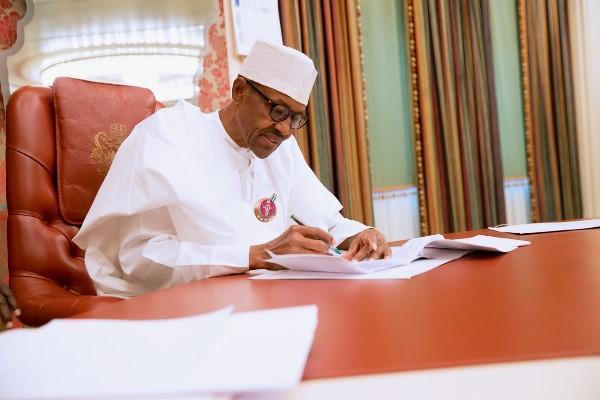
President Muhammadu Buhari’s five-week absence from Nigeria has triggered political jockeying within his ruling party as concerns grow about his health and his capacity to lead when he does return.
His office tried to reassure Nigerians this week that “there is no cause for worry”, but added that the 74-year-old, who has been receiving treatment in London, would need a longer period of “rest” than originally planned. And not even his own ministers know how ill Mr Buhari is, said senior officials.
The uncertainty has fuelled speculation that the former general will not be fit enough to run for a second term in 2019, and the country’s political class is now consumed with who will stand on behalf of his ruling All Progressives Congress.

At the heart of that issue – and simmering power struggles – is the concept of “zoning”, a defining principle of Nigerian politics since military rule ended in 1999. It holds that the presidency should rotate between the mainly Christian south and the mainly Muslim north after every two terms.
If Mr Buhari, a northerner, leaves office before his first term ends, Yemi Osinbajo, his deputy and a southerner, would take over until elections are held. But whether Mr Osinbajo then becomes the APC’s nominee in 2019 is “anybody’s guess”, said a senior party member from the south, predicting that the party’s northern elite might argue they need to finish “their turn”.
“Will the cabal let go?” said a northern Nigerian technocrat, using a term some use to describe Mr Buhari’s aides, who are also Muslim northerners. “A scenario where they maintain northern control over government is what they want.”
The issue has become more sensitive because the last president from the north, Umaru Musa Yar’Adua, died in office in 2009, prematurely ending the region’s hold on the executive. Goodluck Jonathan, Yar’Adua’s deputy, went on to secure his party’s nomination for 2011 polls and served another term. In the two decades since the end of military rule, northern politicians have held the presidency for less than five years.
“A lot of politicians are already looking ahead to 2019 and how best to position themselves,” said Antony Goldman, head of London-based PM Consulting, which provides advisory services to the Buhari administration.

“The current speculation, actively fuelled by political interests, is only accelerating the process,” he added.
The tussle comes as Nigeria, Africa’s top oil producer, grapples with its worst economic crisis in 20 years. One cabinet minister said the political jostling was already becoming a “distraction”, adding that “other considerations should be the focus of the government now”.
Still, some in government note that Mr Osinbajo has used the president’s absence to push ahead with the sort of action Nigerians have been hoping for since electing Mr Buhari two years ago.
“People are happier with the performance and style of the vice-president – he’s more decisive, active and charismatic,” said a senior government official. Even some elites from Mr Buhari’s stronghold in the north say the country is running better with his deputy at the helm.
Mr Osinbajo has been chairing cabinet meetings and working with parliament to pass legislation and fill important positions, such as the Supreme Court’s chief justice chair. This week, he unveiled a “60-day action plan” to lure new investment to Nigeria.
Officials close to talks between the government and the World Bank over a $1bn loan also say there is more optimism about the negotiations succeeding as Abuja finally puts together an economic recovery plan needed to secure the debt.
“The country has been in a freezer for the past year,” said the head of a multinational company in Lagos, adding that he now had hope the economy could turn round on the vice-president’s watch. “He [Osinbajo] listens, understands, and inspires trust.”