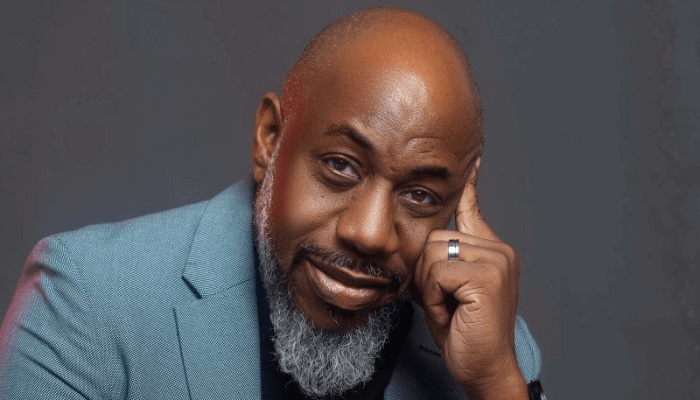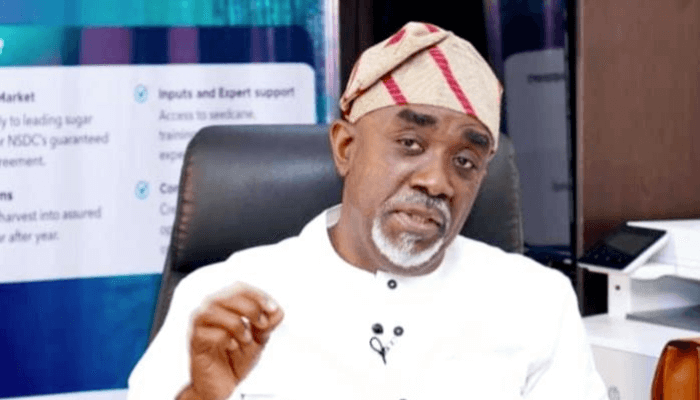
Education, understood as bringing out the best in a person, requires a clear understanding of what and how mental skills evolve, in addition to emotional and psychomotor skills. In this interview ANAYO EZENNIA, Founder Cogniskills Ltd, draws attention to the complexities involved in dealing learning challenges. He spoke to STEPHEN ONYEKWELU. Excerpts:
What inspired you to found Cogniskills Ltd?
In 2005, a friend of mine who had undergone cognitive skills training in the United States of America asked me to help her set up a learning center in Ikoyi. She trained me and we provided cognitive training together to children living in Ikoyi, Lekki and Victoria Island for three years before she returned to USA in 2008.

During the course of training children in Ikoyi, I was better able to appreciate the emotional, psychological and social pains that children with learning disabilities and their parents experience. I made up my mind that I was going to continue providing learning solutions to such children and I believe that is where my calling is. After she left, I traveled to South Africa and then to USA and got further training and certification, came back to Nigeria and registered Cogniskills Ltd in 2009.
What are some of the major problems in Nigeria’s education system – basic education, secondary education and tertiary education?
The education system in Nigeria has deteriorated so much that private institutions now rule the basic primary, secondary and tertiary institutions. The basic facilities are not made available to schools, teachers are not well paid and the little salaries they look forward to at the end of the month are owed. Parents encourage their children to cheat in entrance examinations just to ensure that they gain admission into their desired schools of choice.
The so-called private schools which are supposed to maintain the values of education are population-driven and have reduced their standards in order to admit and maintain as many students as they as can. There are no proper checks in schools to ensure that a student qualifies to be promoted to the next class. Every child is promoted because the schools do not want to offend parents of their pupils.

What solutions do you envisage?
The education sector in Nigeria needs a complete overhaul. It is duty of the Federal and State Governments to ensure that facilities are put in place in schools and teachers, together with being paid good salaries, are trained and re-trained so that they can stay abreast of the evolution in the sector. A monitoring body for both public and private schools should be set up to ensure that schools operate within the dictates and requirements of Government.
What would you list as one of the most prominent achievements at Cogniskills?
The fact that every child I have trained records significant improvement is a very prominent achievement to me. Hearing and reading parents’ testimonials and recommendations to other parents whose children are learning disabled is a huge achievement. Seeing the joy displayed by a child when he or she realizes that they could do those things they thought they couldn’t do before and witnessing a restoration of student’s self-esteem, confidence and a massive improvement in their general academic performance are all huge achievements for me.
I remember a student that got on the honour role as the ‘best improved student’ in his school. Another student wore the best ‘Math Student’ badge in his class for one month (he was coming to the training center with the badge on), while another, recited the names of 44 presidents of United States to the amazement of the head teacher, other teachers and pupils at the morning assembly and he gained the respect of all the children in his school. This helped restore his self-confidence and self-esteem and increased his motivation. These are all children who were labeled, teased and bullied before they enrolled for the cognitive program. The improvements were recorded just after six weeks of training.
What are some of the challenges?
We face challenges in the area of creating awareness. Parents do not understand what cognitive training is about. There is little or no emphasis on providing learning solutions through cognitive training in the country. They think that extra lessons for the child are the solution. The child improves with the help of the lesson teacher in a particular year but falls further behind when faced with bigger challenges during the next academic year. This is because the root-cause of the problem has not been addressed. But cognitive training addresses the root cause of these learning problems and helps what is learnt to become permanent so that the child performs his or her academic duties independently.
Illiteracy is another challenge. Seventy-five percent of Nigerians think that the word ‘cognitive’ refers to ‘mental’ problems. Because of this, parents whose children have learning difficulties that can easily be corrected by undergoing cognitive training shy away from seeking proper intervention because they do not want people to label their child as having ‘mental problems’.
Some parents call it spiritual attack. They take the child to different churches for deliverance. They refuse to admit that the child has a problem because they want to act out their faith but the child suffers.
Schools are not willing to inform parents whose children are slow learners that there is a solution outside their scope because parents may accuse them of failing in their duty to teach their children properly.
Another area where we have a challenge is in the parents’ inability to exercise patience especially expecting instant improvement in a child who has lived with a certain challenge for many years. People need to understand that the length of time and amount of attention given will depend on the severity of the disorder. Severe challenges take a longer time to correct while mild cases take a shorter time to correct. Some parents are impatient, and would expect you to perform magic in a short period of time. However, it is important to note that our program does not cure specific disorders; instead, it helps correct the learning problems that come with such disorders. We only deal with the learning aspect so that when the child gets to school, he can perform easier, faster and better in his academic work.
What is the future of Cogniskills?
Cogniskills is in the process of expanding into a big training center that will cater for the needs of the learning disabled, not only for children but also adults. We have set up a school with boarding facilities for children living outside Portharcourt. That way, parents who cannot bring their children for daily training can send them to us for a specified period of time until the child is through with the program.
We have also developed our own training materials and programs and by September 2017, we will be organizing training programs for trainers who want to go into the business of helping individuals with learning disabilities. In other words, we will be creating job opportunities for many Nigerians next year.
What else is worth knowing about Cogniskills?
Cogniskills Learning Enhancement Center is a learning enhancement and improvement resource facility which provides cognitive skills training that targets the underlying mental and reading skills of its clients. These mental skills are vital for easy, fast and effective learning. Cogniskills Learning Enhancement Center started operations in 2009. We work with individuals of different learning capabilities from the age of six. Cognitive Skills are the underlying fundamental skills which are often overlooked but which also are essential tools of learning.
Examples of cognitive skills are: Attention (selective, divided and sustained), Memory (long and short term), Visual Perception, Processing Speed, Logic and Reasoning, Comprehension and Auditory Processing. They are mental skills which we need to successfully learn academic subjects. When cognitive skills are strong, academic learning is fast, easy, efficient and even fun. When cognitive skills are weak, academic learning will be at best a struggle.
We first of all, identify the weak skills that are responsible for learning difficulties through our battery of cognitive test parameters, and through our dynamic training and practice, we develop and strengthen these skills. We also work with high and average academic achievers who want to record stronger academic performance.
We also established a Nursery/Primary School in 2013, which goes by the name: Brentwood Academy, in Portharcourt. We have a Learning Support Unit that caters for the pupils of the school with learning disabilities. Our aim is to upgrade the pupils’ performances to the highest academic performance level possible and the results have been outstanding.
Which skills are most needed in the 21st Century?
All cognitive skills are needed in the 21st Century because they work in concert with one another. If one or more skills are deficient, other skills are affected and this reflects in the individual’s learning capability.