|
Getting your Trinity Audio player ready...
|
…yet Buhari prefers overseas hospitals
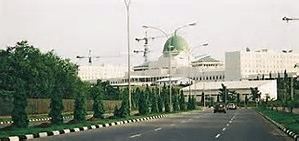
Despite receiving a total budgetary allocation of N4.4 billion in four years (2013-2016), State House Medical Centre within the Aso Rock Villa, Nigeria’s seat of power, is considered ill-equipped to attend to President Muhammadu Buhari’s medical needs.
At least, this is what the president and his handlers think, given Buhari’s preference for foreign hospitals.
The State House Medical Centre is built to provide health-care services to the president and vice-president, their families, civil servants working in the State House, and some notable dignitaries, all possibly less than 1,000 in number, according to an insider. The clinic is also supposed to serve as a training facility for house officers and other medical personnel.
According to available information, the Medical Centre functions through specialised departments, such as Paediatrics Department that manages children from birth to 18 years, made up of Paediatric medical ward, Paediatric outpatient clinics, and the Neonatal unit. It has Lab Medicine comprising four units – haematology and blood transfusion, clinical chemistry, microbiology, and histopathology. It also has the Department of Medicine, comprising two units, medical out-patient and inpatient units, and Obstetrics and Gynaecology Department for reproductive health.
BDSUNDAY checks show that the State House Medical Centre got N619.9 million in the 2013 budget, N862.9 million in 2014, N137.9 million in 2015, and a whopping N2.8 billion allocation in the 2016 budget, bringing the total budgetary allocation to the medical centre to N4.4 billion over the four-year period. For the 2017 fiscal year, a total of N331.7 million has been proposed for the medical centre in the draft budget.
An analysis of this figure shows that the State House Clinic received more allocation in President Buhari’s first year in office than it received in the last three years of the Goodluck Jonathan administration.
In the draft 2016 Budget he sent to the National Assembly, President Buhari had requested for N3.8 billion for the State House Clinic, but the lawmakers had approved N2.8 billion.
Defending the draft 2016 Budget before lawmakers, Jalal Arabi, permanent secretary, State House, said the huge amount was earmarked for the upgrade of the clinic to Centre of Excellence.
“The budget for the State House Medical Centre included N3.219 billion proposed for the completion of on-going work as well as procurement of drugs and other medical equipment,” he said.
“The anticipated improvement of the Medical Centre will propel it to serve as a Centre of Excellence and also reduce medical tourism.”
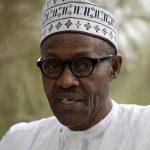
But since coming to power in May 2015, President Buhari, who recently took a trip to London for medical attention, has demonstrated a preference for foreign hospitals. Only last week, he transmitted a letter to the National Assembly informing the legislators of the indefinite extension of his medical leave following “series of medical tests”. The recent trip is Buhari’s second pronounced medical trip since he assumed office.
Even though the cost of the president’s medical trip to the Nigerian taxpayer is not in the open, analysts speculate that it must be running into tens of millions of naira, especially given the weakness of the naira against foreign currencies.
According to BDSUNDAY calculations, the N3.8 billion earlier requested by the president in the draft 2016 budget was N787 million higher in capital allocation than the amount provided for the 16 federal teaching hospitals in the country.
For instance, in the president’s first budget proposal, the capital allocation for the University College Hospital, Ibadan, was N230,904,795; University of Nigeria Teaching Hospital, Enugu got N218,335,908; University of Benin Teaching Hospital received N212,886,502; Obafemi Awolowo Teaching Hospital, Ile-Ife was allocated N162,622,221; University of Ilorin Teaching Hospital got N166,802,164; University of Jos Teaching Hospital got N228,717,880; University of Port Harcourt was allocated N169,498,392; N212,539,245 was allocated for capital projects at the University of Lagos Teaching Hospital, while the capital allocation for the Ahmadu Bello University Teaching Hospital, Kaduna, was N230,904,795.
Similarly, the capital allocation for University of Calabar Teaching Hospital was N201,082,446; University of Maiduguri Teaching Hospital got N215,151,873; Usman Dan Fodio University Teaching Hospital, Sokoto received N279,000,000; Aminu Kano University Teaching Hospital got N210,380,376; Nnamdi Azikiwe University Teaching Hospital, Nnewi got N166,188,931; University of Abuja Teaching Hospital was allocated N198,715,702; while Abubakar Tafawa Balewa University Teaching Hospital got N229,005,992. This sums up to about N3.3 billion.
Ironically, millions of Nigerians depend on these mostly ill-equipped teaching hospitals as well as other public and private hospitals for their medical needs, often paying through their nose to get the required attention.
Osadolor Ochei, a Benin-based human rights activist, told BDSUNDAY that the Senate was reasonable to have approved N2.8 billion for the State House Medical Centre in 2016 given President Buhari’s promise on assumption of office that he would discourage overseas medical trips by government officials in order to give attention to the country’s failing health facilities.
In April 2016, at the opening ceremony of the 56th Annual General Conference and delegates meeting of the Nigeria Medical Association (NMA) held in Sokoto, President Buhari had said, through Isaac Adewole, the Minister of Health, that while his administration would not deny anyone fundamental human rights, he would not encourage expending Nigeria’s hard-earned resources on any official seeking medical care abroad.
“The N2.8 billion was expected to improve on the facility of the Aso Rock clinic. But if the president of this country cannot improve on a facility that is directly meant for him, I wonder how he will improve on the public facility that is meant for the generality of the people of Nigeria. That is why every facility in Nigeria is going comatose,” Ochei said.
The activist, who also took a swipe at the federal lawmakers for not representing Nigerians but their individual pocket, said this was the time for the National Assembly to arise and look into what President Buhari is doing and to make sure the N2.8 billion it approved for the State House Medical Centre was accounted for.
“By right, the president can travel abroad for medical attention if he can afford it with his personal money. But what we are saying in effect is that the NASS should rise up to its responsibility of oversight over Nigeria’s issues. The lawmakers should recall Buhari from wherever he is, whether dead or alive, to come back to Nigeria because we have the equipment and the facility,” he said.
A 2009 report by the defunct NEXT newspaper revealed that the State House Medical Centre had 17 ambulances, the highest by any hospital in the country at the time.
According to the report, in 2008, 10 new state-of-the-art ambulances were brought from North Carolina in the United States, parked inside the presidential villa and left unused.
At the time the ambulances were left to rot away in Aso Rock, the National Hospital Abuja, believed to be one of the topmost hospitals in the country, had only nine ambulances, while the General Hospital in Nyanya, a decaying facility on the outskirts of Abuja that served more than 300,000 people, had just a jalopy 504 Station Wagon (CT 89-A10) as its only ambulance.
Samuel Atiku, research lead, BudgIT, a civic tech organisation, told BDSUNDAY that such wastages occur because Nigerian leaders and public servants have the culture of prioritising according to their personal needs and that of their families, rather than reversing such priority in the interest of the mass citizenry.
“When we spend this huge amount of money buying drugs and medical equipment, at the end of the day majority of voters cannot go to Aso Rock for medical help. Why not just reverse the order of spending by sending the money to medical centres and teaching hospitals where larger percentage of Nigerians go to for their medical needs?” he said.
“The presidential clinic has good equipments that are rusting away. I think the time has come for Nigerians to demand that these equipments be moved to centres where they are needed most since most of the people the clinic is meant for are still flying abroad for medical reason. It is unwise for leaders to be spending taxpayers’ money on a health centre they seldom use and still be flying abroad for the same purpose,” he told BDSUNDAY.
He questioned the rationale behind allocating N2.8 billion a year to a single hospital designed to care for estimated 1,000 citizens while teaching hospitals and other health centres responsible for the health over 170 million Nigerians are poorly funded.
“Economic principles teach us that even as a father in the house, if you know you don’t have much money, the little you have you put into something that would be of benefit to the whole family, not just the father alone,” he said.
“Economic principle forbids a father to be reckless financially by partying while the children lack food to eat and water to drink at home. This is the main reason for our lack of development; because budget planners give so much to few leaders and so little to millions of citizens,” he said.