…to reduce import by 60% by 2018
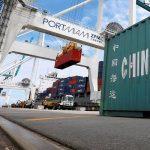
The Federal Government on Tuesday unveiled plans to reduce importation of petroleum products into the country by 60 percent by end of 2018, in line with President Muhammadu Buhari promise.
Ibe Kachikwu, Minister of State for Petroleum Resources gave the assurance during the ongoing investigative public hearing on the review of petroleum pricing template for Premium Motor Spirit (PMS) held at the instance of the House of Representatives, chaired by Nnana Igbokwe.
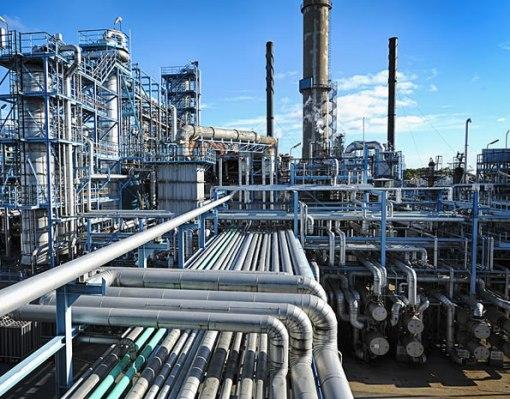
Kachikwu who explained that the ministry is already working on the template to halt importation of refineries products, expressed optimism that the adoption of modular refineries will help in achieving the 2019 target set to stop importing refined petroleum products into the country.

Kachikwu also pledged that within the next two years, the Federal Government revived refineries that were non-functional to contribute about eight million out of over 20 million litres of petrol consumed daily in the country.
“This has consistently served as a target for this government so that by 2018 December, NNPC must be able to deliver on some of the terms given them, one of which is to reduce petroleum importation by 60 per cent. By 2019 we should be able to exist completely the importation of petroleum products in this country.
“Cognisant of the fact that Dangote is building one refinery, we expect to have an excess situation then. The world is leaving that, every member of OPEC is leaving that because of the pricing, volume and market challenges is now shifting from selling crude to selling refined petroleum products. That is what this country must do and there is a template we are working on.”
While reacting to allegations bothering on ‘padding of the template’, the Minister disclosed that about Premium Motor Spirit (PMS) takes 71 percent of the pump price as contained in the template of the Petroleum Product Pricing Regulatory Agency (PPPRA) while 18 percent covers for depot charges, less than 10 percent for transportation while about two percent was provided as incentive to encourage supply of PMS to the Northern part of the country.
He however admitted that the challenges facing importation of petroleum products was due to scarcity of foreign exchange, hence the need for the administrative arrangement with International Oil Companies (IOCs) and the oil marketers.

Kachikwu also reiterated government’s resolve to provide enabling environment for investors to promote local refining of crude oil through the adoption of modular refinery.
To achieve this, he emphasised the need to set up modalities for the adoption of the modular refineries for efficiency.
“The issue is not giving licences to illegality, the issue is how do we ensure that we create an investment environment that pulls individuals from illegal creek activities to legal business activities.
“We are looking at modular refineries, about 60 licenses were given out just before this government came in and none of that was utilized because it requires a lot of money, land and crude security.
“But now we are going out to identify refineries, get individuals who can build co location refineries on the same platforms where our refineries are and identify some key specific modular refineries backed up by foreign investments working with state governments. Hopefully this will address the restiveness you see in the Niger Delta,’’ the Minister said.
On the possibility of reducing the fuel pump price, Kachikwu said there was no padding in the petroleum pricing template for Premium Motor Spirit (PMS) currently sold at N145 per litre.
According to him, 71 per cent of the cost is for the production and freight, 18 percent balance is covered by depot charges and retailers margin.
“In other words the storage tanks, the amount you get by verge of operating a filling station takes another 18 percent, the output of those is already taking you to roughly about 90 percent.
“The transportation is less than 10 percent; we probably can do better with some of those because the effect of that to the templating is an insignificant one or two percent but that’s not where the problem is.
“The problem is with foreign exchange rate of conversion. There are two key elements in the template, how much you buy it is internationally fixed, it is not a Nigerian issue the cost of foreign exchange is a monetary policy issue.
“So at the time we did the template the Central Bank of Nigeria (CBN) monetary policy was N245, that was the basis upon which we calculated the pricing, today N305 is the exchange rate and what we have tried to do is to ensure that anybody who sells us foreign exchange follows basically the instructions of the CBN in terms of the amount,’’ he said.
While responding to questions on the administrative arrangement between the apex bank, International Oil Companies (IOCs) and oil marketers, Alade, CBN Deputy Governor, efforts were made to clear all the matured Letter of Credits (LCs) in December 2016.
She explained that the apex bank was responsible for the authorisation of the forex trading adding that all he hotels were part of those authorised to buy forex and sell to the apex bank.
“There is shortage of foreign exchange. In 2013 to 2014 Federal Government used to get $2 billion to $3 billion monthly and the CBN in the interbank sells about 30 percent of that, seventy percent come from the foreign investors.
“Today, we get $600 million, $700 million. Nothing comes in from interbank. $1.5 million is sold everyday and $1 billion was done in December to clear matured letters of Credit. Its not the way it used to be,” the CBN Deputy Governor told the committee.