|
Getting your Trinity Audio player ready...
|
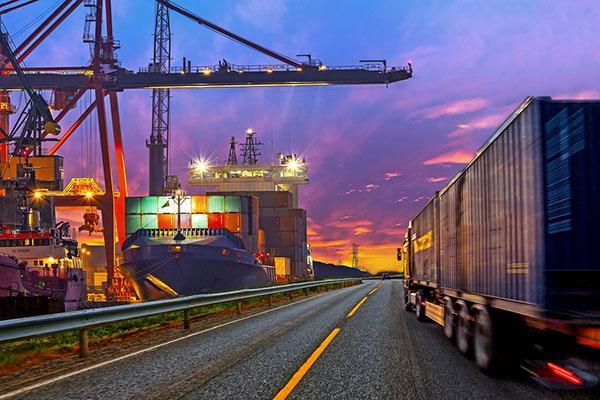
There are serious indications that Ghana may soon outweigh Nigeria in the development of dry ports, also known as inland container depots (ICDs), built with the aim of bringing port operations close to the users as well as decongesting the port.
This is as the Ghana Ports and Harbours Authority (GPHA, yesterday announced its plans to develop a 7500TU off-dock container terminal at the Takoradi Port through a joint venture agreement with Ibistek Crowley.
The container terminal, when completed, is expected to help decongest the port and improve the handling of containers at the port while allowing sufficient space within the port to be used for other important activities that will generate extra revenue for Ghanaian government.
Recall that the Nigerian Shippers’ Council (NSC) has over the years been working in partnership with the private sector investors to build six different ICDs in the six geo-political zones of Nigeria. The ICDs are listed and located at Isiala-Ngwa, Aba; Erunmu, Ibadan; Heipang, Jos; Zawachiki, Kano; Zamfarawa, Funtua and Jauri, Maiduguri.

Tony Anakebe, managing director of Gold Link Investment Limited, believed that the ICD projects in Nigeria, which was conceived with the vision of easing container movement, storage and facilitating trade between Nigeria and neighbouring West
African countries, was initially delayed by the inability of the Federal Government to grant to ICDs a dry port status as requested by the private investors.
According to Anakebe, granting dry port status to the ICDs will help them to become ports of origin such that importers and exporters can either import into a particular ICD in Nigeria or export from there to Europe.
Hassan Bello, executive secretary of the NSC, said recently in a meeting with the various concessionaires of ICDs in Lagos, that government would ensure that all the inland dry ports become ports of origin.
“The concessionaires,” he said, “must be committed to developing the ICDs to achieve its goals. The government has an obligation of creating an enabling environment through consistence policies to encourage private sectors to perform. The concessionaires too have an obligation. Government is an enabler and will do everything possible to ensure that these projects come on stream.”

In Ghana, Ebenezer Afadzi, director of Takoradi Port, said the Takoradi Port was built in partnership with Ghana Cement Manufacturing Company that was expected to construct a spacious car park at the Old Slaughter House at New Takoradi to ease traffic congestion.
He said Ghanaian government had completed a 1.08-kilometre breakwater with a 16-metre depth to enable larger vessels from the West African sub-region to berth without any difficulty, thus achieving its vision of becoming a one-stop-shop for oil and gas services.
On the ongoing expansion works at the port, he noted that it will enable a single large vessel to load 120,000 metric tonnes of cargo at a go, against the 40,000 handled by a vessel now.
“Let me say that the successful completion of the port expansion works would improve the turnaround time and eliminate double handling of cargo and drastically reduce the cost of doing business at the facility. This will also create employment for the youth in the metropolis, and become the preferred destination for shipping companies in the West African sub-region,” he added.
The Takoradi Port which was constructed in 1928, in recent times since Ghana found oil has been witnessing major expansion works to render modern services to its clients and become the preferred destination for vessels in the sub-region.
The GPHA and the Government have secured an initial loan facility of 197 million Euros from the Belgian Government for expansion of the Takoradi Port. Ghanaian parliament also in January this year approved another loan facility of 160 million Euros for the second phase of the expansion works, which would be completed in the next two to three years.