|
Getting your Trinity Audio player ready...
|
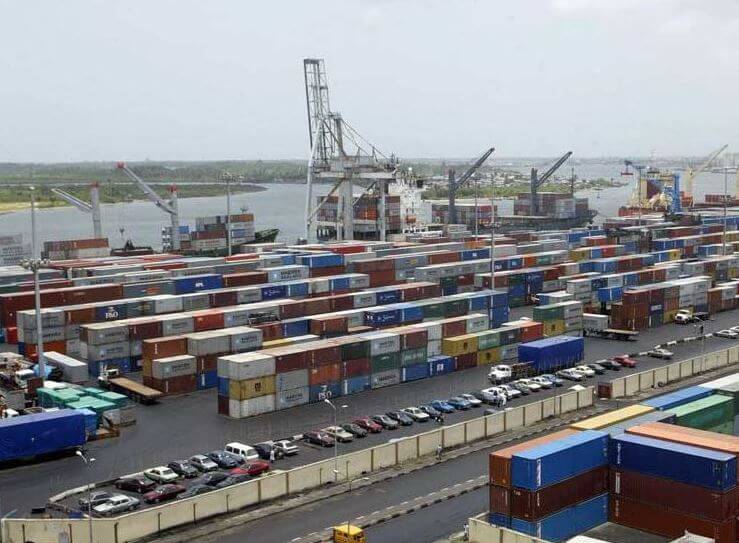
Shippers and manufacturers say manual processes of clearing goods at the nation’s ports are causing long delays and raising their cost of operations by about 50 percent.
The slow clearing processes result in payment of demurrage and storage charges to shipping companies and terminal operators, an unnecessary addition to their cost of operations.
It takes between 14 and 21 days, instead of two days, to clear a container in Nigeria’s seaports, and this adds about 50 percent to the cost of importation and 61 percent of the total cost of exporting cargo, importers told BusinessDay.
Jonathan Nicole, president, Shippers Association of Lagos State, told BusinessDay that the nation’s maritime system is infested with rent-seekers, who have refused to adopt modern day technologies to fast-track cargo clearance and save cost for shippers.

“Government needs to encourage genuine manufacturers and importers to bring in critical raw materials by reducing the cost of clearing from the ports. This is because high cost of clearing transforms to high cost of production, which adds to the market prices of finished products,” Nicole said.
He advised that the cost of clearing can be reduced by the introduction of “e-payment of Customs duty; e-container loading list; electronic risk-based inspection; connecting all government agencies under one platform and e-permit exchange, among operators.”
Tony Anakebe, managing director of Gold-Link Investment Limited, a clearing and forwarding company, said in a telephone interview that the biggest bottleneck experienced by importers in Nigerian port is the delay in cargo clearing, and suggested the quick introduction of the Single Window Model of cargo clearance.
Anakebe said the Single Window system enables shippers to submit regulatory documents at a single location, where the relevant authorities involved in cargo clearance can access them. “This helps to increase efficiency, through time and cost savings for traders in their dealings with government agencies during cargo clearance.”
He gave example of neighbouring Ghanaian ports, where he said automation is deployed seamlessly, resulting in greater efficiency and savings in time and cost.

A recent survey titled ‘Nigeria: Reforming the Maritime Ports,’ carried out by the Lagos Chamber of Commerce and Industry (LCCI) pointed out that manual inspection of cargo by the Nigeria Customs Service (NCS) consumes time and increases cost of moving containers. The survey suggests the need for the Customs to allow terminal operators carry out container scanning (as is done globally) and electronically transmit the information to Customs for analysis, to save time.
The LCCI survey further observed that late resumption of daily operations and failure to work at weekends and public holidays were significantly slowing down economic activity and growth in the economy.
“Services such as invoicing and issuing of payment receipts, as well as booking of examination of cargo, also contribute to man-hour losses, due to late commencement of operations that could easily be done electronically. Positioning cargo for examination should be effected 24-hours after booking, to avoid delays,” the survey added.
The LCCI survey further suggested that there is a need to create a National Trade Data Centre, to integrate the various processes and value chain management in the ports. “This would help Nigerian seaports increase efficiency and attain global best business practice.”
Emma Nwabunwanne, a Lagos-based importer, said in an interview, that it is disheartening that agencies like the Customs and the Standards Organisation Nigeria (SON) still generate payment receipts manually, when computers are accessible. He observed that this creates room for corruption and collection of illegal charges.
AMAKA ANAGOR-EWUZIE