|
Getting your Trinity Audio player ready...
|
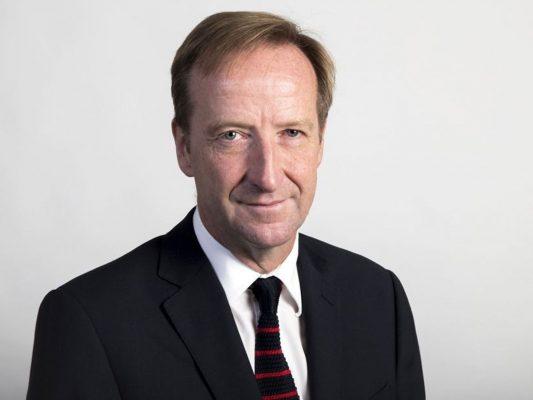
State-sponsored propaganda, fake news and subversion pose a “fundamental” threat to the sovereignty of the UK and its allies, according to the chief of Britain’s Secret Intelligence Service.
Although he did not name Russia, references in a rare public speech by Alex Younger, head of MI6, left little doubt he was referring to recent activities that many western spy agencies attribute to the Kremlin. “The risks are profound,” he said. “They should be a concern to all those who share democratic values.”
His warning comes after a deeply divisive US election campaign in which federal authorities said Russian intelligence sought to influence voters by discrediting Hillary Clinton.
Moscow’s boldness in the presidential vote – which exceeded any of the KGB’s cold war “active measures” campaigns – has caught even hawkish western intelligence agencies off-guard.

MI6 and Nato officials share significant concerns over what the Kremlin may do to disrupt or manipulate elections in Europe next year.
“The connectivity that is at the heart of globalisation can be exploited by states with hostile intent to further their aims deniably,” said Mr Younger. “They do this through means as varied as cyber attacks, propaganda or subversion of democratic process.”
Russia’s spy agencies, the SVR, GRU and, in some instances, the FSB, have been increasingly active in Europe for some time – with now equal, if not greater, penetration of European political parties than that recently seen in Washington, senior European intelligence officials recently told the FT.
Last month Bruno Kahl, head of the German Federal Intelligence Service, or BND, warned that “Europe is in the focus of this attempted disruption and Germany in particular”.
Germany’s cyber security agency, the BSI, previously warned that all the country’s main political parties had been targeted by Russian hackers.

“Our job is to give [our] government the information advantage,” said Mr Younger yesterday, “to shine a light on these activities and help our country and our allies, in particular across Europe, build the resilience they need to protect themselves.”
He said attempts to manipulate elections and distort public information fitted into “the increasingly dangerous phenomenon of hybrid warfare”, which was spreading in its use and effectiveness.
Hybrid warfare, known in Russian military doctrine as “non-linear” warfare, is now central to the way the Kremlin confronts countries it sees as strategic adversaries, such as the UK.
It involves bringing a range of pressures to bear, from economic to information manipulation, and includes subversion and covert acts of destruction and destabilisation.
Manipulation of information is a critical component of the Russian doctrine, particularly where it can be used to exert what Russian intelligence knows as “reflexive control”. This is where information narratives are created that box in opponents and unwittingly guide decision makers towards choices favourable to Russian interests.
While many techniques now practised by Russia were used by the KGB, the internet has created powerful new methods of influence.
“Data and the internet have turned our business on its head,” Mr Younger said.