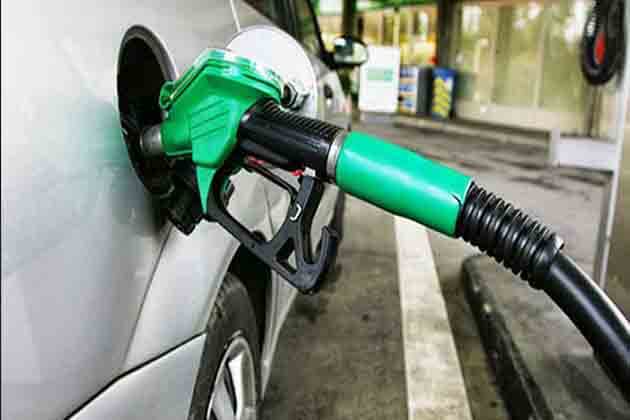
Lagos, Oyo and Ogun states have emerged the highest users of the automotive gas oil (AGO) otherwise known as diesel and premium motor spirit (PMS), locally called petrol, the analysis of petroleum products consumption by BusinessDay Research and Intelligence Unit (BRIU) for the nine months ended September 2016 shows.
The two products are used as proxies to measure the level of economic and industrial activity in Nigeria. Thus the high consumption of petrol and diesel in the three states reflects the high level of economic activity concentrated in the three states.
BRIU analysis shows the three states at the end of the period collectively utilised 962 million litres of diesel and 3.92 billion litres of petrol, representing 57 percent and 31 percent of the total diesel and PMS consumed in Nigeria within the period.
But compared with the same period in 2015, the 2016 consumption represented a drop from the 61 percent of diesel and 29 percent of PMS, which translated to 1.44 billion litres of diesel and 3.87 billion litres of PMS by the end of third quarter of 2015. In terms of the actual volume, the PMS and diesel consumption in the three states dropped 33 percent, which could be linked to the effect of the on-going difficulties the manufacturing sector is facing as they struggle to sustain their capacity with lack of access to foreign exchange.

Data from the National Bureau of Statistics (NBS) shows that the manufacturing sector has experienced negative growth in the last three quarters. A good chunk of Nigeria’s heavy manufacturers are concentrated in the Lagos, Ogun and Oyo production axis.
BRIU analysis of PMS and diesel consumption along geopolitical zones shows petrol consumption in the South-South economic bloc fell by 23 percent to 1.80 billion litres, compared with 2.34 billion litres in the same period of 2015. On the other hand, the region recorded just ten percent growth in diesel usage, which went up to 617 million litres from 559 million used in similar period in 2015. This is the least growth among the six regional economies within the period under consideration.
Diesel consumption in Rivers State fell by 46 percent in 2016 compared with same period in 2015. It is not clear if the drop in diesel consumption has anything to do with the rise in militant activities, which has impacted negatively on business in the state.
In North Central Nigeria, 2.6 billion litres of petrol were utilised during the period, compared with 2.2 billion litres in the same period in 2015, representing an increase of 16 percent. By that, the region accounted for 20 percent of the nationwide petrol consumption compared with 16 percent during the same period last year.
Petrol consumption in the third quarter 2016 fell by 10 percent and 15 percent in the North West and North East respectively, when compared with the usage level in the same period in 2015. By implication, 1.6 billion litres were used in the North West, as against 1.8 billion litres, just as consumption also declined to 1.1 billion litres in the North East from 1.2 billion litres consumed same period in 2015.

On the other hand, diesel consumption quadrupled in the North West during the period. From 34 million litres by third quarter of 2015, utilisation surged to 102.4 million litres by third quarter of 2016, representing 200 percent increase. Nonetheless, this amounted to just 3 percent of the nationwide diesel consumption in third quarter 2016 and that was higher than 1 percent nationwide usage in same period in 2015.
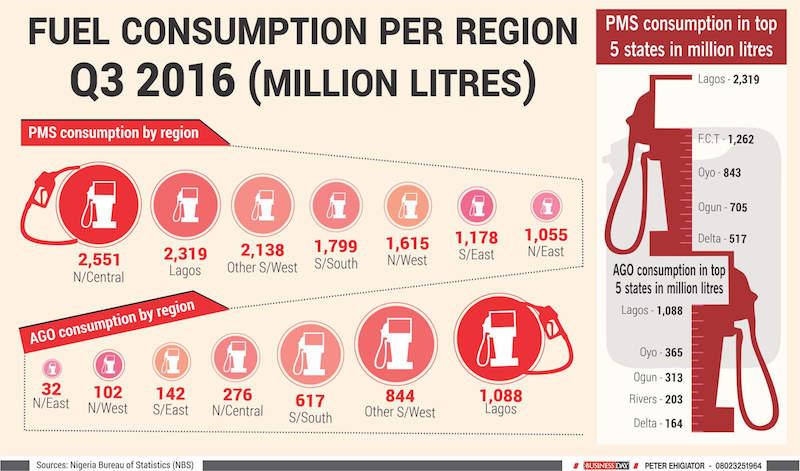
The North Central followed by recoding 169 percent increase in the product usage. That is as against 10.5 million litres used in third quarter of 2015, diesel utilisation went up to 276 million litres in third quarter 2016 within the North Central geopolitical zone.
The North East witnessed the least growth in diesel consumption, which rose to 32.5 million litres in 2016 as against 17.4 million litres in similar period in 2016, translating to 87 percent increase in usage.
On why the two products experienced contrasting consumption rates within the northern hemisphere, Abiodun Oladimeji, a manager of Total Petrol Station in Lagos attributed the phenomenon to the partial deregulation of the downstream sector and increased agricultural activities.
“Firstly, partial deregulation has made PMS more expensive to all Nigerians and in particular northerners. This should explain why its consumption was lower within the period. Secondly, northerners dominate the haulage business in this country as an many transport firms have hundreds of trucks on their fleets. Thirdly, increased agricultural activities have been reported from the region. So, diesel usage was higher because they have to transport their farm produce and other items to other regions in Nigeria and even outside the country”, Oladimeji said. The agricultural sector has consistently posted over 5 percent quarterly growth within the period.
In the South West, petrol consumption rose marginally by 2 percent to 4.5 billion litres, compared with 4.4 billion litres in third quarter 2015. When Lagos is excluded, consumption in the region increased by 13 percent to 2.1 billion litres in contrast to 1.9 billion litres same period in 2015. Consequently, the South West accounted for 35 percent petrol usage in third of 2016 in contrast to 33 percent in 2015. But, SW excluding Lagos accounted for 17 percent nationwide petrol usage in 2016 in contrast to 14 percent usage in the same period of 2015.
Diesel consumption in the South West witnessed 25 percent growth, while the South West, excluding Lagos, recorded 84 percent growth. By implication, the SouthWest consumed 1.93 billion litres of the product in third quarter 2016 compared with 1.55 billion litres in 2015 while the South West excluding Lagos, consumed 844 million litres in 2016 in contrast to 459 million litres in same period in 2015.
A total of 1.2 billion litres of petrol was consumed in the South East during the period, which represents 9 percent of the nationwide utilisation. That was lower than 1.4 billion litres consumed same period in 2015, which represented 10 percent of the nationwide utilisation.
Diesel consumed in the South East went up by 52 percent to 142.3 million litres by end of September 2016 in contrast to 93.7 million litres consumed same period in 2015. The region accounted for 5 percent of the product usage during the period, compared with 4 percent usage by end of September 2015.
TELIAT SULE