The crash in oil prices has forced the Federal Government to begin major reforms to attract global investors to the under-exploited mining industry.
The first key reform is that state governments are now allowed to approve consent given to mining prospectors by host communities. Before now, interested miners often took consent documents from host communities directly to the Federal Government, after they got licenses. This system created a lot of crisis and legal battles, culminating in long delays, as the Federal Government approved consent for miners who did not correctly obtain them from host communities.
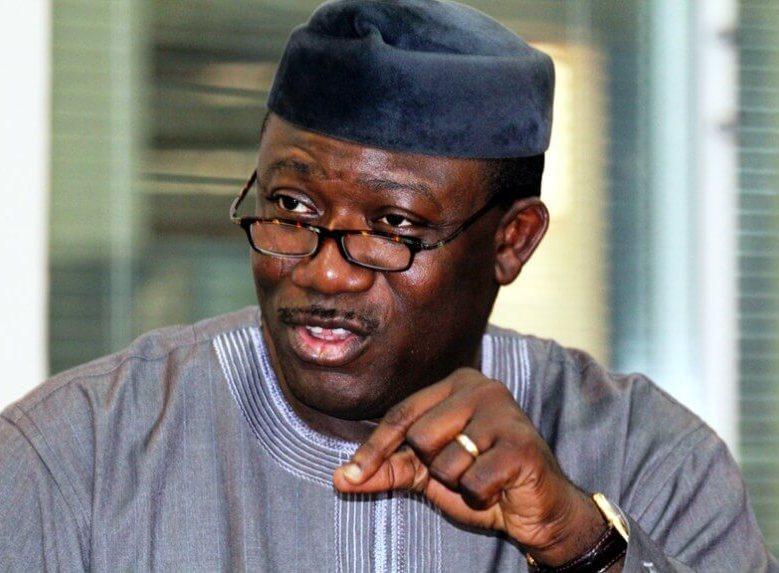
“What we do now is to get states to ratify the consent coming from host communities. It reduces conflicts and gives them a sense of belonging. Since states cannot get involved directly, they can now go into joint ventures with the private sector and get licenses. Many states are now doing this,” Kayode Fayemi, minister for mines and steel development, said on Tuesday at the Nigerian-British Chamber of Commerce and Industry (NBCC) advocacy roundtable held in Lagos.
The second major reform is that miners can now access funds from the Natural Resource Development Fund, where 1.68 percent of the Federation Account is domiciled. This is where the recently approved N30 billion funding for miners came from. This fund will enable miners who have genuine projects that are stalled halfway by funding, to access funds needed to complete their projects.
Similarly, the Federal Government has taken steps to ensure that local miners do not have to travel to Canada, Australia and other parts of the world to test minerals. Miners often travel to countries abroad to test minerals, as Nigeria has no globally approved laboratory to do this. But this trend is about to change, as the government has finalised a discussion with a company known as SDS to rejuvenate mining labs in Kaduna to ensure that local minerals meet global standards.
“We are working to discourage export of raw minerals out of the country. Beneficiation is the next big thing now, and once we get it right in this area, we will discourage export without value-addition. People take lead and zinc that contain other minerals which are not taken into account,” he said.
Mining creates 0.02 per cent of the national employment, contributing 0.34 per cent to the gross domestic product. Nigeria approved the Mining Roadmap in August 2016, with a view to building a globally competitive industry that will deliver industrialisation, jobs and wealth creation targets for the country. The roadmap identifies industry challenges such as absence of geosciences data, policy uncertainty, insufficient infrastructure, funding, and skills gap, among others, as major impediments to investment. “There is a perception that the policy and investment environment profile of Nigeria are hostile,” said Ayo Salami, partner in the Tax, Regulatory &and People Services Practice of KPMG Professional Services.
“In Ghana, there is an incentive framework that says that investors in the mining sector cannot be affected by fiscal policy for the next 15 years, and if you invest $500 and above, you will have additional incentives. This is why you see investors rushing there. In Nigeria, taxes are just roadblocks and disincentives,” Salami said.
Tim Tokun, CEO, Mining Division, ICTL Global, observed that there is a shortage of skills in the sector, calling for increased capacity for geo-mining.
Alade Isa, senior associate at Banwo & Ighodalo, lamented that halfway into the current administration, many mining proposals are yet to be implemented, urging the government to hasten implementation to attract investors.
Global miners include Astra, Newsmont, Barrick, and Mitsubishi Materials, among others.
ODINAKA ANUDU