|
Getting your Trinity Audio player ready...
|
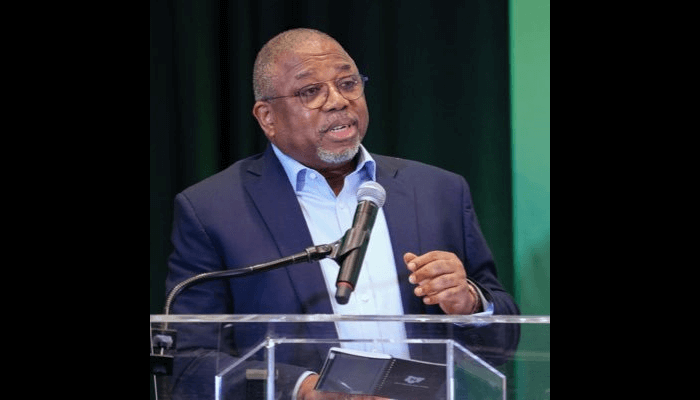
The Managing Director and Chief Executive Officer of online shopping website, PayPorte, Bassey Eyo, in this interview with Bala Augie, says e-commerce is pivotal to reducing financial exclusion and that the industry is in dare need of government bailout.
How is PayPorte different from other e-commerce brands?
Basically we are truly a Nigerian company, we are solely own Nigeria company with all our investment in Nigeria and all of that, so that brings about a lot of connection with Nigerians. What stand us out differently is the uniqueness of our products and our pricing; our pricing model is unique and different – we have better pricing at least across the various product spectrum, we have the best pricing and delivery. We actually make sure that we keep our delivery within 24hrs, so we have prompt delivery.
Lastly, what stands us out is that we only stock product we own, you know there is something called ‘market place’ a lot of other e-commerce companies have though. So much in market place that means they open their e-commerce doors and they have a lot of sellers, so they don’t basically own the product; it’s the seller that own the product, yet their name and integrity is at stake.

In PayPorte we boast of over 90 percent inventories own by us, so that way we can promptly deliver services to our numerous customers. So these are a few of the things that stood us out in this industry. E-commerce is the cornerstone in driving financial inclusion, which is bringing banking to the unbanked with a view to achieving economic growth and development.
Does your company have products to drive consumer profiles for the unbanked population, most especially with a view to enable seamless banking?
What tools are we developing; we’re starting something called the ‘PayPorte wallet’: now the PayPorte wallet is going to be linked to people’s bank account, where people will have to make payment through PayPorte wallet. Now let me put this foundation – PayPorte plan to end cash on delivery by Dec. 2016, so that means most of our customers, 80, 90% of our customers are going to be banked in some way or the other.
So, we’re already setting the ball rolling for that, infant one of our store: PayPorte food store only accept online payment and then so the way we’re operating PayPorte right now is – we’re actually reaching out for the unbanked people, now the business model of e-commerce in Nigeria why a lot of people are falling by the way is because of the burden of cash on delivery, people want to pay you cash upon delivery of their products, but now PayPorte is introducing PayPorte wallet system.

Our PayPorte wallet system is linked directly to the banks and people would be able to pay with their wallet similar to pay-pal, so with the PayPorte wallet system people are able to pay; we are also introducing the PayPorte ‘ussd’ code that is, payment with short code. So, if you buy something on PayPorte you can now come up and type *777* this and put the amount and you send; and you get the receipt payment and all that.
By introducing the PayPorte wallet system, we are introducing the short code, we already have the online payment system where we allow people to make payment online and we also accept cash transfers to us. Well, I know this is going to be policy driven by the CBN but however in our own way we try to make sure people that come to our platform are banked in some way.
Why is financial exclusion high in Nigeria?
First of all the thing is cultural, the way Africans were taught is that you need to serve money. The way our parents taught us to save money wasn’t literally to take it to the bank but to keep it at home that is, save your money somewhere.
People need to break out from that culture and begin to embrace technology, embrace the banking system, also there is equally the issue of trust, there is that mindset that I can easily be defrauded if I take my money to the bank, using a debit or credit card I can easily be defrauded and stuff like that, the other problem is accessibility to these financial institutions – Nigeria opened up mobile banking to get people into these sector but that hasn’t proven to be too successful the way it has been in Kenya with the M-pesa model over there. Accessibility of these financial institutions is also a problem.
I think to me, lastly is going to be education, do people know how to use the tools and services of mobile apps because all the banks now have mobile apps, mobile banking but do people know how to use all these things, and sometimes I think the banks also need to take out some time to educate the people on adopting these system.
People still don’t know how to use the ATM card, they still need someone to go to the ATM with them to make use of the card, so I think by and large the government need to galvanize more policy that will be driven towards this financial inclusion thing which to me is very good cause by then transaction will be easier, if you are banked I can do transaction with you easier; if you are not banked that becomes a problem because am not able to deal with fraud if you are not banked and stuff like that.
So, these are some of the factors that have limited the whole financial inclusion drive – of course there are opportunities, Nigeria is a country of over 170 million people; how many switching companies do we have in Nigeria?
We still have opportunity for more switching companies, the likes of interswitch, eTranzact and other people can still play in that space, so there are lots of opportunities for people that offer the use of other related services like other card services, a lot of opportunities for card services, e-wallet system, a lot opportunities lies there.
In Nigeria I don’t even think we have enough banks, where are the mortgage banks, the microfinance banks, where are the investment banks, the guy that started M-Pesa in Kenya, he started M-Pesa; you know what M-Pesa is?
Providing power because people connected to the M-Pesa platform that is the mobile money platform can buy power through the M-Pesa. They have solar panels and are able to recharge this solar power through M-Pesa, so there are lots of opportunities in this financial inclusion thing if driven properly.
In your own opinion, will you say internet penetration is slow with regard to online retail business in Nigeria?
With respect to internet penetration it’s slow because you can’t be having 18 million people connected to the internet, and look at the number of people transacting online. Now, when I talk about its slow I mean with respect to online retail store – because you know that if you buy your online ticket, its e-commerce, if I do transfer to you for a service, its e-commerce. But it’s slow with regards to online retail business, so I need to make us understand that, and this is largely to issues of trust.
Nigeria is one of the fastest growing country with regards to internet penetration because we have well over 30 million people weekly on the average connected, in a month we have over 80 million people that have connected, within a day we have over 10 million people that have connected to the internet, this is high numbers but with regards to online retail stores, online retail business, these numbers are not being seen and you can’t say because there is a huge internet penetration we are already having huge sales with regards to e-commerce.
But, I know that internet penetration will in the long run lead to e-commerce penetration, but right now the rate is not proportional.
We are in a Recession and businesses are closing, employers are shedding jobs, inflation is rising and the purchasing power of consumer eroded. Is the economic downturn affecting your top lines and operations generally?
Seriously, never in the history of PayPorte – (well we are only 2 years) have we had to run so many promos or activations to get customers to buy. So, this is really affecting purchasing power because people don’t understand; like Pay Porte that imported hugely its products because we wanted to maintain certain quality, we use to buy a shoe for 10 dollar, one dollar then was N160 when we started, 10 dollar was N1,600, that same shoe today apart from logistic charge: that same shoe is now being sold at N4,000,its really affecting our sales and customers are beginning to slow down in terms of their purchases, sales is dropping compared to what it was last year.
So, it’s really biting and e-commerce space is really affected by the current economic situation in Nigeria but, I think for us at PayPorte we see it in some way as a plus because this has led to manufacturing because we have set-up our own garment factory in Nigeria, some of our foot wears are now being commissioned with our PayPorte branded shoes because we can’t really go back into importation – so in some way this is really good.
But, I think the government have a role to play, I think internet businesses in Nigeria should be given some sort of a bail-out because internet business in Nigeria is one of the fastest growing in the world. The space in Nigeria that is turning out the highest number of entrepreneur daily in this country is the internet business, if you go to Yaba now in Lagos some part of Yaba is now becoming the silicon valley of Nigeria.
Mark Zuckerberg visited Nigeria; he went into some of these hubs where entrepreneurs are being made every day and yes recession is there but I sincerely think that the government should consider bail-out for internet businesses because we are a very big force in terms of employment from the e-commerce companies to people in the e-commerce online retail to ticketing – people like walkanow.com to irokoTV, jumia, konga, the PayPorte to people offering e-learning and all of that, these are all e-commerce, internet based companies that are recruiting people.
I worked for an internet business before and that business survived, I came out of an internet business to set-up my own business right now with over 250 staff and these are some of the other things that are happening.
So, if internet companies in Nigeria are given a bail-out even in this time of recession I still think that there is hope for Nigeria, I think it’s important that internet businesses should be considered for bail-out: if Nollywood and co are given bailout I see no reason why internet companies should not be given bail-out in this time of recession.
Yes recession is biting in; yes economic crisis is biting in but I think it’s a two edged sword – its biting in some ways but its leading us to thinking outside the box, manufacturing things and reducing our reliance on importation.
Businesses attribute slow growths to the foreign exchange scarcity, a lot of them don’t have access to dollars to import raw materials. Is the foreign exchange scarcity hitting your business?
It has affected us seriously from when government came with policies where you couldn’t deposit a certain amount of money into your dollar account, you had limit on your card and all of that, so all these have affected us seriously and the kind of business we do: e-commerce business don’t fall into the categories of those that have the right to bid for dollars; we don’t fall into that category according to the CBN. So, we need to source our dollar from the parallel market, every one of us in these space just have to do that, we source our dollars from the parallel market – so we spend huge money because the shortage has really affected us seriously and we can only hope that these things will ease as we get on.