|
Getting your Trinity Audio player ready...
|
Nigeria is blessed with both human and natural resources. Government at different times had made attempts to explore these resources to bolster economic activities. In the early 1980s, Federal Government of Nigeria embarked on construction of Dams for several purposes including water supply, irrigation and power generation. These projects were novel and laudable.
They were targeted at solving obvious challenges facing Nigeria economy at that time. While the challenges remain with us today and have been astronomically escalated, the solutions had been abandoned and are wasting away. It is an understatement that no economy can grow without energy.
Economic recovery will also be hard without adequate power supply. At this time when economic diversification has become a common song on every lip, there is the need to optimise all available resources to achieve real economic diversification. While investment in agriculture has been suggested as a potent way of diversifying Nigeria economy, there are few suggested practical way through which agriculture can be used.
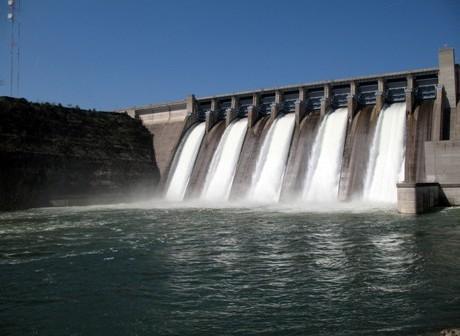
There is a need to commend the effort of the current administration to implement the developemnt of Mambilla Hydro Power Project. This project has the capacity to generate over 3,000 MW. This is a sign that Nigeria as a country is waking up from its slumber. A large hydroelectric power project like Mambilla does not only have the capacity to boost power generation in the country, but will also bolster agricultural activities and generate employment.

If properly developed, it could also serve as tourist attractions and thereby provide additional source of revenue for government.
Meanwhile, at this time when government is considering selling off some of its asset to raise funds for capital projects, it becomes necessary to consider some other smaller abandoned hydro-power projects across the country.
There were some of these Dams that were constructed over 30 years ago. Some at the point of completion, but now abandoned. The current economic situation in the country presents a better opportunity for a sincere government to explore these abandoned hydroelectric projects.
Diversification through agriculture will remain a mirage, if all efforts are geared towards primary production. Agricultural products are perishable. So, there must be simultaneous investment in agro-processing to ensure achievement of desire goal in our “go –to-farm” campaign.
Agro-processing cannot thrive without adequate and regular power supply. One of the ways to achieve this is to increase access to electricity in rural areas. By this, agro-processing factory will not have to be cited in the cities. Rural-urban migration challenges will be ameliorated and economic activities will improve.

Therefore, Government should make concerted efforts to get these abandoned smaller hydroelectric projects across the country functional. There is a need for the Ministry of Works, Power and Housing to carry out on-the spot assessment of these projects and recommend them for either privatisation or concession. This will have multiplier effects on the economic activities of the host communities and the entire nation.
There are a number of smaller hydropower projects, like Ikere Gorge Dam in Oyo State, that were never completed. In the face of unfavourable global oil market, resurgence of restiveness in the Niger-Delta region and current economic recession, we should begin to think more of renewable energy sources, particularly those in which huge capital investment had been made in the past but were never utilised.
Olanrewaju is the Chief Executive Officer Watershed Capital Limited