|
Getting your Trinity Audio player ready...
|
As militant activities escalate in the Niger Delta region with the destruction of oil pipeline and the crippling impact on the economy, built environment experts are saying that the best and sustainable way of resolving the crisis in is in infrastructure development and dialogue with the militants
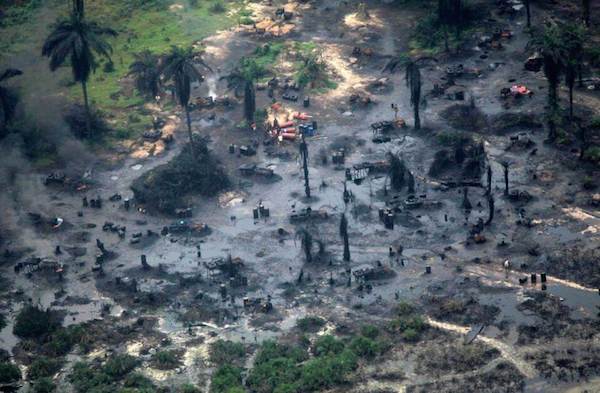
Militant activities in the region spells double tragedy for the Nigerian economy as the blowing up oil wells and pipelines has reduced oil production in the country by over 50 percent at a time when oil prices at the international market has come down to a level considered the lowest in 20 years.
This has led to a substantial loss of revenue to the government estimated at N3 trillion in just six months. It has been a source of major concern the last 12 to 15 months and the experts are urging the federal government to embrace dialogue because the use of force which it is considering is not only destructive but also counter-productive in the long run.
“The use of force will do no good in the Niger Delta. Resources for war may be adequate to provide holistic solution. Planning for the proposed solution can be done within six months while genuine implementation may span 10 years”, explained Misbau Aminu, an engineer and expert in community engagement, who spoke at a press conference in Lagos recently.

Aminu, who said he had successfully managed volatile situations through citizen engagement, recommended that the federal government could resolve Niger Delta crises by employing dialogue; special education programme, compensation, infrastructure development, etc.
On infrastructure development in the region, he noted, has been a sad story, saying that the federal government, the Niger Delta Development Commission (NDDC) and other government agencies only have capacity to initiate, fund and supervise projects but that they cannot implement.
“A lot of projects have been awarded to different companies, but the contractors could not execute these projects; it has resulted to abandoned projects or loss of government funds. The people will rather impose impossible conditions on the project or collect cash from contractors, than allow projects to be executed”, he said, stressing that “once we dialogue, compensate and educate, meaningful projects will evolve in the Delta and it would soon become another Texas or Dubai.”
Genuine dialogue in Niger Delta is critical and should involve tendering apology to the disadvantaged people, analysing past grouses, addressing immediate concerns and promising a rewarding future for alleviation of their pains.
Tunde Obileye, a facilities management expert, shares this view, arguing however that much as these approaches should be adopted for the sake of peace and the economy, people have no excuse for committing crime, explaining that the neglect or under-development of the region is no justification for the destruction of national assets by the militants.

“I share the pains of people in the Niger Delta for the neglect, deprivation and under-development they have suffered over the years, but I don’t see that as enough justification for destroying both the region and the oil wells in their domain”, Obileye stressed, adding, “I don’t believe that extreme poverty is enough justification or excuse for anybody to steal or commit any form of crime”.
Aminu emphasized that the Niger Delta people have undergone denial of livelihood, oppression and persecution and that these base inhuman conditions have changed everything about the region, have remoulded average minds and brains, and made them lose trust in the leadership and the nation, become suspicious of every move, defensive in nature and rebellious as a group, etc.
He noted that genuine complaints were raised on oil spills by environment movements like MOSSOP, human rights group, etc, wondering what other Nigerians, especially past leaders have done. “We persecuted Kenule Saro Wiwa and other agitators in the name of criminals; what follows is the bitter experience today. The country is almost shut-down with GDP declining to almost half the value of what it was one and half years ago”, he lamented.
CHUKA UROKO