|
Getting your Trinity Audio player ready...
|
Aba-made. This was the word used to mock knock-offs, poorly sewn, and ill-fitted clothing for years. Today, the conversation has and continues to change as the best of tailors, textiles, and styles can be found in this same city that was once scoffed at. The close to a million Aba residents that walk the city’s streets know the value of its fashion and textile markets. Most notable are Ariaria International Market, New Market, and Ekeoha Market.
Ariaria is loved for its affordability and the vendors’ ability to replicate any style of footwear that can be found in the world. Once seen, it can be remade. If Aba is known as the “Japan of Africa,” Ariaria is the “China of Africa” with is versatility in shoe and leather works. Its open-air structure sustains an affordable pricing scale and it has lived up to the reputation of its predecessor, The Old Ekeoha Market.
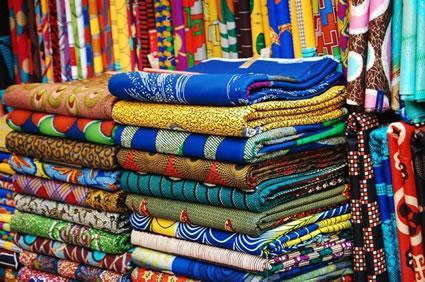
 The second grade cloth business thrives at New Market and Ekeoha Market (not to be confused with Old Ekeoha that burned down in 1976) is a must-visit centre for buyers of textiles and fabric. Hundreds of millions of naira has been said to change hands monthly in this market. The fashion industry in Aba runs a smooth network. From obtaining bales of fabric from markets in Asia and Europe, styles are created, designed, or in some cases replicated and produced both for the masses and according to designers’ specifications.
As a more accurate picture of the worth of the “Japan of Africa” is recently brought to light, Nigeria’s fashion influencers and artists raised in Aba, continue to give the city credit for moulding their fashion sensitivities. Visual artist and illustrator, Ibe Ananaba was raised in Aba. In his ongoing exhibition, Selense (pronounced seh-lehn-seh), he fuses inspiration from the fashion filled town of Aba with the street style of Lagos.

Using mixed media, Ananaba has created a feast for eyes in his simple but intrinsic works. The exhibition is broken down into The Runway, Sartorial, Applique, and Head Series. “Sure Boys” and “Bae” are among the favourites from The Runway. Incorporating shredded pieces from Nigerian newspapers, Ananaba plays with each tabloid’s color scheme while highlighting societal issues.
Friend and fellow fashion enthusiast, Noble Igwe pens poignant words on he and Ananaba’s Aba days in Selense’s catalogue. He recalls chasing a tyre past fashion stalls in the city and being enthused by the emanating style. Thus, began the upward spiral into this world of colour, fabric, and storytelling.
From representing Lagos traffic to its Owambe parties, Ananaba weaves a web of tales spun around a city of fashion, Aba and a city of style, Lagos.