Another key reason why African governments always resort to ‘control regimes’ is the need to keep prices low and urban dwellers and workers happy. Normally, political pressures for low-cost food and products generally come from urban workers/dwellers and employers and governments must appease these workers to keep them from revolting.
Historically, revolts and agitations for change in Africa has always come from the urban centres and usually, following steep rises in prices of foods and products and the erosion of purchasing power of these city dwellers. This is even truer during the colonial period. For instance, the entire decolonisation process was fully kick-started or gained serious traction following the world-wide inflation that followed the end of World War II and the resistance of the colonial governments to increase salaries or offset wage increases of the urban workers. This led to widespread protests throughout urban areas in Africa. It is these protests and agitations that empowered the nationalist leaders and they, in turn, capitalised on the political dissatisfactions to weaken the powers of the colonial administrations and hasten their own rise to power.
Nowhere in Africa was this more spectacular than in Ghana where the anti-inflation campaign organised by urban consumers saw the young, fiery, but unconnected Kwame Nkrumah rise quickly from obscurity to upstage long standing elites and conservative nationalist leaders such as JB Danquah and Edward Akufo-Ado. More dramatic also was Nkrumah’s rise to the premiership of Ghana in 1952 following the landslide victory of his party – the Convention’s people’s Party (CPP) formed just three years before then – in the February 1951 legislative elections, the first general election to be held under universal franchise in colonial Africa. CPP won 34 of the 38 contested seats and the colonial governor, Arden-Clarke, had no choice but to release Nkrumah from prison and ask him to form the government, even though he was considered a dissident, imprisoned for his role in the general strike of January 1950, and was not even invited to the select commission of middle-class Africans to draft a new constitution that would give Ghana more self-government.
But I digress. Haven ridden on the back of urban workers and dwellers to displace the colonial administrations, many Africans leaders were aware of the potency of urban militancy and actively sought to keep them happy or prevent them from becoming militant. The governments also feel the heat during agitations for wage increases during times of inflations because due to the control regimes, they are the largest employers of labour in their countries.

There are several options available. One way to do this is to prevent the effectiveness of trade unions by direct government control, co-optation of its leaders or through outright clampdown and repression. History has shown these means are not always successful. The best way for the government therefore, was to try to appease urban interests, according to Roberts Bates, “not by offering higher money wages but by advocating policies aimed at reducing the cost of living, and in particular the cost of food.” Just like they did with the marketing boards, “they purchased food crops from the largely rural farmers at prices set to ensure that soldiers, bureaucrats, and urban workers would be assured of low cost food.” The governments therefore sacrifices the interest of the majority of the population – rural farmers – for the comfort of the minority – urban workers/dwellers, but who possess the ability to cause problems for governments. As Billy Dudely – Nigeria’s foremost political scientist – surmises years back, “Nigeria existed only through the exploitation of her farmers”.
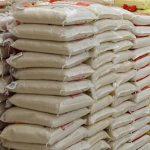
But there are serious problems associated with this control mechanism. The farmers get tired and when they consistently produce below costs, they tend to rebel or quit production thus precipitating food crisis. Here the governments use its control of foreign exchange, imports and exports to ban the export of food crops, import cheap food crops into the country and encourage dumping of food by foreigners just to keep prices below market rates and the urban workers happy. The effect, of course, is that the agricultural sector is consistently underdeveloped. But how do they care; their main preoccupation is survival and not growth or development of their countries.
Just one example: Following the overthrow of the Gowon regime in 1975 – whose unpopularity was caused partly as a result of the regime’s inability to deal with the rapidly rising consumer prices – the new government appointed a task force to investigate the problem of inflation. The task force rightly pinpointed the need to “increase food prices as a key element in any attempt to assuage the demands of the urban working population”. That led to the introduction of Operation Feed the Nation. Part of the programme was to improve poultry production. The government got the International Institute for Tropical Administration (IITA) to develop a new variety of yellow maize to be used as feed. The programme was successful and many farmers (in 2,500 villages) were enlisted to produce the maize. However, just as the farmers were beginning to buy into the programme and growing the maize, the government, in 1977, abruptly, ended the programme, and removed previously established barriers to imports of yellow maize from the United States. With an overvalued Naira, the administration was able to import yellow maize below the local cost of production. This was done out of desperation to lower urban food prices. Thus, all the farmers that adopted the programme found that they could not sell their maize at a profit.
Next week, I will proceed to show how the Buhari administration is towing this same line and what it seeks to achieve by its various ‘control regimes’ and how it is just a futile attempt to keep the inhabitants of Lagos and Abuja happy at the expense of everyone else.

Christopher Akor