|
Getting your Trinity Audio player ready...
|
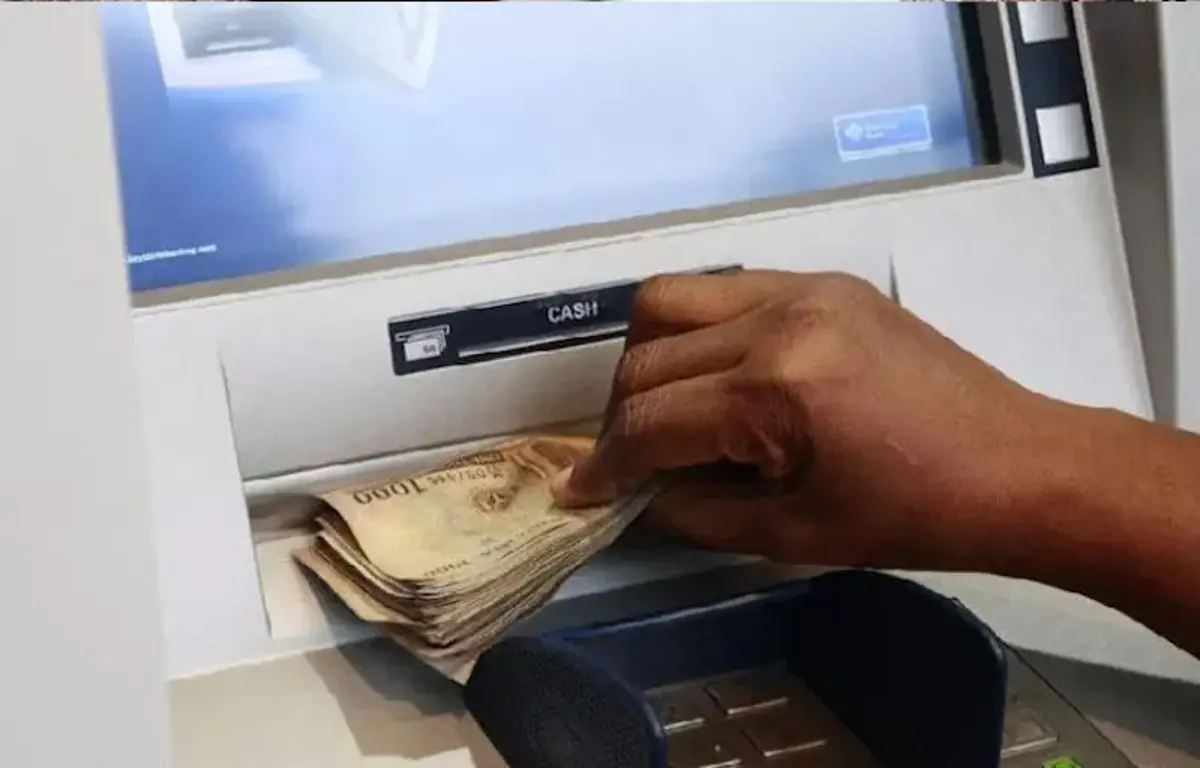
Non-passage of National Payments System Management (NPSM) Bill by the National Assembly has been seen as one of the challenges inhibiting the progress of electronic payment system in the country, according to the Central Bank of Nigeria (CBN).
Other challenges include network connectivity, epileptic power supply, literacy level/techno phobia, resistance due to the fear of electronic fraud, lack of adequate infrastructure to support the e-payment services, and low computer internet penetration.
Dipo Fatokun, director, banking and payment systems department of the CBN, stresses the need for political support of the National Assembly and other stakeholders on legislation and contributions to combat fraud in order to strengthen the payments system.
Speaking at the Finance Correspondents Association of Nigeria (FICAN) bi-monthly forum hosted by the apex bank in Lagos, at the weekend, Fatokun disclosed of ongoing plans to extend Bank Verification Number (BVN) registration project to customers of Other Financial Institutions (OFIS) such as Microfinance Banks (MfBs), Primary Mortgage Institutions (PMIs), among others.

The OFIS operators are already angling to have their customers included in the BVN project, he said.
According to Fatokun, the CBN is considering having the OFIS customers enrol through deposit money banks, because of the high cost of procuring the machines. “We are considering using commercial banks as registration points for the OFIS customers. We also expect that many of the OFIS customers, who already have their BVNs will supply the data to their banks, while others without BVN will register afresh,” he said.
He said the BVN project, which is being coordinated by the CBN, commercial banks and Nigeria Interbank Settlement System (NIBSS), had helped reduce the number of bank frauds in the industry.
The CBN director explained that before the coming of the BVN, identifications previously used in the banking industry were not foolproof, with fraudsters easily going unidentified.
However, BVN has now made it easier for the CBN and banks to uniquely identify every customer or to be able to trace transactions when frauds are committed. He explained that no bank customer, including Nigerian bank customers in the Diaspora, was authorised to have more than one BVN.

“I want to assure you that the BVN has assisted us a lot in the banking system. It has assisted us to check frauds, and we are working on a framework, that will enable us if not to blacklist customers, because of some legal implications, but at least to watch-list a customer that is identified to have been fraudulent, or have done what he is not supposed to do across the banking sector,” he said.
Fatokun, who spoke on the theme: ‘Recent Developments in the Electronic Payments System and Implications for Consumers of Electronic Payment Services,’ said the CBN had been at the forefront of the transformation of the payments system in the country, which has been demonstrated through the development of the Payments System Vision (PSV) 2020 document in 2007, which was reviewed in 2013.
The CBN director said the number of BVN linked to customers’ accounts as of August 23, 2016, was 36.7 million while the total number of individual customers in the banks was reported as 59.9 million as of the same date.
“Any bank customer resident in Nigeria without a BVN would be deemed to have inadequate KYC while effort is ongoing to ensure that customers of OFIs such as MfBs and PMIs are brought into the system begin to get their BVNs,” he said.
The e-payment remains an initiative of CBN under the Payments System Vision 2020 as part of the overall FSS 2020, he said, adding that one of the CBN mandates is the promotion of a sound financial system (Section 2 (d) of the CBN Act 2007).
He disclosed that Section 47(2) of the CBN Act 2007, stipulated that the CBN shall continue to promote and facilitate the development of efficient and effective systems for the settlement of transactions, including the development of e-payment systems, adding that the promotion of a sound financial system entailed active support for the effectiveness, efficiency and systemic safety of the payments system.
HOPE MOSES-ASHIKE